//
Machine Learning14 articles
Machine Learning
Model concepts explained through thresholds, queues, and error costs that small teams can actually manage.
Resource path
Model behavior explained through queue decisions.
This lane is for the moment a score stops being abstract. False positives, false negatives, thresholds, confidence, and calibration only matter because they move work between customers, reviewers, and systems of record.
Start here
Precision, recall, and the approval queueIt teaches model tradeoffs through the work a reviewer sees, not through metric definitions alone.
Connect a model score to a human review rule and miss-handling plan.
Review one approval thresholdTranslate the metric into a miss
Read the model result as a queue consequence: which wrong approval reaches a customer, which safe item gets stuck, and who pays the review cost.
Write the threshold note
Capture what the score means, what the reviewer must verify, which misses are tolerable, and when the workflow should pause instead of auto-approve.
Tune against one workflow, not a dashboard
Pick one queue, one proposed action, and one error cost. Then decide whether the threshold should reduce customer exposure, review drag, or operational delay.
Articles
 Constructed diagram
Machine Learning·
SageMaker can rank an inference setup. Make sure it tested your workload.
SageMaker AI Studio can benchmark and rank generative AI serving configurations for latency, throughput, or cost. The result is useful only within the workload and objective the job actually tested.
7 min read
Machine Learning·
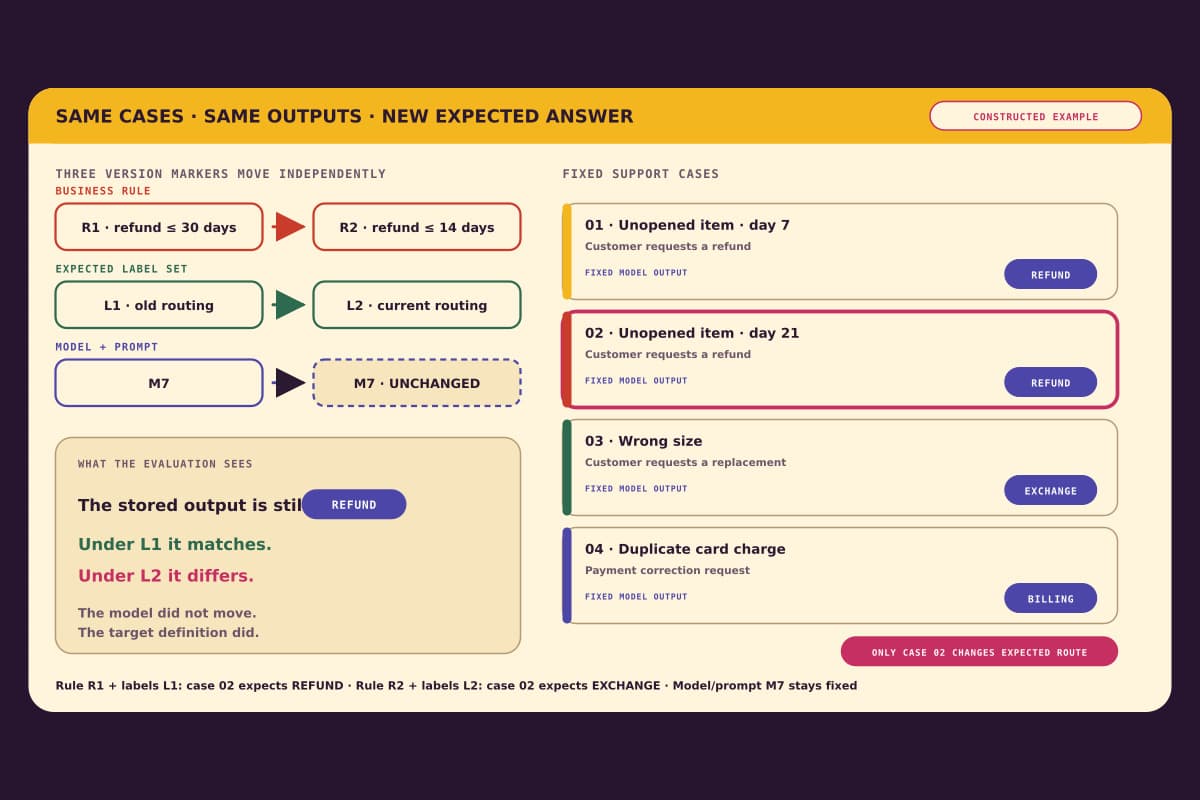
When a label change makes a stable model look worse
A stable classifier can look worse after the business changes the expected label. Separate model, input, and rule changes before retraining.
10 min read
Machine Learning·
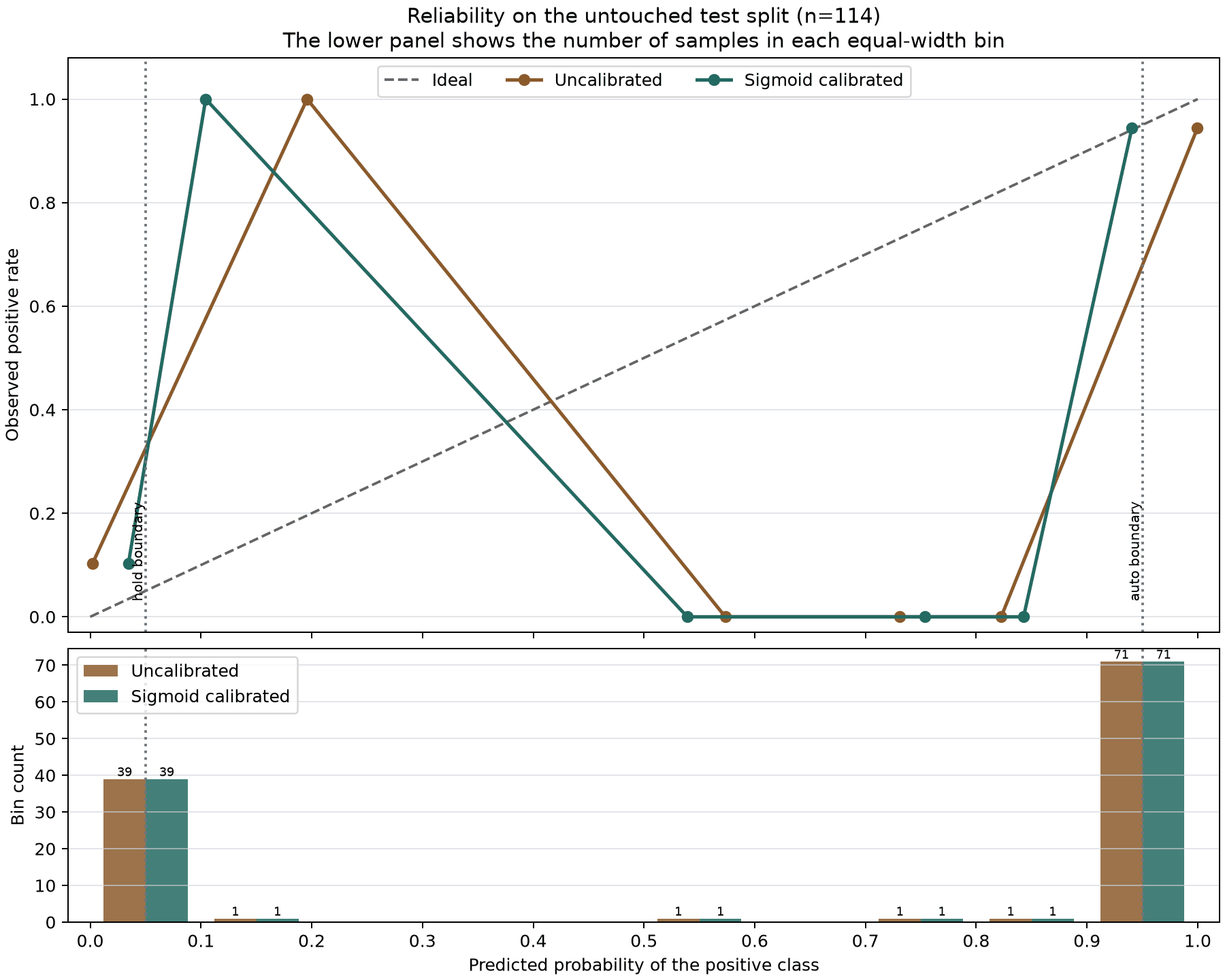
Calibrate AI scores before setting an approval threshold
A reproducible scikit-learn example that separates ranking from calibration, plots bin counts, and shows how one numeric threshold can change an approval queue.
11 min read
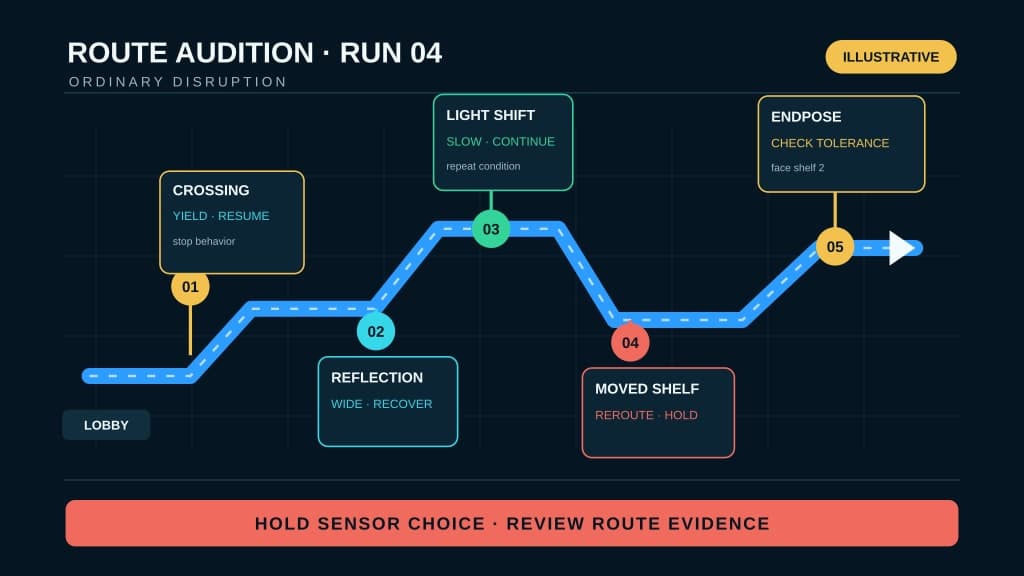
One camera may be enough for the robot. The route still has to prove it.
10 min read

Machine Learning·
Why false positives and false negatives feel different in an approval queue
False positives and false negatives do not feel like model math in an approval queue. One creates exposure outside the queue; the other creates drag inside it.
8 min read
Machine Learning·
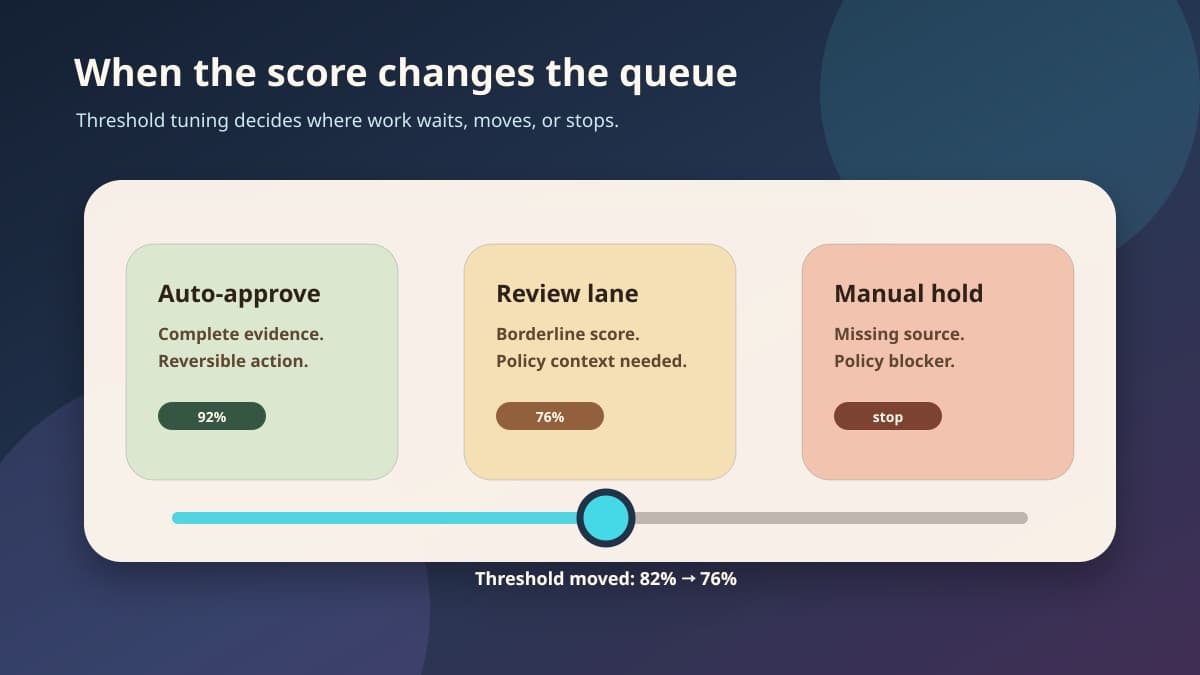
When the score changes the queue: threshold tuning for AI approval workflows
Threshold tuning is not just a model dashboard choice. It changes review volume, customer-visible mistakes, and which AI actions still need human approval.
8 min read
Machine Learning·
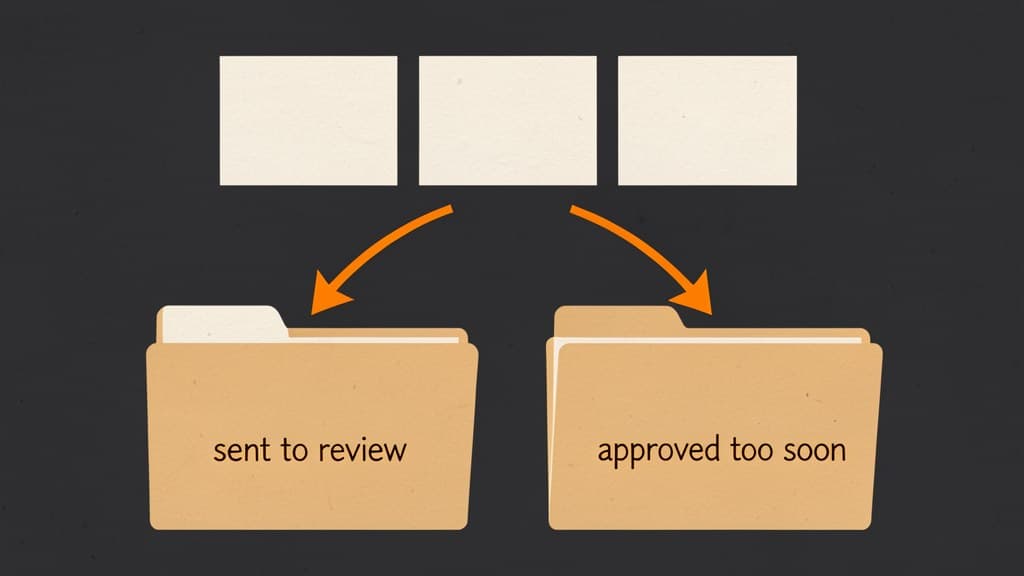
Precision, recall, and the approval queue
Precision and recall are not just model metrics. They tell you which AI mistakes reach customers, which safe work gets stuck in review, and where your approval threshold should move.
7 min read
Machine Learning·
A confidence score is not an approval policy
Confidence scores, thresholds, and model probabilities can help route AI work, but they cannot replace policy, review design, and cost-aware error handling.
6 min read

Machine Learning·
Cursor Says Composer Learned to Compress Its Own Context and Cut Compaction Error in Half
Cursor says Composer now learns to summarize its own working context during reinforcement learning, cutting compaction error by 50% while using about one-fifth of the tokens of a tuned prompt baseline.
5 min read
Machine Learning·
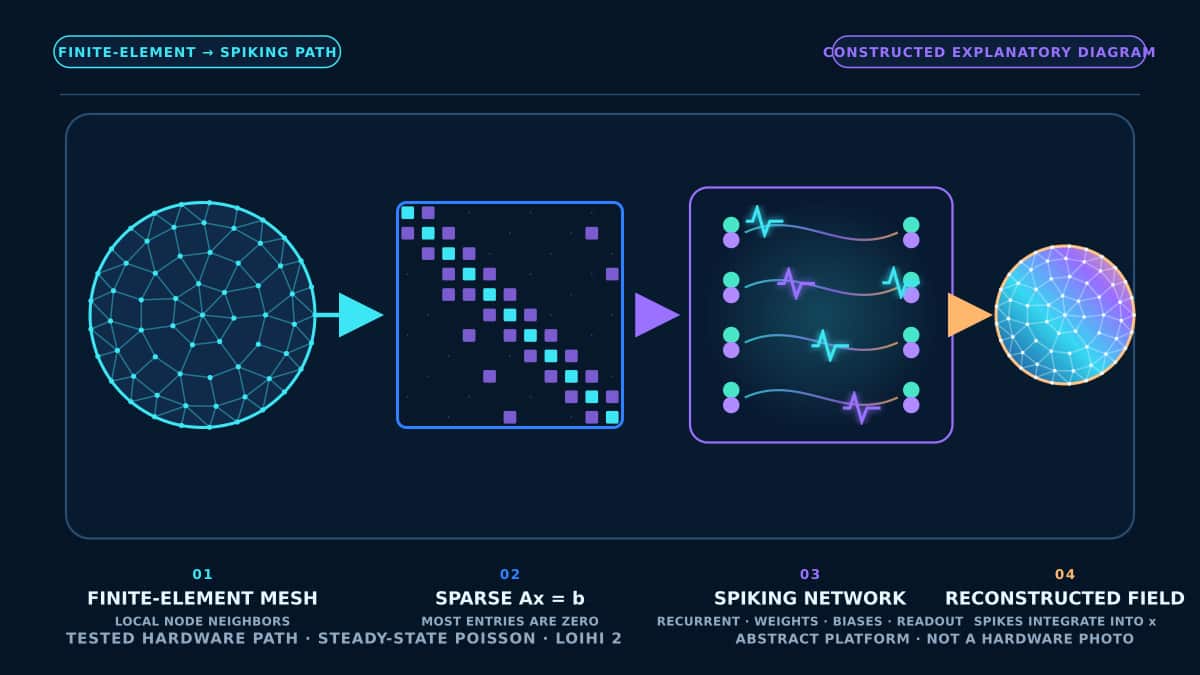
Sandia put a finite-element solver on Loihi 2. Here is what it proved.
Sandia researchers mapped sparse finite-element linear systems to a spiking neural network on Intel Loihi 2. The paper shows a working solver and close-to-ideal scaling, while broad speed and energy claims remain open.
9 min read
Machine Learning·
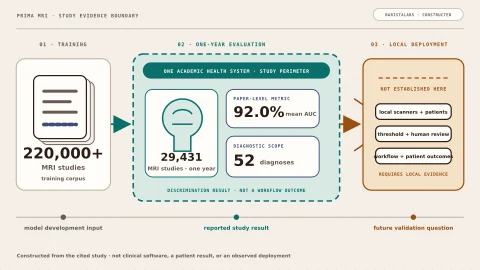
Prima can prioritize brain MRI studies. Its evidence comes from one health system.
Prima reached a mean diagnostic AUC of 92.0% across 52 diagnoses in a one-year, 29,431-study evaluation at one academic health system. Here is what that result supports and what deployment still requires.
6 min read
Machine Learning·
OpenAI's "First Proof" Breakthrough: AI Solves Novel Math Research Problems
OpenAI's internal model has solved 6 out of 10 frontier math research problems in the 'First Proof' challenge. This marks a historic shift: AI is no longer just retrieving knowledge—it is discovering it.
5 min read
Explore Other Categories

AI Development
Implementation notes for building AI tools around real business data, handoffs, review queues, and safeguards.
206 articles

Announcements
Product notes, service updates, and BaristaLabs news that affect how small teams use AI at work.
9 articles

Industry Insights
AI market news translated into workflow decisions, risk boundaries, and practical next steps for small businesses.
392 articles

Small Business AI
Plain-language guidance for owners and operators choosing one useful, reviewable AI workflow at a time.
98 articles

Technical Tutorials
Hands-on guides for approval policies, shadow weeks, agent receipts, and other AI workflow controls.
26 articles