Page 12 of 40
Insights on AI, machine learning, and technology strategy

Mistral AI released Mistral Small 4 on March 16, 2026, with 119B total parameters, 128 experts, 6.5B activated per token, a 256K context window, configurable reasoning, and an Apache 2.0 license.

NVIDIA released Dynamo 1.0 at GTC 2026 — open source inference software it calls the 'OS for AI factories.' AWS, Azure, Google Cloud, and OCI are adopting it. Blackwell GPU inference performance jumps up to 7x.

Adobe and NVIDIA announced a strategic partnership at GTC to build next-generation Firefly models, agentic creative and marketing workflows, and a new Omniverse-based 3D digital twin system. The real story is not one more model launch — it is Adobe wiring NVIDIA infrastructure directly into the tools, asset pipelines, and brand controls that enterprises already use to ship work.

GPT-5.4 hit 5 trillion tokens per day within one week of its API launch -- exceeding the entire OpenAI API volume from a year ago and putting the model on a $1B annualized net-new revenue run rate.

Andrew Ng's new open-source Context Hub CLI gives AI coding agents current API docs, local memory, and doc feedback loops to cut stale-call errors.

A controlled benchmark found MCP costing 4 to 32× more tokens than CLI for identical operations. NVIDIA's Vera CPU launched with 88 custom cores and 22,500 concurrent agent environments per rack. Mistral's Leanstral beat Claude Sonnet 4.6 on formal proof benchmarks at one-fifteenth the price.

Mistral AI joined Nvidia's Nemotron Coalition at GTC 2026 and helped build the open base model behind Nemotron 4. The headline number is 675B parameters, but the practical number is 41B active per query.

Nvidia's Groq 3 LPX claims 35x inference throughput, but the unit is per megawatt, not absolute. The real story is 128GB of on-chip SRAM replacing HBM entirely — a supply chain end-run hiding inside a performance slide.

Researchers found six zero-day vulnerabilities in ML model loading, including the first CVEs ever assigned to Keras safe_mode. Over 90% of non-security ML practitioners believed safe_mode=True prevented arbitrary code execution. It did not.

OpenAI shipped subagents in Codex on March 16, 2026, making parallel agent workflows available in both the app and CLI. The real change is not raw speed; it is that one coding task can now be split into delegation, review, and merge discipline.

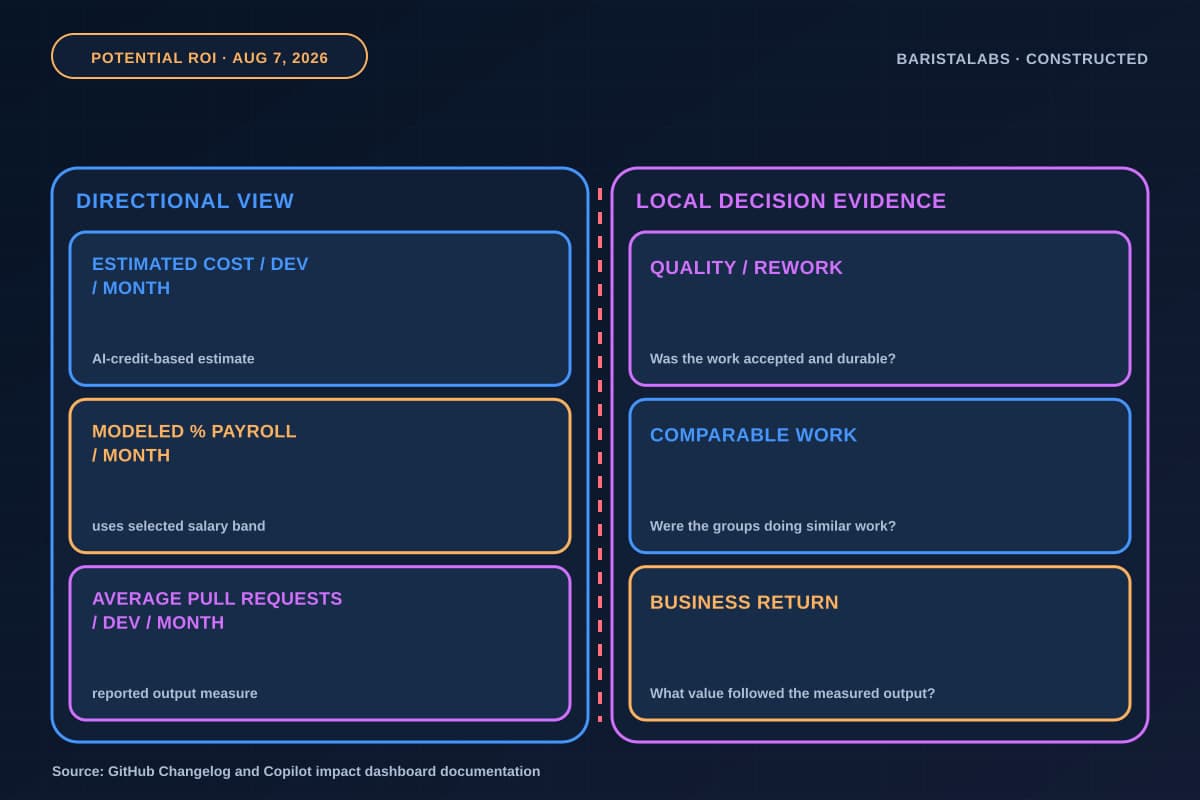
A $20/seat AI writing tool that saves 4 hours of drafting can quietly add 6 hours of review, editing, and rework. The math only works if you price the full loop.

Aikido Security found 151 malicious packages uploaded to GitHub in one week that hid their payload in invisible Unicode characters, leaving reviewers staring at code that looked completely blank.
Dive deeper into the subjects that matter to you

Implementation notes for building AI tools around real business data, handoffs, review queues, and safeguards.

Product notes, service updates, and BaristaLabs news that affect how small teams use AI at work.

AI market news translated into workflow decisions, risk boundaries, and practical next steps for small businesses.

Model concepts explained through thresholds, queues, and error costs that small teams can actually manage.

Plain-language guidance for owners and operators choosing one useful, reviewable AI workflow at a time.

Hands-on guides for approval policies, shadow weeks, agent receipts, and other AI workflow controls.