//

Industry Insights393 articles · Page 6 of 33
Industry Insights
AI market news translated into workflow decisions, risk boundaries, and practical next steps for small businesses.
Industry Insights articles, page 6

Industry Insights·
Before you trust an agent benchmark, ask where the budget stopped
The UK AI Security Institute found that agent benchmarks with fixed compute caps systematically undersell what frontier models can do. If your evaluation has a stop rule, the stop rule is part of the score.
7 min read
Industry Insights·
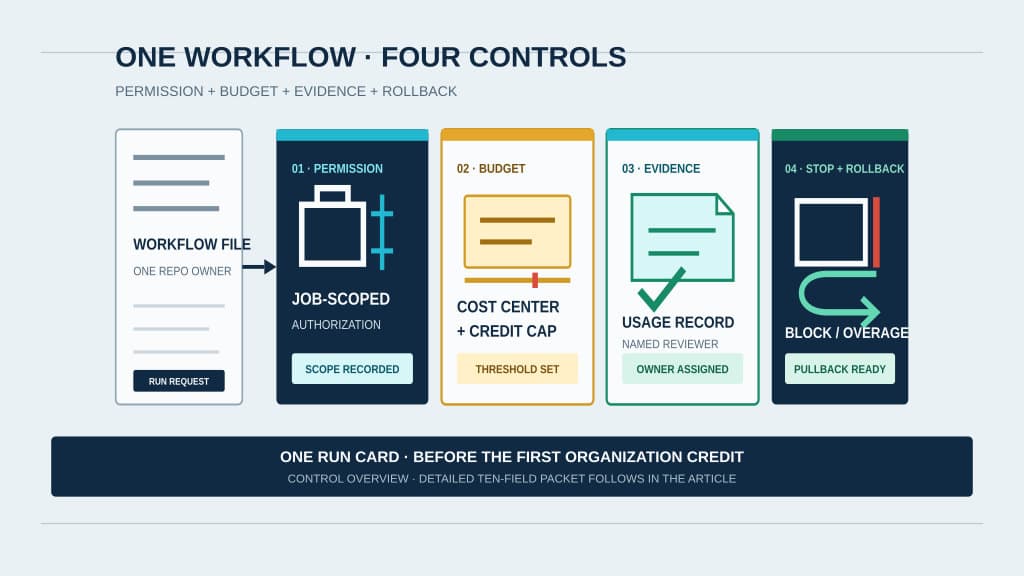
The secret is gone. The Copilot Actions run still needs a card.
GitHub just let Copilot CLI run in Actions without a personal access token. That closes one risk and opens a quieter one: a workflow that spends organization AI credits with no owner, no cap, and no reviewer.
10 min read

Industry Insights·
Before AI Edits the Forecast, Give the Workbook a Rulebook
Copilot in Excel is moving from formula helper to workflow runner. Microsoft's real answer to 'can we trust it' is a worksheet that travels with the file. Here's the smaller packet that makes that answer hold.
7 min read
Industry Insights·
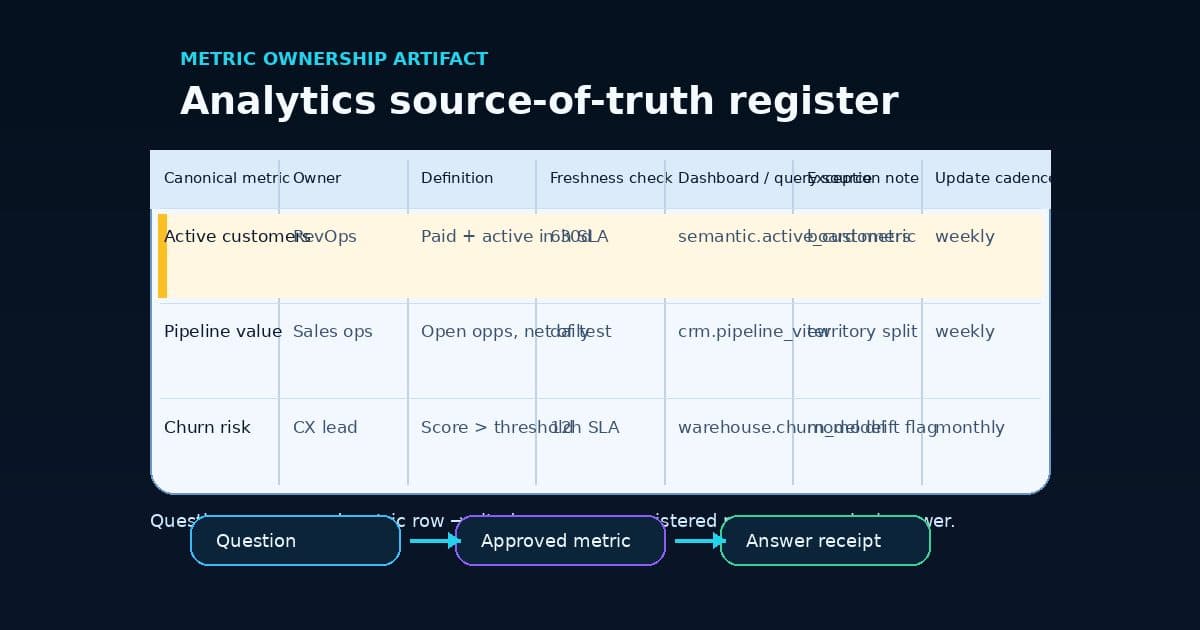
Before Claude answers the dashboard question, make someone own the metric
Anthropic says Claude automates 95% of its internal business analytics queries at 95% accuracy. The accuracy came from a maintained metric layer, not from pointing an agent at a warehouse.
8 min read
Industry Insights·
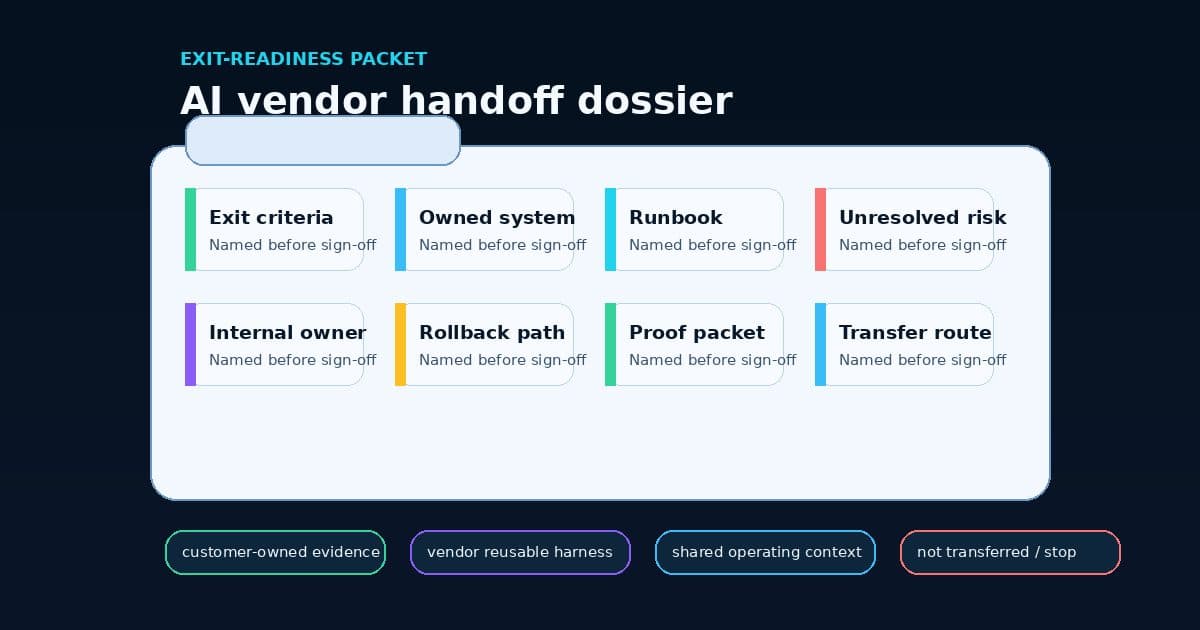
AWS will send the AI pod. Ask what stays when it leaves.
AWS is putting $1 billion behind Forward Deployed Engineering teams that embed with customers to build agentic AI fast. The durable question for buyers is not whether the demo works. It is what evidence, ownership, and operating muscle remain after the outside team goes home.
8 min read
Industry Insights·
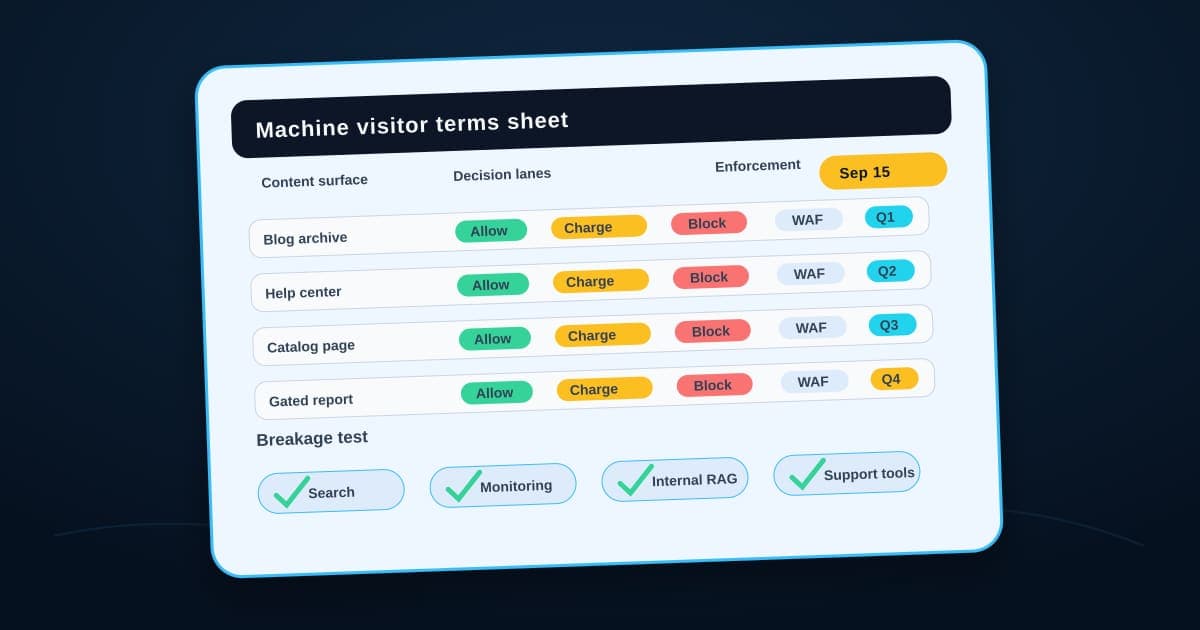
Before September 15, write your site's machine visitor terms
Starting September 15, 2026, new sites on Cloudflare will block AI training and agent crawlers by default on any page that shows ads, while search crawlers stay open. Existing sites can opt out before the deadline, but the harder problem isn't the checkbox. It's that "crawler" was never one category to begin with.
8 min read
Industry Insights·
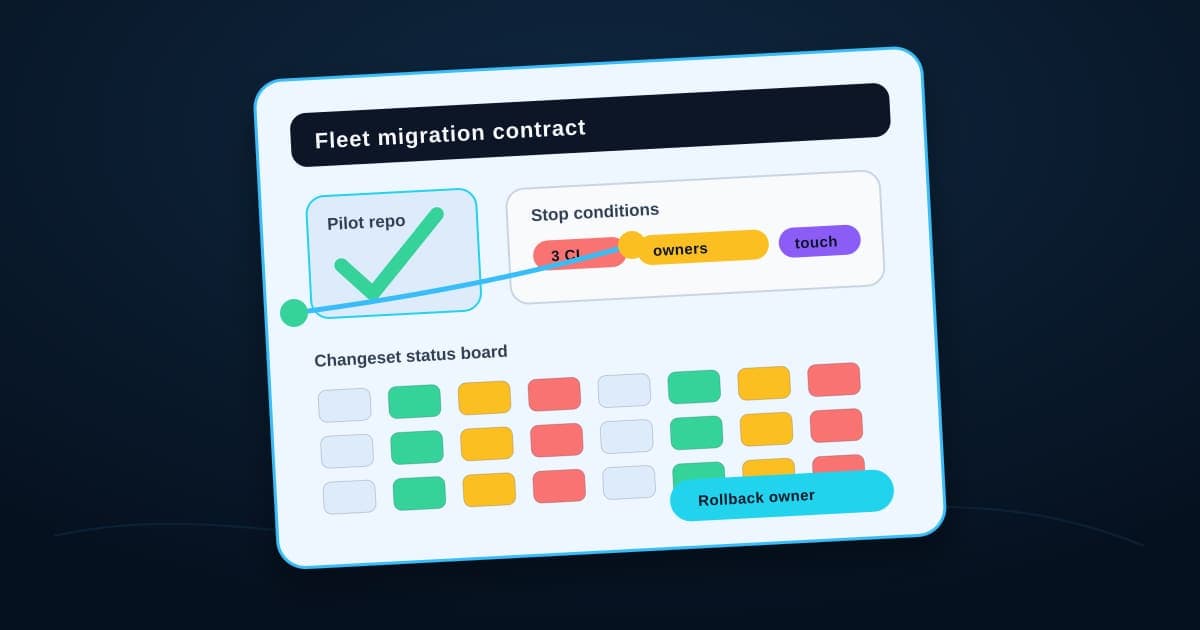
Before an AI agent opens 80 migration PRs, write the fleet contract
An engineer at Mercari went looking for one deprecated call and found roughly 80 repositories that needed the same fix. That number is the real story in Sourcegraph's new agentic migration tool: not whether an agent can write the change, but whether your team has a plan for repo two before repo one finishes.
8 min read

Industry Insights·
Before an agent migrates Java, make it earn three receipts
ScarfBench shows AI coding agents can compile migrated Java code and still fail deploy or behavior. Use a migration acceptance bench before giving agents modernization work.
8 min read

Industry Insights·
The map is not the receipt
An AI can sound certain about a supplier plot, field site, or flood claim. That does not make the answer replayable. emem shows what real-world agents need next: a field-fact receipt that pins down place, source, time, signature, and the decision the fact is allowed to support.
7 min read

When AI finds the bug, the handoff becomes the risk
8 min read

Industry Insights·
Before an agent remembers for you, make it forget on purpose
The support agent tells the customer their card on file is the Amex ending 4022, confident and sourced, and the Amex was cancelled in April. The memory was true when it was written. It is dangerous now. Recall working is not the same as memory being safe. Before a persistent-memory agent recalls customer facts on a real workflow, run it through a memory misfire drill: source, scope, freshness, confidence, contradiction, boundary, edit and delete, pass or fail.
8 min read

Industry Insights·
Before a browser agent restores state, make it pass the morning check
The agent reopens the portal already logged in, and the demo feels solved. But a restored session does not tell you which account, which environment, or which namespace you just walked back into. Before a browser agent reuses saved state on real portals, make it pass a short acceptance test: identity, namespace, validation, save policy, and reset.
6 min read
Explore Other Categories

AI Development
Implementation notes for building AI tools around real business data, handoffs, review queues, and safeguards.
220 articles

Announcements
Product notes, service updates, and BaristaLabs news that affect how small teams use AI at work.
9 articles
Machine Learning
Model concepts explained through thresholds, queues, and error costs that small teams can actually manage.
14 articles

Small Business AI
Plain-language guidance for owners and operators choosing one useful, reviewable AI workflow at a time.
104 articles
Technical Tutorials
Hands-on guides for approval policies, shadow weeks, agent receipts, and other AI workflow controls.
26 articles