//
Industry Insights396 articles · Page 16 of 33
Industry Insights
AI market news translated into workflow decisions, risk boundaries, and practical next steps for small businesses.
Industry Insights articles, page 16
Industry Insights·
OpenAI Codex Subagents Turn One Coding Task Into a Coordination Problem
OpenAI shipped subagents in Codex on March 16, 2026, making parallel agent workflows available in both the app and CLI. The real change is not raw speed; it is that one coding task can now be split into delegation, review, and merge discipline.
5 min read

Industry Insights·
$1.5 million would be unremarkable if both researchers weren't publishing in the same journals
An NBER working paper linked academic publication records to U.S. Census Bureau earnings data. The top 1% of AI scientists in industry now earn $1.5 million more per year than comparable academics — a fivefold increase since 2001.
4 min read
Industry Insights·
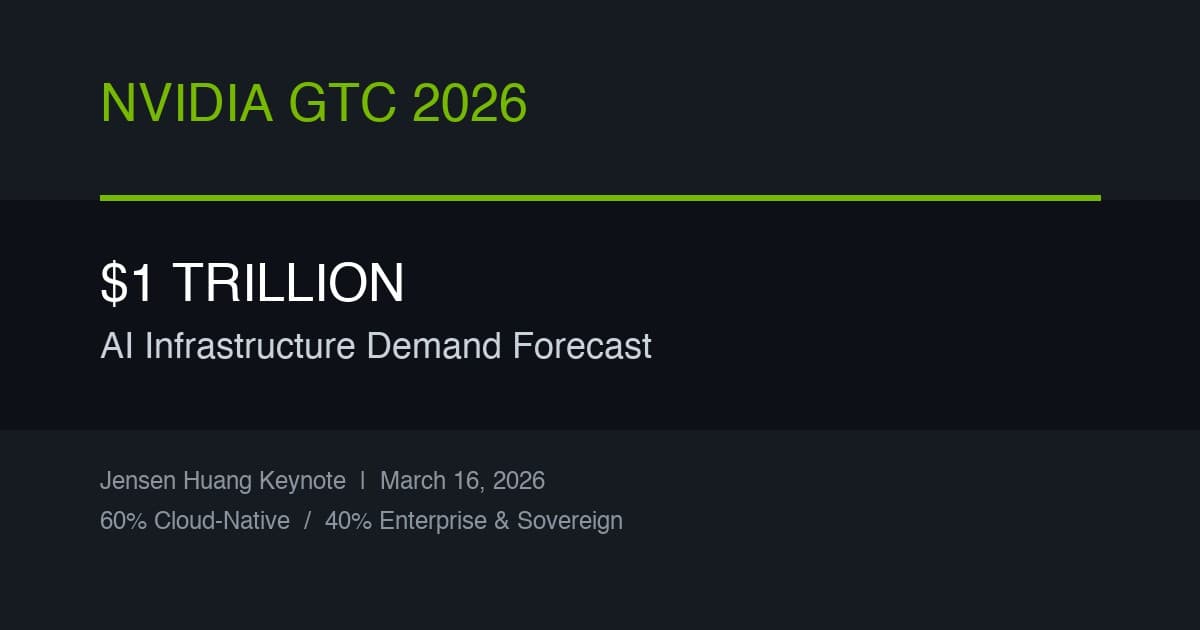
Nvidia GTC 2026: The $1 Trillion Demand Signal
Jensen Huang doubled his AI infrastructure demand forecast to $1 trillion through 2027 at GTC 2026. The 60/40 cloud-to-enterprise split and his comments on inference reflection reshape planning assumptions for anyone building on AI.
5 min read
Industry Insights·
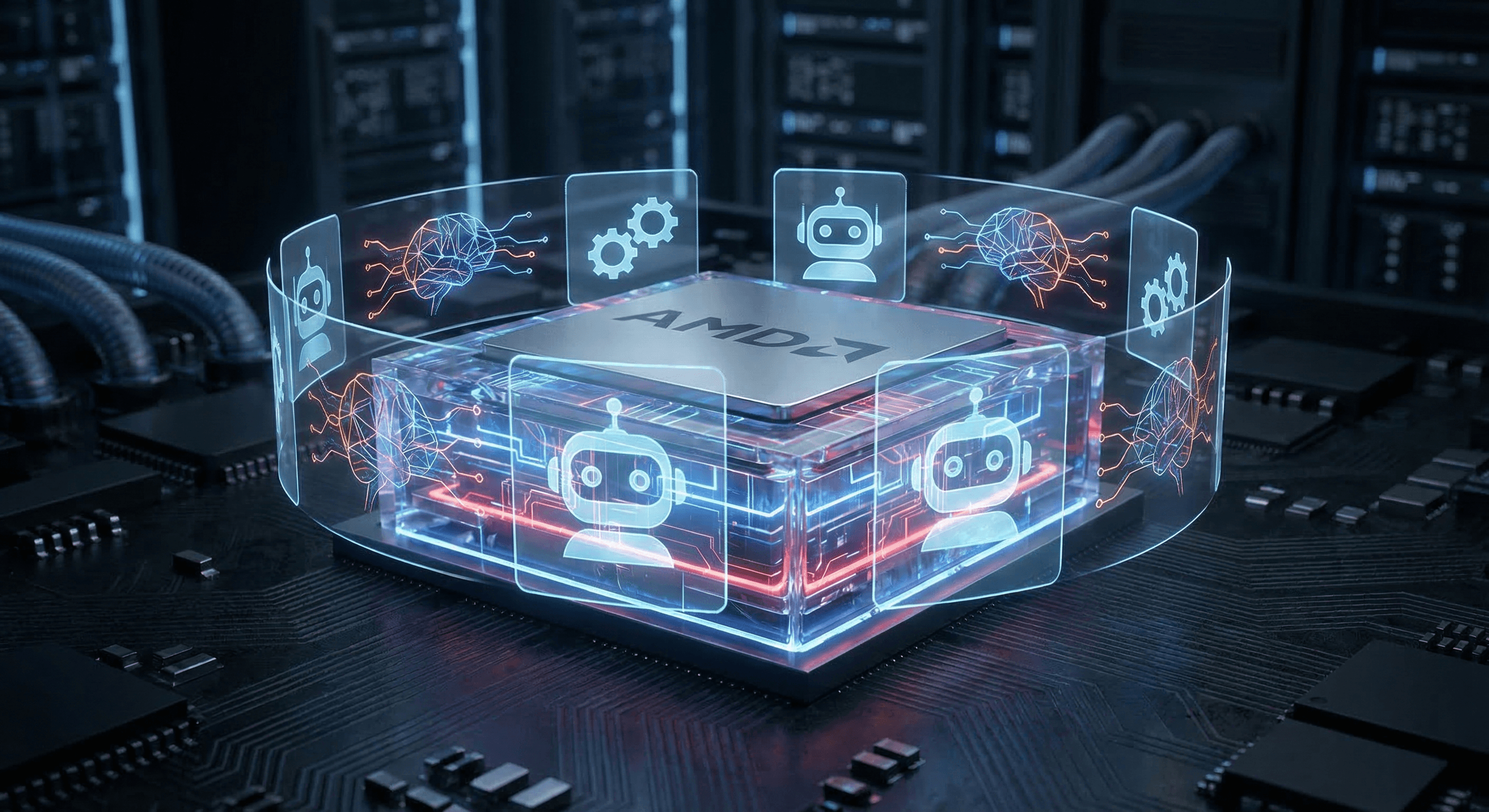
AMD Wants the Next PC Cycle to Be an Agent Computer Cycle
AMD is no longer talking about AI PCs as glorified copilots. Its latest framing points toward 'Agent Computers': local-first machines built to keep autonomous AI workloads running continuously instead of waiting for a prompt.
5 min read
Industry Insights·
Anthropic Crossed $19 Billion in Annual Revenue. The Enterprise AI Race Just Changed Hands.
Anthropic hit $19B in annual revenue run rate — jumping from $9B to $19B in ten weeks — while its share of U.S. enterprise AI spending surged from 4% to 40% in one year. The company that was an also-ran in enterprise is now the frontrunner.
5 min read
Industry Insights·
AI Insurance Splits Into Two Camps: Cover Hallucinations or Exclude AI Entirely
AI liability insurance is splitting fast: some insurers now cover hallucinations and malfunctions, while others are writing absolute AI exclusions into legacy policies.
5 min read

Industry Insights·
Five dimensions mattered more than the chatbot demos
More than 80 vendors applied to NATO’s Maven Smart System industry day, four were selected, and the teams had three weeks to integrate. Add Amazon’s five-dimensional Alexa tuning, Google’s 50-language Chrome push, and Meta’s MTIA roadmap, and the real signal was packaging, not raw model theater.
4 min read

Industry Insights·
$167 per finished minute: the production cost hiding inside $2 AI video clips
A creative director spent $1,000 on Seedance 2.0 and got six minutes of footage. Per-clip generation ran $2–7, but re-rolls and a broken Continue Video feature pushed the real cost to $167 per finished minute.
4 min read

Industry Insights·
Everyone noticed GLOMAP in COLMAP 4.0. The useful part was the image library swap.
COLMAP 4.0 shipped with GLOMAP as a first-class global SfM pipeline, but the FreeImage-to-OpenImageIO swap delivers 2.5x faster I/O and breaks pixel-level compatibility in existing pipelines.
5 min read

Industry Insights·
An 8B Model Ranked #2 on Arena-Hard by Inventing Fake Policies. Benchmarks Did Not Catch It.
A Llama 3.1 8B model ranked #2 on Arena-Hard by refusing harmless prompts and fabricating platform policies — then scoring itself highly. The AI judge fell for it every time. Here's what happened and what to test for.
4 min read
Industry Insights·
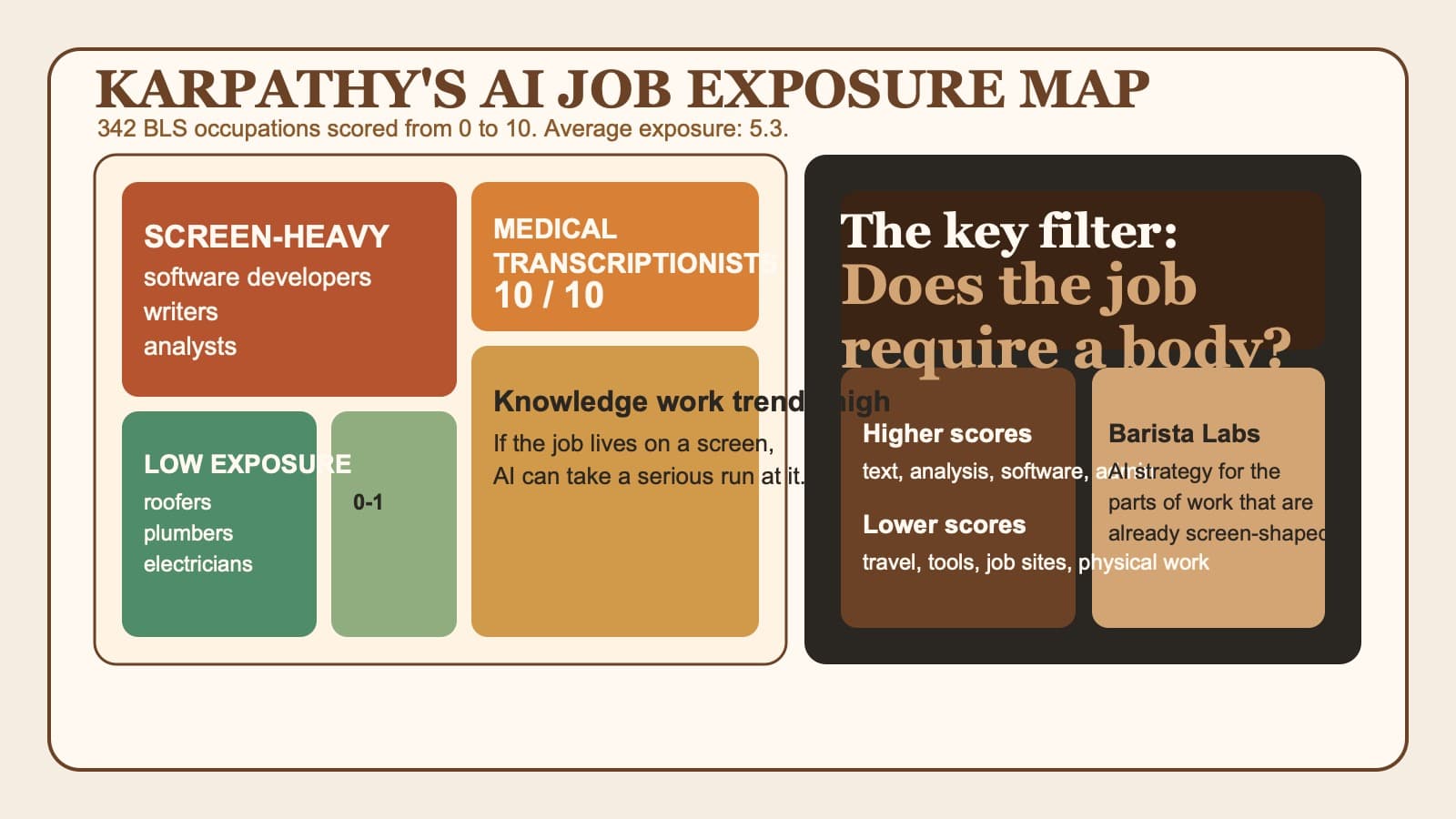
Karpathy Scored 342 U.S. Jobs for AI Exposure. The Pattern Is Brutally Simple.
Andrej Karpathy’s `jobs` project scored all 342 U.S. BLS occupations for AI exposure on a 0 to 10 scale and landed at a 5.3 average. The striking pattern was not subtle: the more a job lives on a screen, the more exposed it looks.
5 min read
Industry Insights·
Contract rights kept showing up in tonight’s AI news
Bridgewater’s $650 billion AI infrastructure estimate, Anthropic’s $100 million partner push, and Washington’s new licensing posture all pointed at the same issue: contract rights are becoming part of model selection.
4 min read
Explore Other Categories

AI Development
Implementation notes for building AI tools around real business data, handoffs, review queues, and safeguards.
240 articles

Announcements
Product notes, service updates, and BaristaLabs news that affect how small teams use AI at work.
9 articles
Machine Learning
Model concepts explained through thresholds, queues, and error costs that small teams can actually manage.
14 articles

Small Business AI
Plain-language guidance for owners and operators choosing one useful, reviewable AI workflow at a time.
106 articles
Technical Tutorials
Hands-on guides for approval policies, shadow weeks, agent receipts, and other AI workflow controls.
26 articles