//
Industry Insights393 articles · Page 24 of 33
Industry Insights
AI market news translated into workflow decisions, risk boundaries, and practical next steps for small businesses.
Industry Insights articles, page 24

Industry Insights·
The SWE Benchmark Your Team Used to Vet AI Coding Tools Expired in 7 Weeks
Ajeya Cotra at METR updated her AI coding agent forecast from ~24-hour tasks to >100 hours — in under two months. If your AI tool evaluation used SWE-bench or time-horizon metrics from Q4 2025, you're running on expired data.
5 min read
Industry Insights·
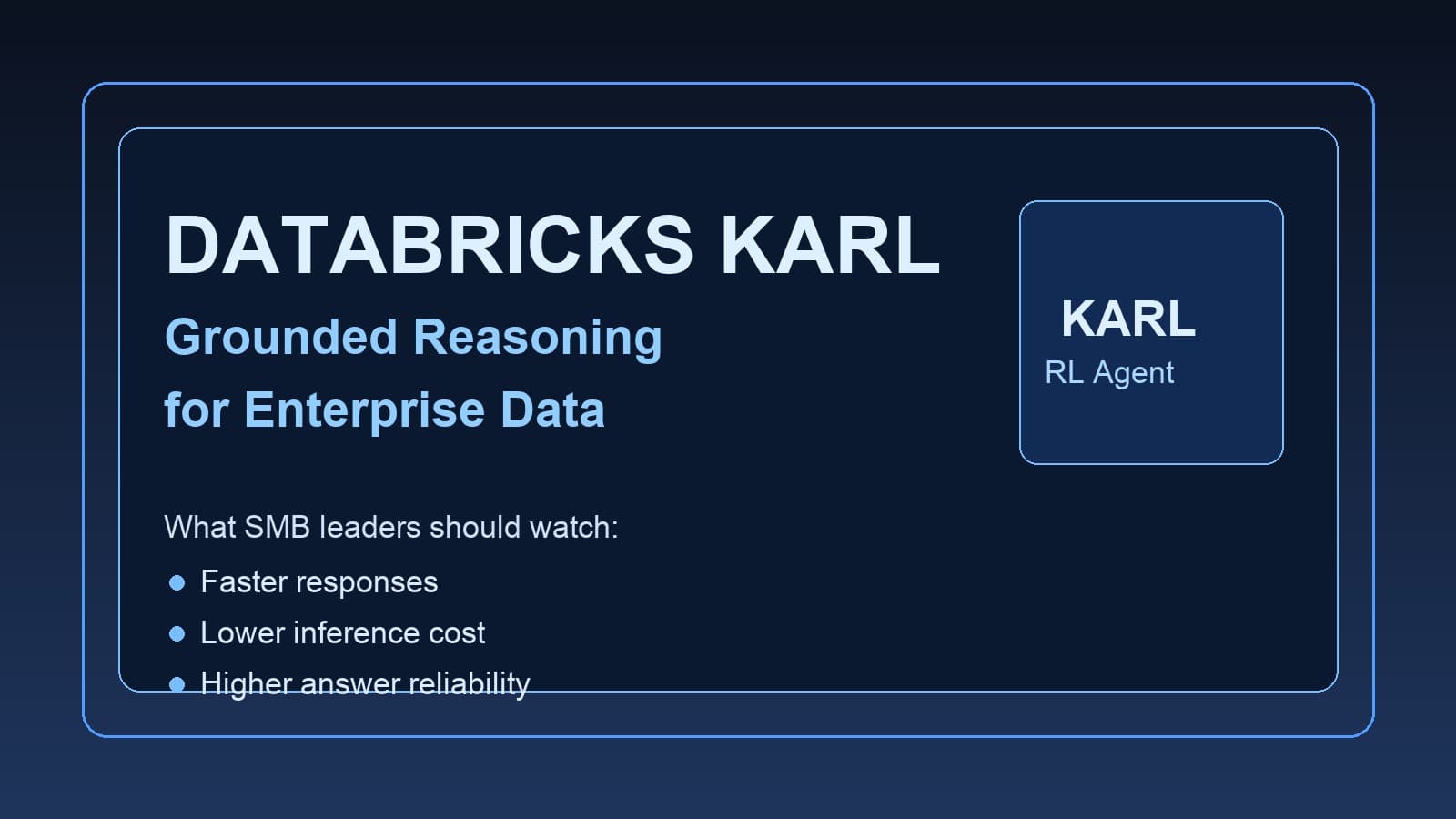
Databricks Launches KARL: A Grounded-Reasoning Agent Built for Enterprise Data
Databricks says its new KARL agent uses reinforcement learning to deliver faster, cheaper, and stronger grounded reasoning over enterprise data. Here’s what SMB leaders should pay attention to right now.
5 min read

Industry Insights·
NotebookLM Goes Cinematic: Can a $250/Month Subscription Replace Your $1,500 Explainer Video?
Google's NotebookLM now generates fully animated cinematic videos from your documents using Gemini 3, Nano Banana Pro, and Veo 3. Here's an honest accounting of where it earns that Ultra subscription price—and where it doesn't.
4 min read
Industry Insights·
Microsoft Copilot Tasks Signals the Shift From Chat to Real Workflow Automation
Microsoft’s Copilot Tasks preview reframes AI from assistant chat to action-taking workflow execution. Here’s what small businesses should test now, where human approval still matters, and how to prepare for practical rollout.
3 min read
Industry Insights·
The WSL Tax Is Gone: A Workflow Teardown of OpenAI Codex on Windows for 10-Person Dev Shops
OpenAI's Codex app landed natively on Windows today, eliminating WSL-based workarounds. Paired with Symphony's spec-first orchestration, it closes the gap that kept Windows dev shops on the sidelines of agentic coding.
6 min read

Industry Insights·
Anthropic Called OpenAI a Liar. Your AI Vendor Stack Just Got Political.
The OpenAI-Pentagon deal didn't just split two labs — it forced every IT buyer into a position. Six signals that turn this week's drama into a concrete procurement decision.
4 min read
Industry Insights·
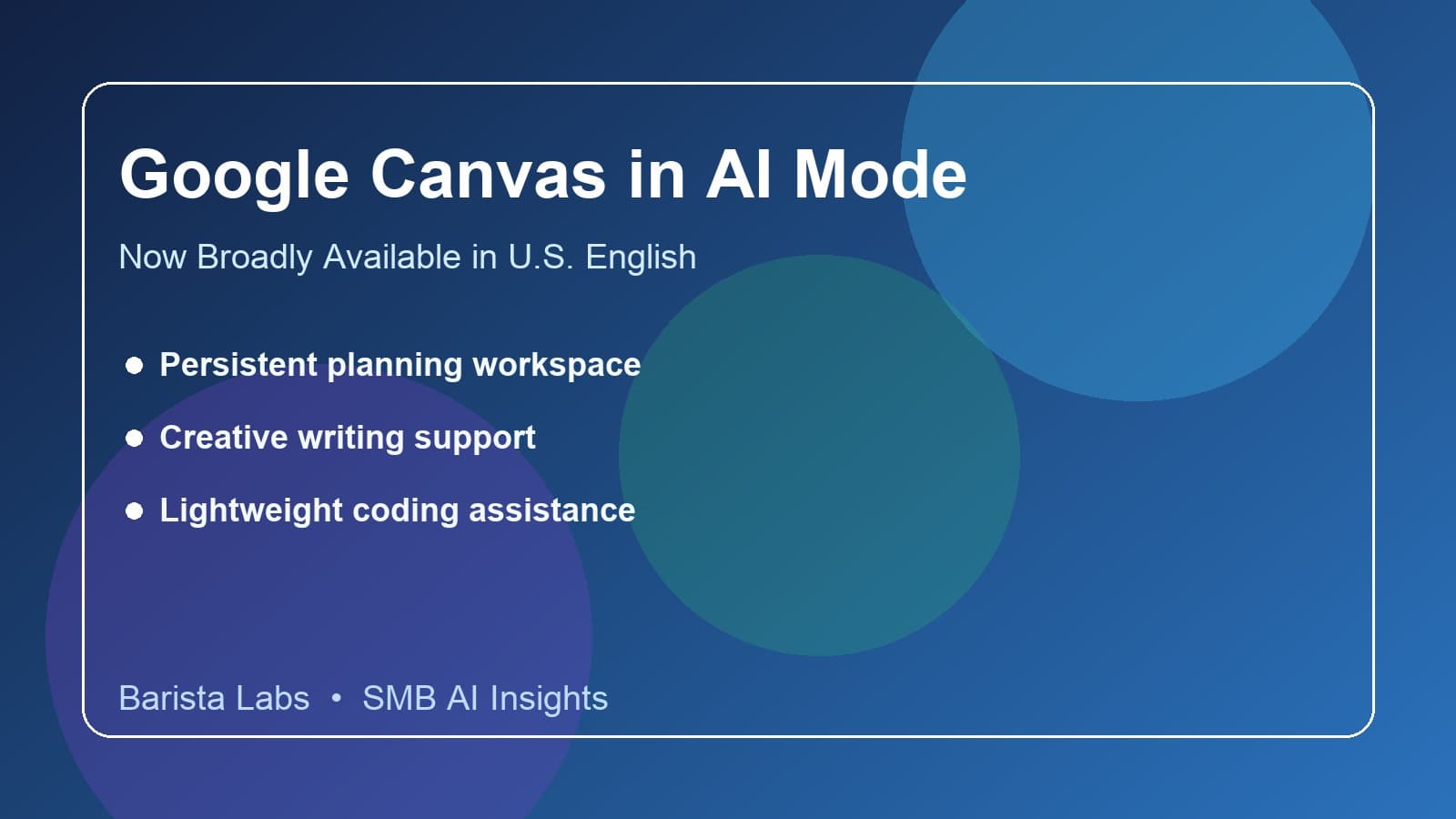
Google Expands Canvas in AI Mode Across U.S. English: What SMB Teams Should Do Next
Google’s Canvas in AI Mode is now broadly available in U.S. English, moving from limited Labs testing toward mainstream use. Here’s what this rollout changes for small business planning, writing, and lightweight coding workflows.
4 min read
Industry Insights·
Pin or Chase: A Decision Memo for Teams Running Live Integrations on OpenAI's Monthly GPT-5.x Updates
OpenAI shipped GPT-5.3 Instant on March 3 with a 26.8% hallucination reduction, then teased 5.4 the same hour. For developers and ops leads with production API integrations, the question isn't which version is better — it's whether your workflow can handle a model that changes faster than your sprint cycle.
6 min read

Industry Insights·
ModelScope Open-Sources Step 3.5 Flash: What SMB Teams Can Actually Do With a 196B MoE Model
ModelScope announced open access to Step 3.5 Flash assets, including base and midtrain checkpoints, plus the SteptronOss training stack. Here’s what the published specs and benchmark claims mean for small-business AI deployment.
5 min read

Industry Insights·
Apple’s $599 MacBook Neo Could Be the Distribution Breakthrough Local AI Needed
Apple just introduced MacBook Neo at $599 with an A18 Pro chip and Apple Intelligence support. For small businesses, this looks less like a laptop refresh and more like a distribution moment for practical on-device AI workflows.
5 min read
Industry Insights·
Google Is Shutting Down Gemini 3 Pro on March 9. For SMB Teams, the Real Story Is Lifecycle Reliability
Google's March 9 shutdown of Gemini 3 Pro Preview and quick alias rollover to Gemini 3.1 Pro Preview is a clear reminder: production AI reliability is now as much about model lifecycle operations as model quality.
3 min read
Industry Insights·
Experienced Developers Trusted AI Output at 2.6% in 2025. The 2026 Models Are Targeting Exactly That Gap
Stack Overflow's 2025 survey found 84% of developers using AI tools while only 3% highly trust the output. That gap wasn't irrational — it was calibrated. Here's what the 2026 model wave actually changes for engineering leads.
7 min read
Explore Other Categories

AI Development
Implementation notes for building AI tools around real business data, handoffs, review queues, and safeguards.
223 articles

Announcements
Product notes, service updates, and BaristaLabs news that affect how small teams use AI at work.
9 articles
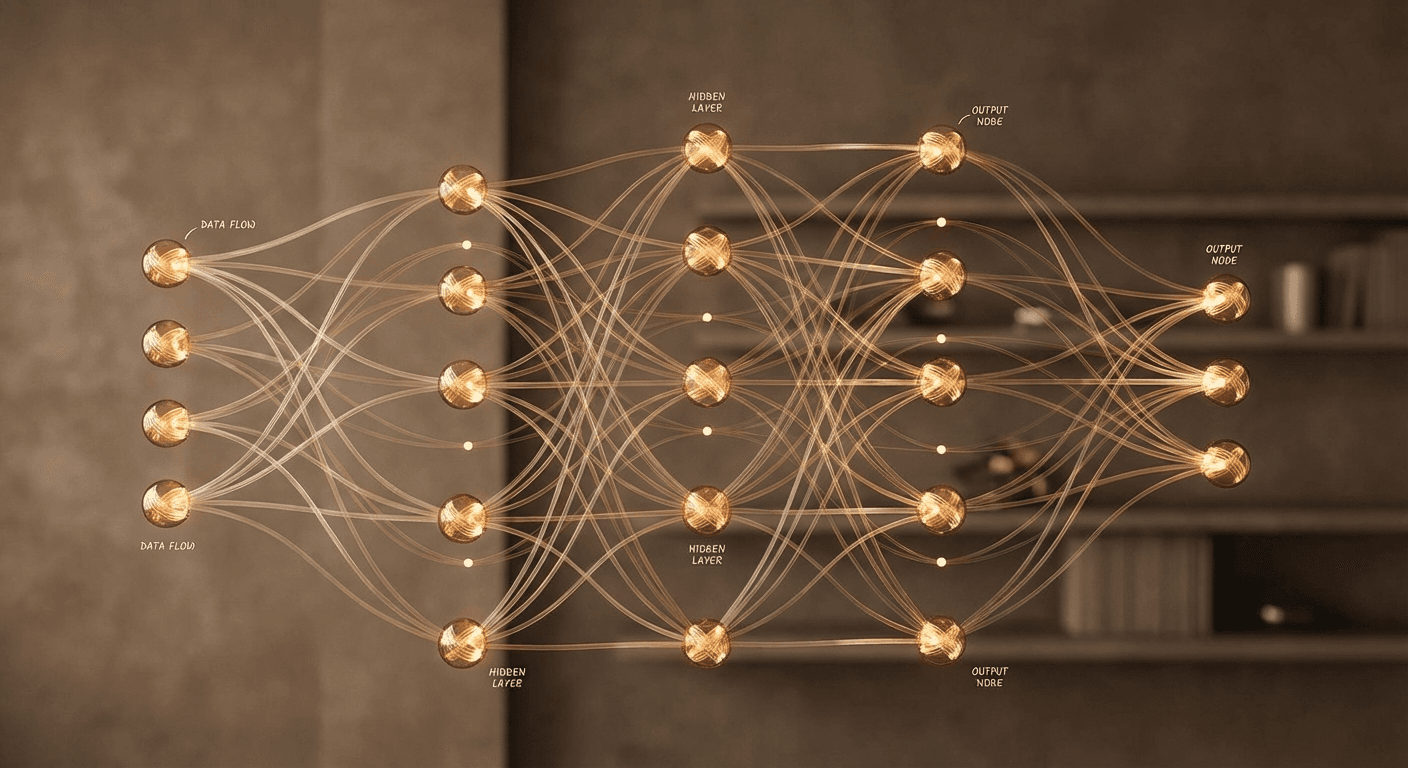
Machine Learning
Model concepts explained through thresholds, queues, and error costs that small teams can actually manage.
14 articles

Small Business AI
Plain-language guidance for owners and operators choosing one useful, reviewable AI workflow at a time.
104 articles
Technical Tutorials
Hands-on guides for approval policies, shadow weeks, agent receipts, and other AI workflow controls.
26 articles