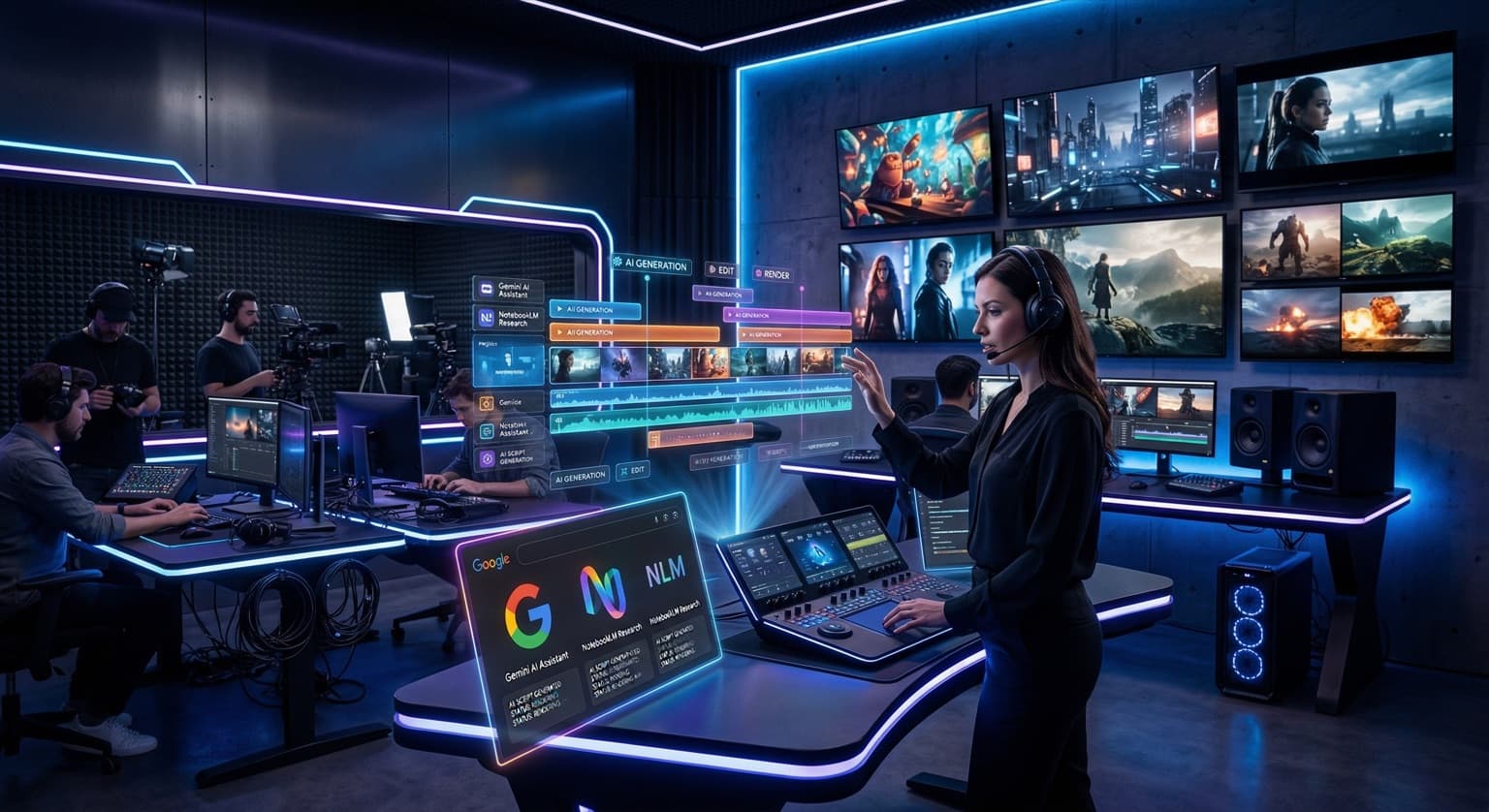

Google's NotebookLM just shipped Cinematic Video Overviews to all Google AI Ultra subscribers—and the upgrade is not cosmetic. This isn't a filter tweak on the narrated slide format that's been in NotebookLM since July 2025. It's a full pipeline rebuild using three separate Google AI models working in sequence, and it changes the actual cost-benefit math for content-heavy teams.
The honest question worth asking before you run back to your production vendor: does this replace a line item in your budget?
What "Cinematic" Actually Means Here
The original Video Overviews were essentially AI-narrated PowerPoints: storyboard panels, voiceover, some visual theming. Usable, but clearly synthetic. The new Cinematic version hands the entire creative direction to Gemini 3, which makes "hundreds of structural and stylistic decisions"—Google's words—before a single frame is rendered. It determines narrative arc, visual style, pacing, and then quality-checks its own output for consistency before export.
The pipeline underneath: Gemini 3 directs, Nano Banana Pro generates the imagery, Veo 3 handles animation and motion. That's the same model stack behind some of Google's premium one-off video demos, now running against your uploaded PDFs and notes.
The output is full animated video—fluid motion, rich generated visuals, synchronized audio narrative. Not a slide deck. Not a screen recording with captions.
The Three-Model Stack and What It Actually Does to Output Quality
Gemini 3 as creative director is the part that matters most. Previous video generation tools (including earlier NotebookLM) treated visuals as decoration layered on top of a text summary. Cinematic flips that: the model reasons about how to tell the story visually first, then generates assets to match that plan.
Nano Banana Pro handles imagery generation at 2K resolution. Veo 3—Google's current flagship video model—handles animation. The combination means you're not getting repeated static images with a zoom effect. You're getting generated motion sequences.
Practical limits: 20 cinematic overviews per day, English only, Ultra subscribers only. Pro tier access is confirmed as "coming soon" per the NotebookLM team—no timeline given.
The Math on a Realistic Content Production Calendar
Here's the cost structure for a content ops lead at a 25-person professional services firm:
Current state (no AI video):
- Typical explainer/training video: $1,200–$2,500 per finished minute from a production vendor
- Internal team-recorded explainer with basic editing: $300–$600/hour in staff time plus editing software
- Turnaround: 2–4 weeks for vendor work, 3–5 days internal
With Cinematic Video Overviews at $249.99/month:
- Input: a well-organized NotebookLM source set (existing docs, reports, slide decks)
- Output: 1–3 minute cinematic video in under 20 minutes, up to 20 per day
- Per-video cost at 10 videos/month: ~$25. At 20 videos/month: ~$12.50.
That math is compelling for one specific use case: internal content at volume—training materials, client onboarding summaries, quarterly updates, product walkthroughs for a structured knowledge base.
Where it stops making sense: anything requiring brand-specific visual identity, real footage, on-camera spokesperson presence, or precise messaging review before external publication. The model is the creative director. You're not.
When to Actually Pay for Production Instead
Three scenarios where the $1,500 vendor invoice is still the right call:
1. External, brand-critical video. Cinematic outputs carry the aesthetic of Google's generative models, not your brand's visual language. If a video will be embedded on a client-facing landing page or used in a sales pitch, the generic-AI-visual problem is real.
2. Regulatory or compliance content. You cannot fully audit what a model "decided" to emphasize visually. For healthcare, legal, or financial services content where exact language matters, the generative creative director is a liability.
3. Testimonial and narrative storytelling. Veo 3 generates motion, but it doesn't generate credibility. A case study video with real client faces and real outcomes still outperforms generated animation on trust signals—especially in B2B contexts.
The honest verdict: Cinematic Video Overviews is a genuine upgrade that makes the $249.99/month Ultra subscription defensible for teams producing internal content at volume. For a 25-person firm generating 8–12 training or onboarding videos per month, the ROI against vendor pricing is immediate and obvious. For external-facing, brand-critical, or compliance-sensitive content, it's a supplementary tool at best. Keep your production vendor on retainer for the work that actually requires them.
AI Pilot Readiness Checklist
Turn the idea into a pilot you can defend.
AI agent articles are easy to bookmark and hard to operationalize. Use the readiness questions as a shared way to decide whether a workflow is specific enough, safe enough, and measurable enough to pilot. If they surface a strong candidate, BaristaLabs can review it with you and help shape a first version that fits your systems, approval process, and risk tolerance.
Please do not submit PHI, customer records, credentials, or confidential workflow exports.
Practical AI Workflow Notes
Want more practical AI operations ideas?
Get short notes on applying AI inside real small-business workflows — from document handling and customer follow-up to internal reporting, compliance, and automation guardrails.