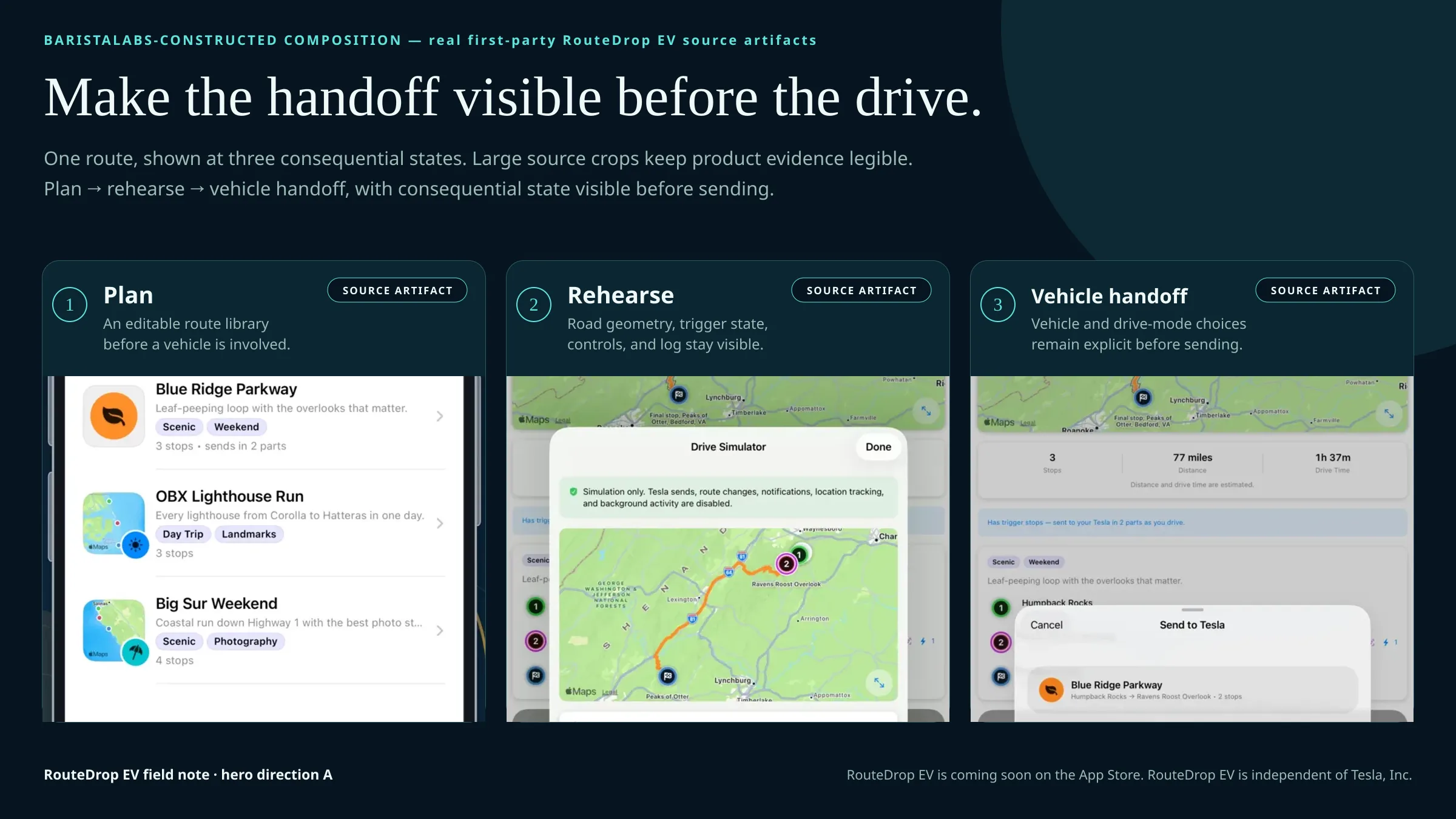


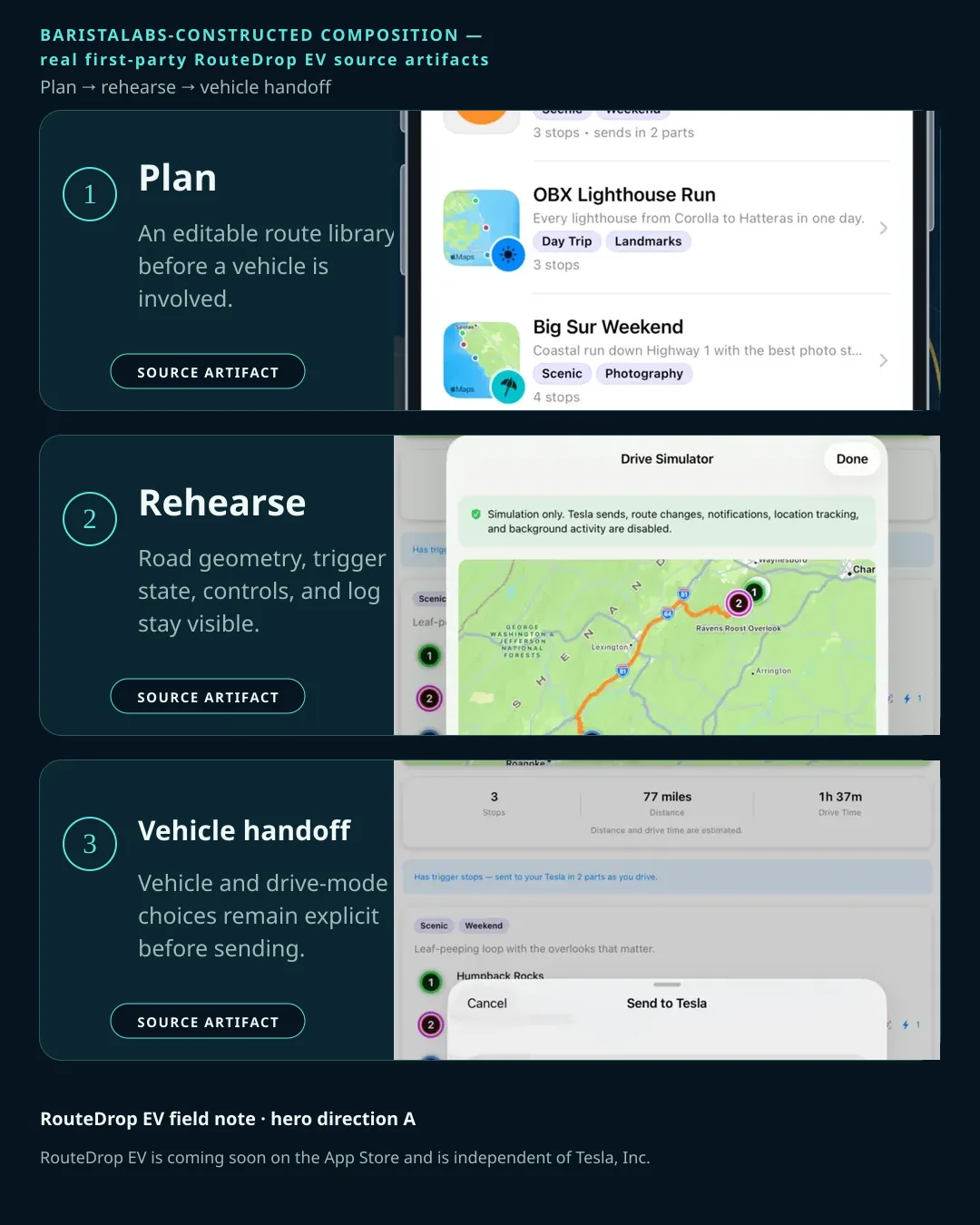
A multi-stop drive gets complicated while the car is still parked. One stop is only a waypoint. Another has photos and a note to show on arrival. A third should play an announcement as the car approaches. The route may need to continue in another part, reach a specific vehicle, or stay private until a group deliberately chooses to share it.
That is the useful moment to see the complexity. Changes are still cheap. The driver can inspect the route, reorder an action, rehearse a trigger, or decide that a live connection is unnecessary.
RouteDrop EV is an independent Barista Labs product built around that moment. It is coming soon on the App Store. Its product pages describe a route planner for iPhone and iPad that can shape, save, rehearse, share, and send a multi-stop drive to a compatible Tesla. The design principle running through those features is straightforward: keep the deep work available before the drive, then show the state of every consequential handoff.
The route starts as an editable local plan
A RouteDrop EV route is more than a row of destinations. The saved library can hold routes, Trips, notes, photos, icons, colors, labels, and embedded media. Those materials work from the device and privately sync through iCloud. Ordinary planning does not require a RouteDrop account, and Tesla sign-in remains optional until a driver asks for live vehicle features.
That local-first boundary matters because route planning is iterative. Stops get disabled without being deleted. Their order changes. Several independent routes can sit inside a Trip without being flattened into one long path. A driver can import a route, save an editable copy of a curated drive, or build one from a blank map. The plan remains something the driver can inspect and revise rather than a temporary set of instructions that disappears into the next system.
BaristaLabs' interpretation is that local-first storage does more than answer a privacy question. It gives the planning surface room to be detailed without making every edit a server action. The route can become specific before it asks a vehicle, a live group, or a generated-content service to participate.
Ordered actions make the stop behavior inspectable
That specificity continues inside each stop. RouteDrop EV can attach an ordered sequence of enabled actions to a trigger radius. Depending on what the driver chooses, a stop can present notes and photos, play local speech or audio, queue media, post a notification, wait for a tap to open a Shortcut, or hand off to another route.
The important product state is the order. The interface lets the driver reorder, enable, disable, or remove actions. Tap-required actions pause visibly instead of being skipped. Imported actions with side effects arrive paused for review. RouteDrop EV's product documentation also separates safe replayable content from actions that should not run a second time, such as an external app launch or route change.
That makes the stop sequence understandable before location turns it into behavior. The driver does not have to infer what a trigger will do from a collection of settings. The sequence is an authored part of the route.
Rehearsal follows the road without performing the risky effects
The simulator carries that sequence onto routed road geometry. It starts before the first trigger, advances through the actual trigger circles in route order, and keeps a rehearsal log. The driver can play, pause, scrub, move around triggers, and change the simulated speed.
The boundary around the rehearsal is just as important as the controls. The simulator can preview local speech, embedded generated audio, and arrival cards. It logs Tesla sends, notifications, external apps, media controls, Shortcuts, route switches, history, and background work instead of performing them.
This is not evidence that a physical drive will be safe, reliable, or free of surprises. RouteDrop EV's own help material tells the user to rehearse trigger circles and ordered actions before driving; it does not publish a performance result. The value of the simulator is narrower and more concrete: it gives the driver a place to inspect route order, trigger behavior, and intended side effects before those choices meet a moving vehicle.
The vehicle handoff reports what it knows
When a driver chooses to send the route, RouteDrop EV does not compress the handoff into a hopeful spinner. The documented flow exposes vehicle selection, connectivity, virtual-key pairing when required, command compatibility, route preparation, progress, and Tesla confirmation. It also shows duplicate-send safeguards, cooldown, and fallback states when delivery is uncertain.
The help flow begins with the state the product can verify: wake the vehicle, sign in on Tesla's page, choose the exact car, pair when asked, and confirm the selected send mode and route part while safely parked. Drive Mode, Round-Trip, and Just Send make different promises, so the choice appears before the command. If the route exceeds the vehicle's limit, RouteDrop EV organizes it into parts instead of asking the driver to rebuild a series of disconnected sends.
This is where the principle becomes most visible. An uncertain vehicle response should remain uncertain in the interface. Confirmation belongs to Tesla; preparation and delivery state belong in the handoff the driver can see.
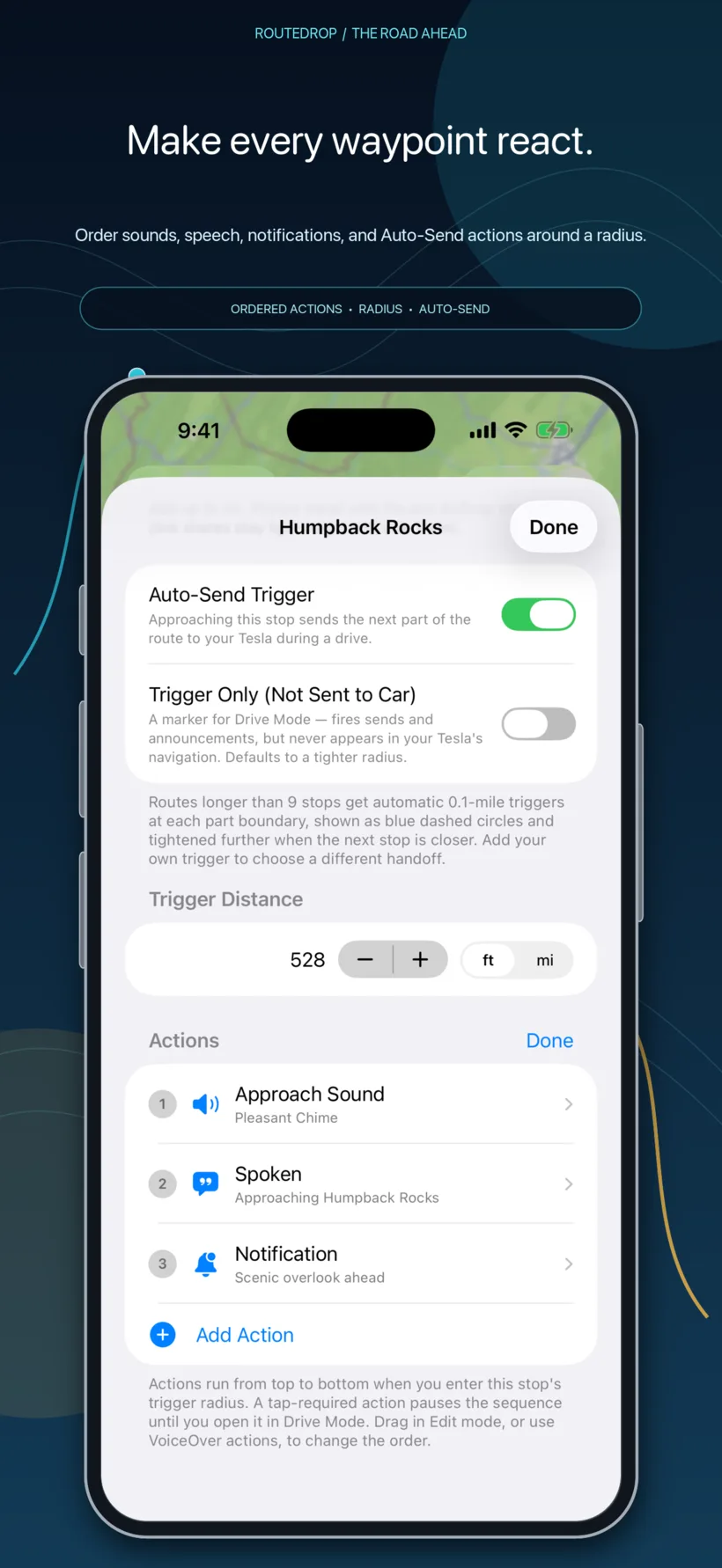
Source fact: The stop radius and action order are editable before the drive.
BaristaLabs interpretation: Consequential behavior becomes inspectable as a sequence, not a hidden setting.
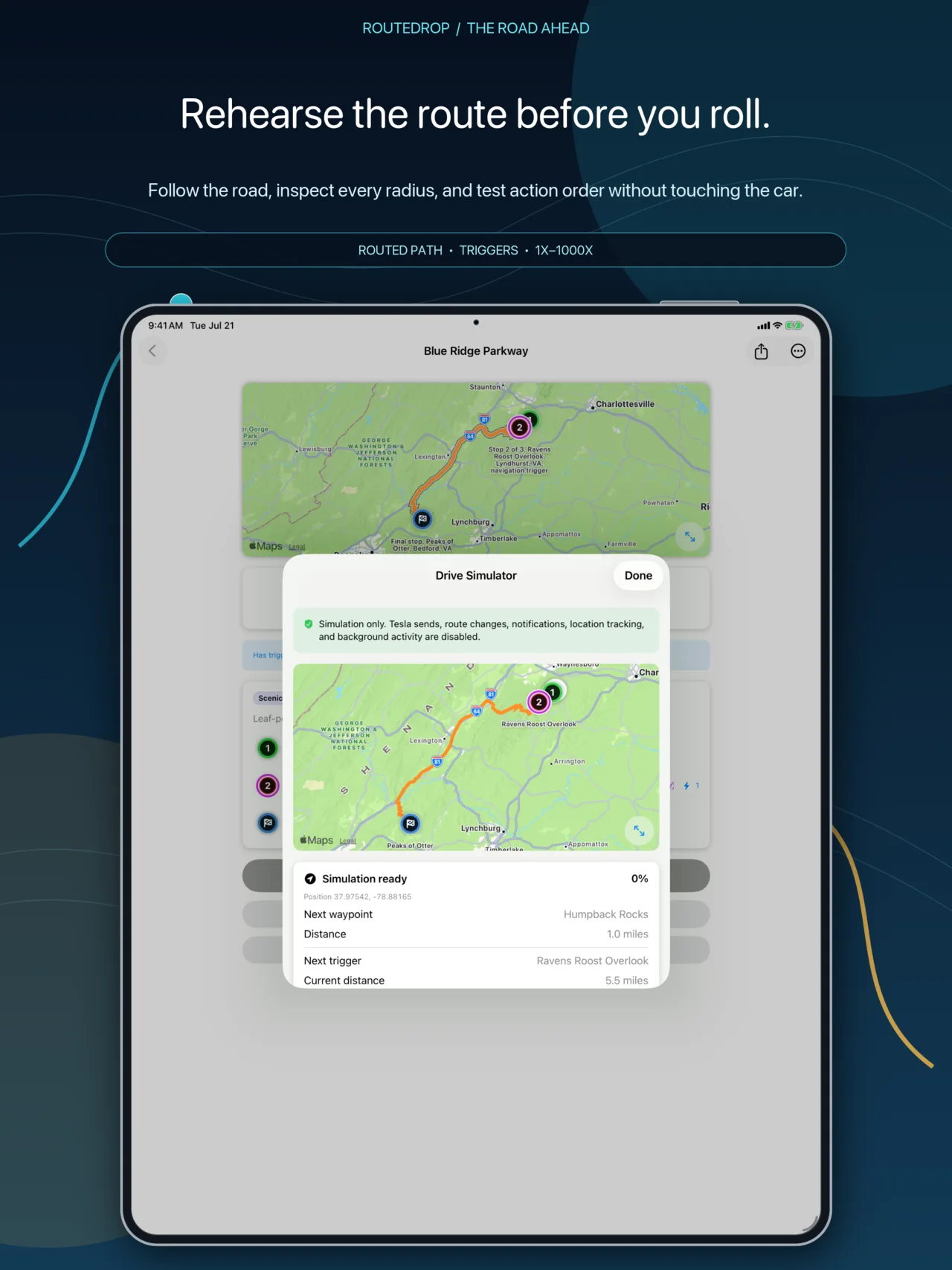
Source fact: The simulator follows routed geometry and exposes rehearsal state.
BaristaLabs interpretation: Rehearsal is an inspection surface, not evidence of physical-drive safety or reliability.
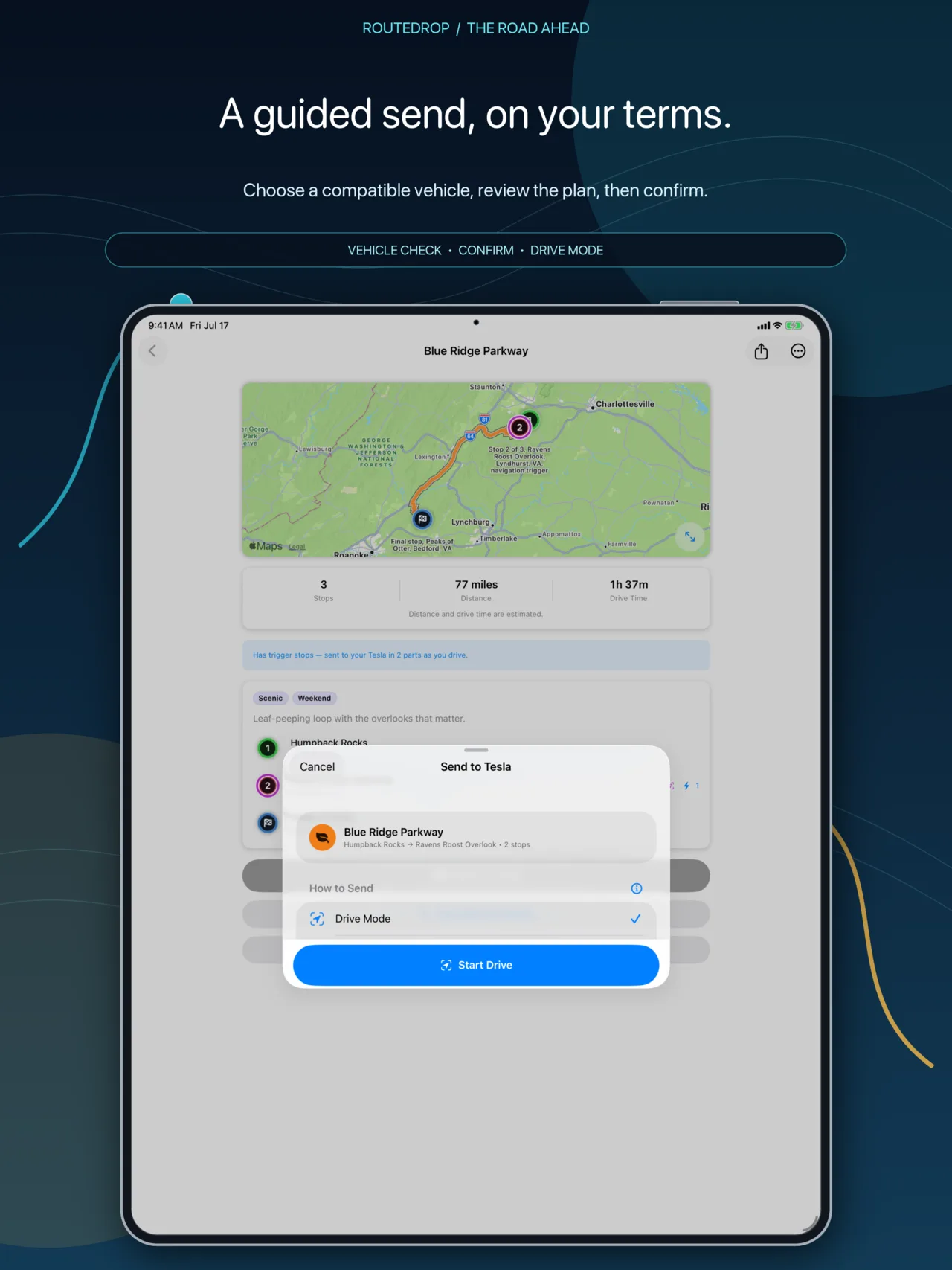
Source fact: Vehicle and send-mode choices stay visible before the command.
BaristaLabs interpretation: Preparation and uncertainty should remain visible; confirmation belongs to Tesla.
Live presence gets a separate precision decision
The same approach shapes RouteDrop EV's optional social features. Route Radar uses a coarse nearby area and direction of travel rather than publishing an exact trail. Convoys are invited rooms joined by code. They require separate room-specific consent before relaying precise location to that group, and precise positions are not stored as location history. Closing or leaving the room stops that sharing.
Generated stop drafts have another explicit boundary. When a driver asks Grok to draft context for a stop, the saved draft remains editable and its supporting source links remain visible. The product documentation describes generated audio with saved-text fallback and labels Live Drive commentary as entertainment rather than navigation or safety advice.
These features use different data and outside services, so they should not inherit permission merely because a route exists. Coarse presence, invited precise location, and generated content each ask for their own action. That separation is a product-source fact; our broader interpretation is that optional intelligence is easier to trust when its precision and fallback are visible at the point of use.
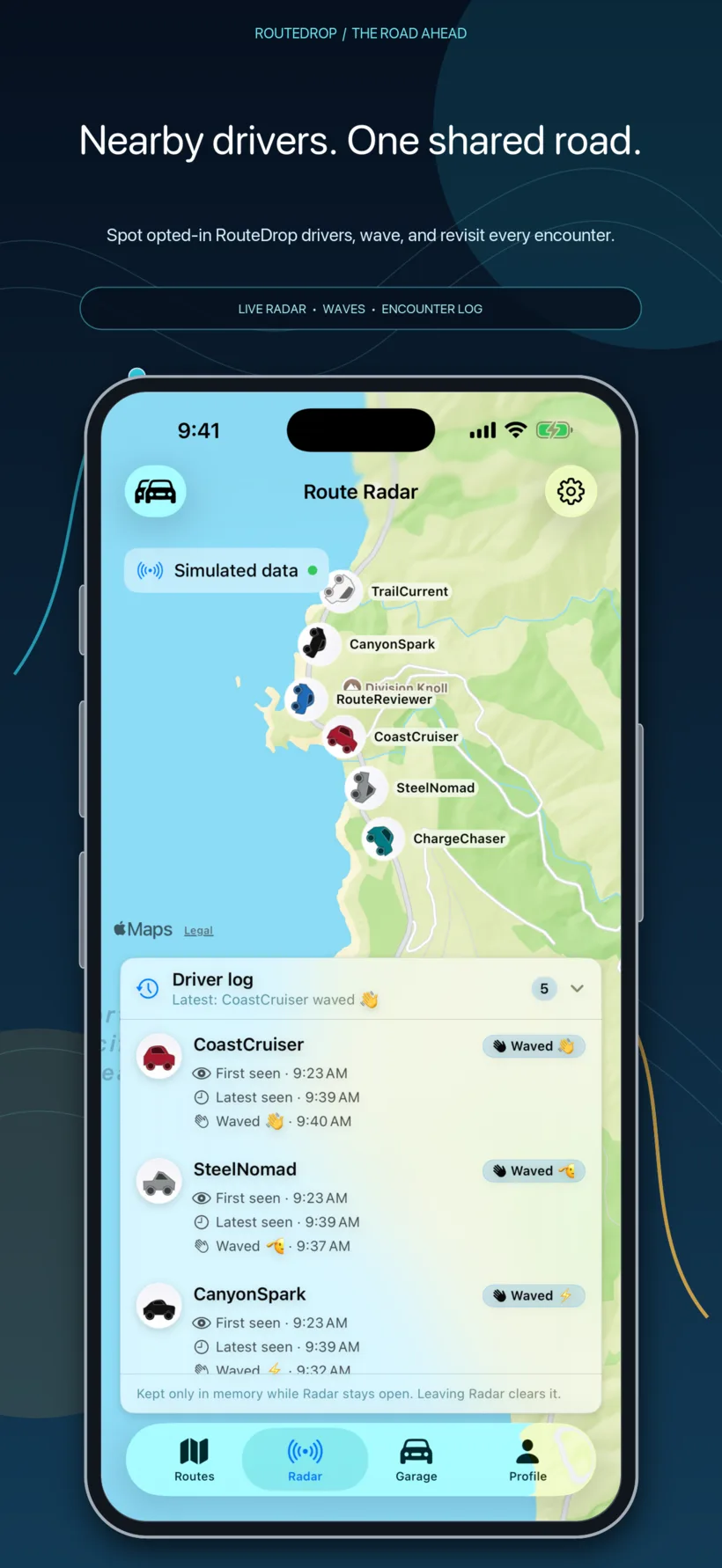
Source fact: Radar presents nearby coarse presence and direction rather than publishing an exact trail.
BaristaLabs interpretation: Precision should be a separate product decision, not a default inherited from route planning.
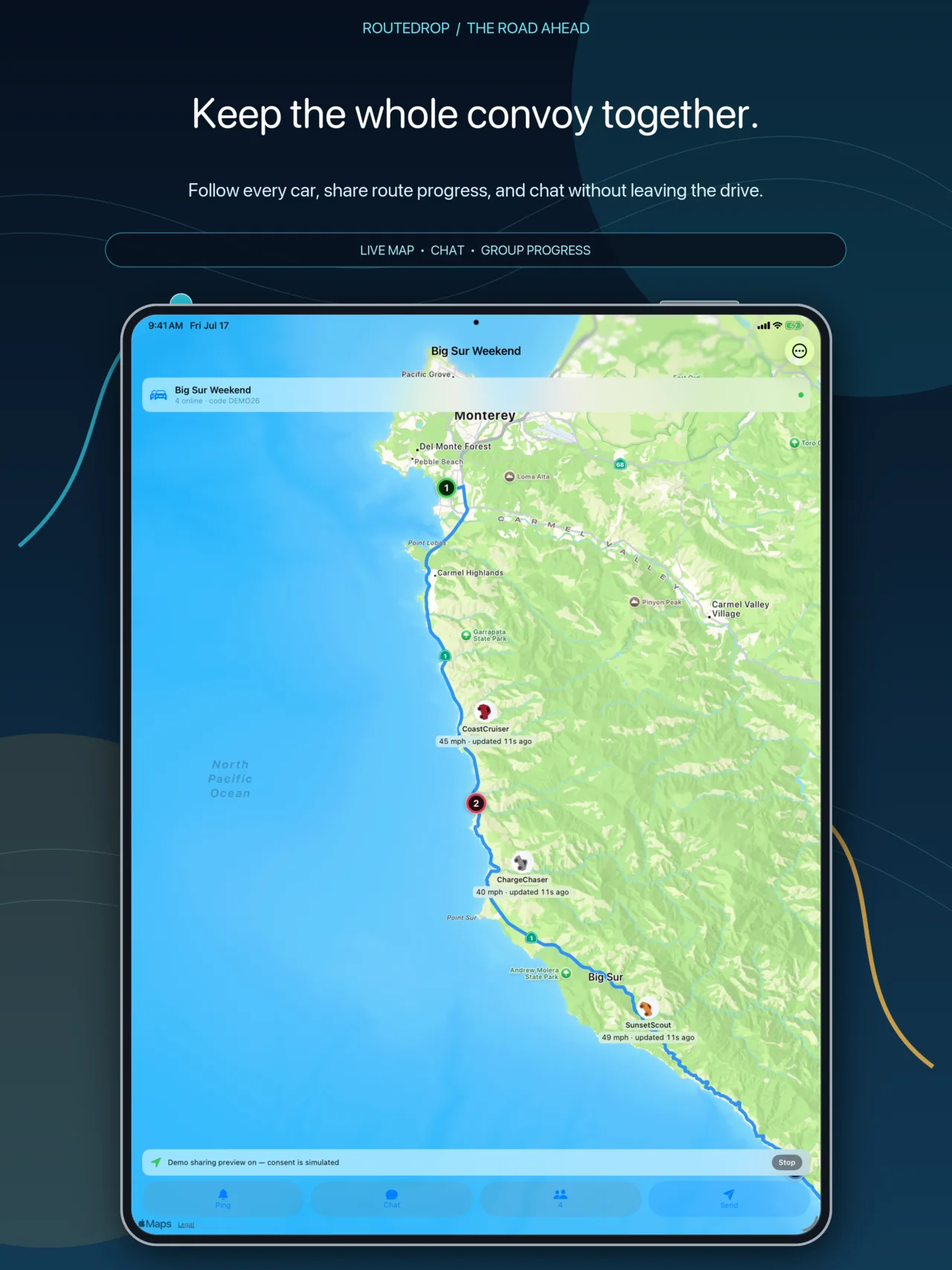
Source fact: A joined Convoy uses its own room and consent boundary for precise group presence.
BaristaLabs interpretation: Optional live features are clearer when their data boundary is visible at the moment of use.
RouteDrop EV is coming soon on the App Store and is an independent Barista Labs product, not affiliated with or endorsed by Tesla, Inc.
A product note, not a performance claim
RouteDrop EV does not provide customer results, adoption numbers, time-saved measurements, or a release date in the reviewed sources. This field note should not imply any of them. What the first-party material does show is the product judgment BaristaLabs wants to make visible: preserve a deep, editable planning surface; rehearse ordered behavior; expose vehicle state; and make live-data precision a deliberate choice.
If you are evaluating how BaristaLabs scopes a first release, read the RouteDrop EV product-engineering proof. It separates the build decisions from any customer or performance claim.
App Store availability is coming soon. Until then, you can Preview RouteDrop EV or see the products BaristaLabs is building.
Sources
First-party RouteDrop EV sources reviewed on August 2, 2026:
Product preview
See the RouteDrop EV product surface
Preview the first-party RouteDrop EV product site while App Store availability is still coming soon.
Practical AI Workflow Notes
Want more practical AI operations ideas?
Get short notes on applying AI inside real small-business workflows — from document handling and customer follow-up to internal reporting, compliance, and automation guardrails.