

The next batch of BaristaLabs posts started as a spreadsheet, not a headline list.
One column showed the current archive. Out of 418 posts, 278 sat in Industry Insights. Small Business AI had 73. AI Development had 44. Machine Learning had 9. Technical Tutorials had 8. Announcements had 6.
That shape made sense for a site watching a noisy market. It also showed the next editorial job.
Readers do not need BaristaLabs to react to every model release, benchmark, ad campaign, or agent demo. They need a library that helps them decide what to do with one workflow, one queue, one source packet, one review step, or one rollback path.
The next batch starts there.
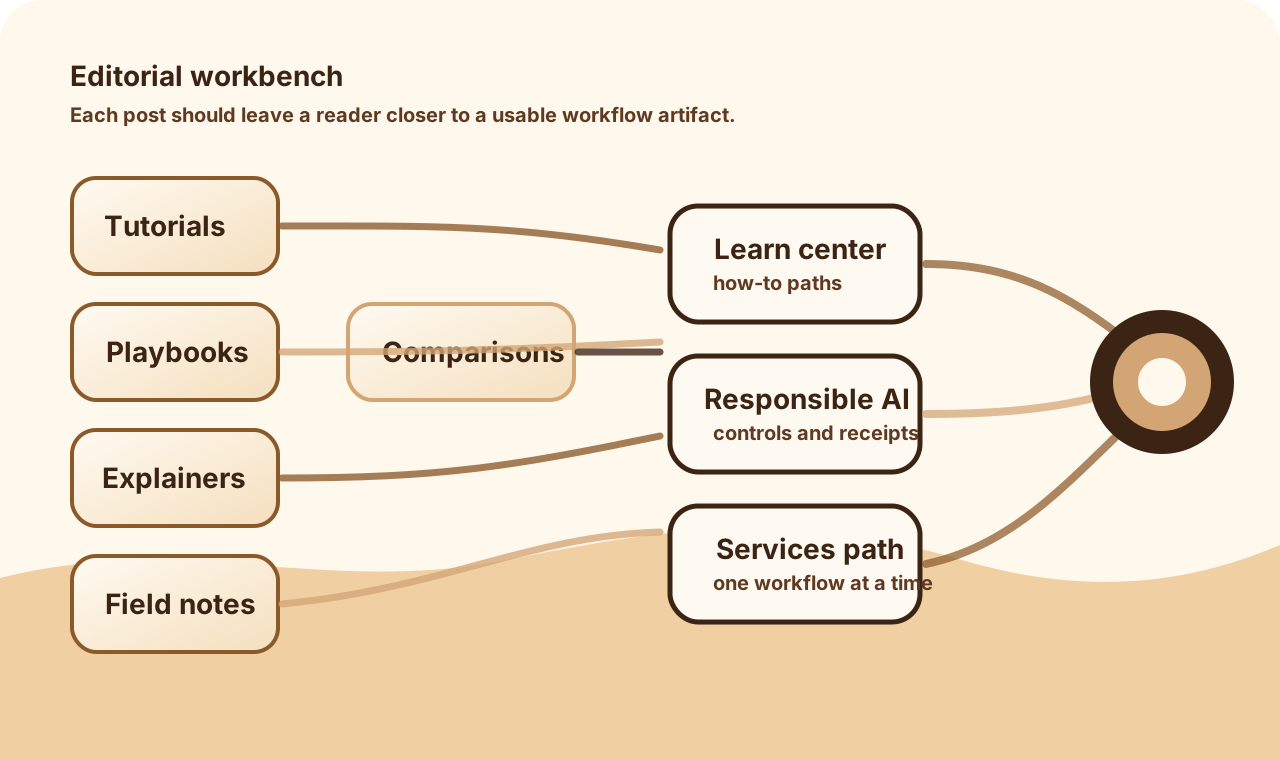
The category mix is becoming a product decision
We are not abandoning market coverage. The AI market still sends useful signals: which permissions vendors want, which controls are missing, which demos create new pressure on small teams.
But a recap should not be the default endpoint.
More of the next posts will land as technical tutorials, small business AI playbooks, machine learning explainers, implementation notes, and compact announcements like this one.
The difference is simple. A market recap tells a reader what happened. A resource-library post helps the reader carry the signal into work.
The earlier promise now has an operating rhythm
In June, we wrote that BaristaLabs was turning AI news into workflow artifacts: receipts, approval queues, launch packets, security worksheets, review lanes, and rollback paths.
This follow-up is less about philosophy and more about the publishing queue.
When a story comes in, the first question is no longer "Should we cover it?" The better question is "Which artifact would make this useful after the tab closes?"
A security story may become a worksheet. A model-evaluation issue may become an approval-queue explainer. A vendor launch may become a comparison. A messy field observation may become a short note that helps an owner name the next decision.
If none of those paths fit, the story may only need a note in the watchlist.
Five article types will do most of the work
The batch now has five lanes.
Tutorials show how to write or inspect an artifact: a rollback lane, approval rule, receipt field, shadow-week board, or source packet.
Playbooks help owners respond to a live management moment, such as pausing a pilot after the first risky miss.
Explainers translate model or workflow concepts into operational judgment. False positives and false negatives matter because one creates outside exposure while the other creates review drag.
Field notes make BaristaLabs' own working choices visible, including how we decide which AI stories deserve deeper treatment.
Comparisons help a buyer or operator distinguish tools only when the difference changes a workflow decision.
That mix should make the archive easier to use. A reader should be able to move from a timely post into the Learn center, then into the Responsible AI hub, then into one concrete artifact they can discuss with a teammate.
What readers should expect next
Expect fewer posts whose only job is to say that AI changed again.
Expect more posts that end with something inspectable: a queue rule, a review packet, a source boundary, a worksheet, a restart condition, a rollback owner, or a service path for one recurring workflow.
Expect category pages to become more useful as paths, not just labels. Technical tutorials should hold implementation artifacts. Machine learning should explain model behavior through queue decisions. Small Business AI should help owners choose the next safe week of work.
The Announcements lane will stay small. When we use it, the point should be reader utility: what changed in how BaristaLabs is building the library, and what a returning reader can expect from it.
Browse the workflow library
If you are trying to turn AI interest into a practical next step, start with the Learn center or the Responsible AI hub.
Those pages are where the batch should keep pointing: toward artifacts a team can inspect before AI gets more permission.
And if one workflow already feels close enough to test, BaristaLabs can help map the source packet, review boundary, receipt, and launch decision through process automation. The blog should make that conversation sharper, not louder.
Browse the workflow library
Turn one AI question into a usable workflow artifact
BaristaLabs helps small teams turn one AI opportunity into a source packet, review boundary, receipt, or launch decision before automation expands.
Best fit when AI news keeps creating interest, but the team still needs one practical workflow decision.
Turn this idea into a pilot
Which workflow should go first?
Use the readiness check to compare impact, effort, risk, owner, and next step before requesting a review.
- 3-5 minutes
- Deterministic score
- No sensitive data
Practical AI Workflow Notes
Want more practical AI operations ideas?
Get short notes on applying AI inside real small-business workflows — from document handling and customer follow-up to internal reporting, compliance, and automation guardrails.