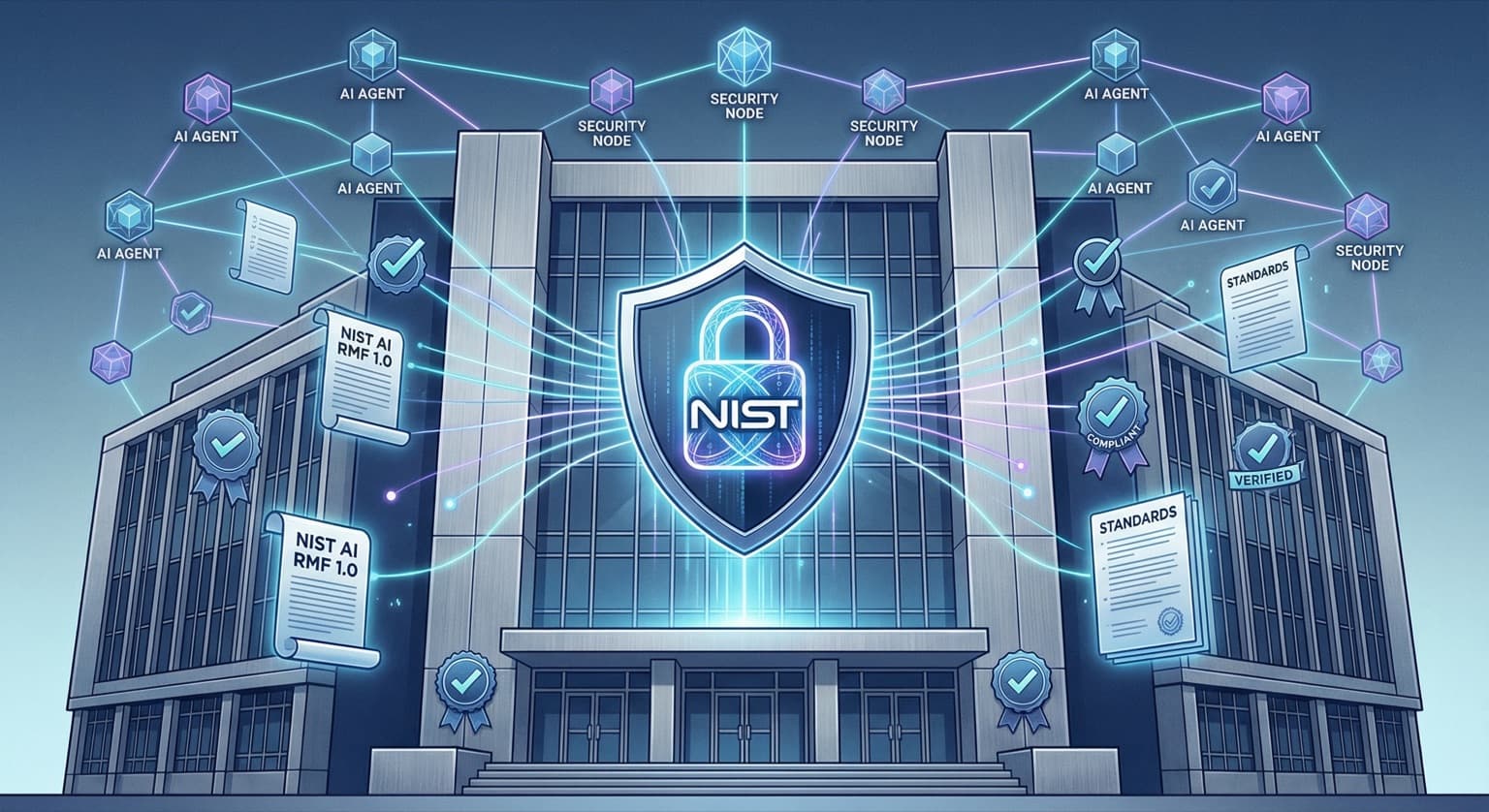

The National Institute of Standards and Technology announced Tuesday the launch of its AI Agent Standards Initiative, a new program designed to create common standards for security, identity, and interoperability across autonomous AI agents. The initiative is led by NIST's Center for AI Standards and Innovation (CAISI) in coordination with the Information Technology Laboratory and the National Science Foundation.
This is not theoretical policy work. AI agents that can write code, manage calendars, handle email, and make purchases are already in production. NIST explicitly acknowledges this reality: agents "can now work autonomously for hours, write and debug code, manage emails and calendars, and shop for goods." The standards initiative exists because the technology has outpaced the rules -- and without common guardrails, the entire agentic AI ecosystem risks fragmentation.
For businesses already deploying AI agents or planning to, this is the most important AI governance development of 2026 so far.
The Three Pillars of the Initiative
NIST has organized its agent standards work around three strategic pillars:
1. Industry-Led Agent Standards
NIST will facilitate -- not dictate -- standards development. The agency plans to host technical convenings, conduct gap analyses, and produce voluntary guidelines that inform how the industry standardizes agent behavior. NIST is also positioning the US to lead international standards bodies on AI agent protocols, ensuring that whatever rules emerge work globally rather than creating competing regional frameworks.
The voluntary nature is key. These are not regulations with enforcement teeth -- at least not yet. They are guidelines designed to give businesses a clear target to build toward. Companies that align early will have a competitive advantage when voluntary standards inevitably harden into procurement requirements and compliance expectations.
2. Open Source Protocol Development
The second pillar focuses on interoperability. Right now, every AI agent platform -- whether it is OpenAI's Codex, xAI's multi-agent Grok architecture, or the growing ecosystem of autonomous coding agents -- speaks its own language. Agents built on one platform cannot easily communicate with agents on another.
NIST wants to change that by fostering community-led open source protocols for agent communication. The NSF is backing this through its Pathways to Enable Secure Open-Source Ecosystems program. If successful, this would let an AI agent managing your email on one platform hand off a task to an AI agent handling your CRM on a different platform -- seamlessly and securely.
For small and mid-size businesses, open protocols would be transformative. Instead of being locked into a single vendor's agent ecosystem, you could mix and match agents from different providers based on which ones actually perform best for each task.
3. AI Agent Security and Identity Research
This is the pillar that matters most right now. When an AI agent acts on your behalf -- sending emails, making purchases, accessing internal systems -- who authorized it? How does the receiving system verify that the agent is legitimate? What happens when an agent's permissions need to change or be revoked?
NIST is conducting fundamental research into agent authentication and identity infrastructure. The agency has already published a concept paper on AI agent identity and authorization through the National Cybersecurity Center of Excellence (NCCoE), with public comments due April 2.
This work matters because the security model for AI agents is genuinely unsolved. Traditional identity and access management systems were designed for humans and software applications with predictable behavior. Autonomous agents that make context-dependent decisions in real time break those assumptions. NIST is trying to build the security foundation before a major breach forces the industry to retrofit one.
Why This Matters for Your Business Right Now
You do not need to be deploying cutting-edge AI agents to care about this. Here is why:
Enterprise procurement will follow these standards. Large companies and government agencies will adopt NIST guidelines as baseline requirements for AI vendors. If your business sells AI-powered services or integrates with enterprise customers, aligning with these standards early will be a differentiator. Ignoring them means getting locked out of contracts down the road.
Your AI tools will change. The platforms you already use -- Gemini in Google Workspace, Microsoft Copilot, ChatGPT -- are all adding agentic capabilities. The standards NIST develops will influence how those features work, what permissions they require, and what audit trails they generate. Understanding the direction now helps you prepare your IT policies before the features land.
Insurance and liability frameworks will reference them. As AI agents take actions with real-world consequences -- purchasing decisions, financial transactions, communications sent on behalf of employees -- the question of liability gets complicated fast. NIST standards will become the benchmark that insurance providers, auditors, and legal teams reference when assessing whether your AI deployment was "reasonable."
How to Get Involved
NIST is actively soliciting input from businesses of all sizes through multiple channels:
-
AI Agent Security RFI -- Responses due March 9, 2026. This is your chance to tell NIST what security challenges you are encountering with AI agents in practice. (Respond here)
-
Agent Identity and Authorization Concept Paper -- Comments due April 2, 2026. Review NIST's proposed framework for how agents should authenticate and receive permissions.
-
Listening Sessions -- Starting in April, CAISI will host virtual workshops focused on sector-specific barriers to AI adoption in healthcare, finance, and education. These sessions directly inform which concrete projects NIST prioritizes next.
Small businesses rarely participate in federal standards processes, which means the resulting guidelines tend to reflect the priorities of large enterprises. If you want standards that work for companies your size, this is the moment to weigh in.
The Bottom Line
NIST's AI Agent Standards Initiative is the clearest signal yet that agentic AI is moving from experimental to institutional. The agency is not trying to slow down agent development -- it is trying to build the trust infrastructure that lets agents scale.
For businesses already invested in AI workflows, the practical move is straightforward: follow the initiative, respond to the RFIs, and start documenting how your AI agents authenticate, what permissions they hold, and what actions they take. The companies that build these practices now will adapt smoothly when standards solidify. The ones that wait will scramble.
Need help building secure, standards-aligned AI agent workflows for your business? Contact BaristaLabs -- we help small and mid-size businesses deploy AI agents the right way from day one.
AI Pilot Readiness Checklist
Turn the idea into a pilot you can defend.
AI agent articles are easy to bookmark and hard to operationalize. Use the readiness questions as a shared way to decide whether a workflow is specific enough, safe enough, and measurable enough to pilot. If they surface a strong candidate, BaristaLabs can review it with you and help shape a first version that fits your systems, approval process, and risk tolerance.
Please do not submit PHI, customer records, credentials, or confidential workflow exports.
Practical AI Workflow Notes
Want more practical AI operations ideas?
Get short notes on applying AI inside real small-business workflows — from document handling and customer follow-up to internal reporting, compliance, and automation guardrails.