
For over a decade, SaaStr has been the north star for the software industry. It is the community where founders learned to scale recurring revenue, optimize churn, and build the "Software as a Service" (SaaS) empires that dominate our workflows today.
But this morning, the industry woke up to a new reality. In a move that signals the end of an era, SaaStr has officially rebranded to "SaaStr AI".
The headline from The New York Times says it all: "Software? No Way. We’re an A.I. Company Now!"
This isn't just a marketing pivot. It is an acknowledgment that the fundamental value proposition of software has changed. The era of selling "tools" for humans to use is over. The era of selling "outcomes" delivered by AI has begun.
From Tool-Wielders to Outcome-Providers
In the traditional SaaS model, you bought a subscription to a tool—Salesforce, HubSpot, Jira—and then you hired humans to operate that tool. The value was in the capability the software provided, but the labor was still on you.
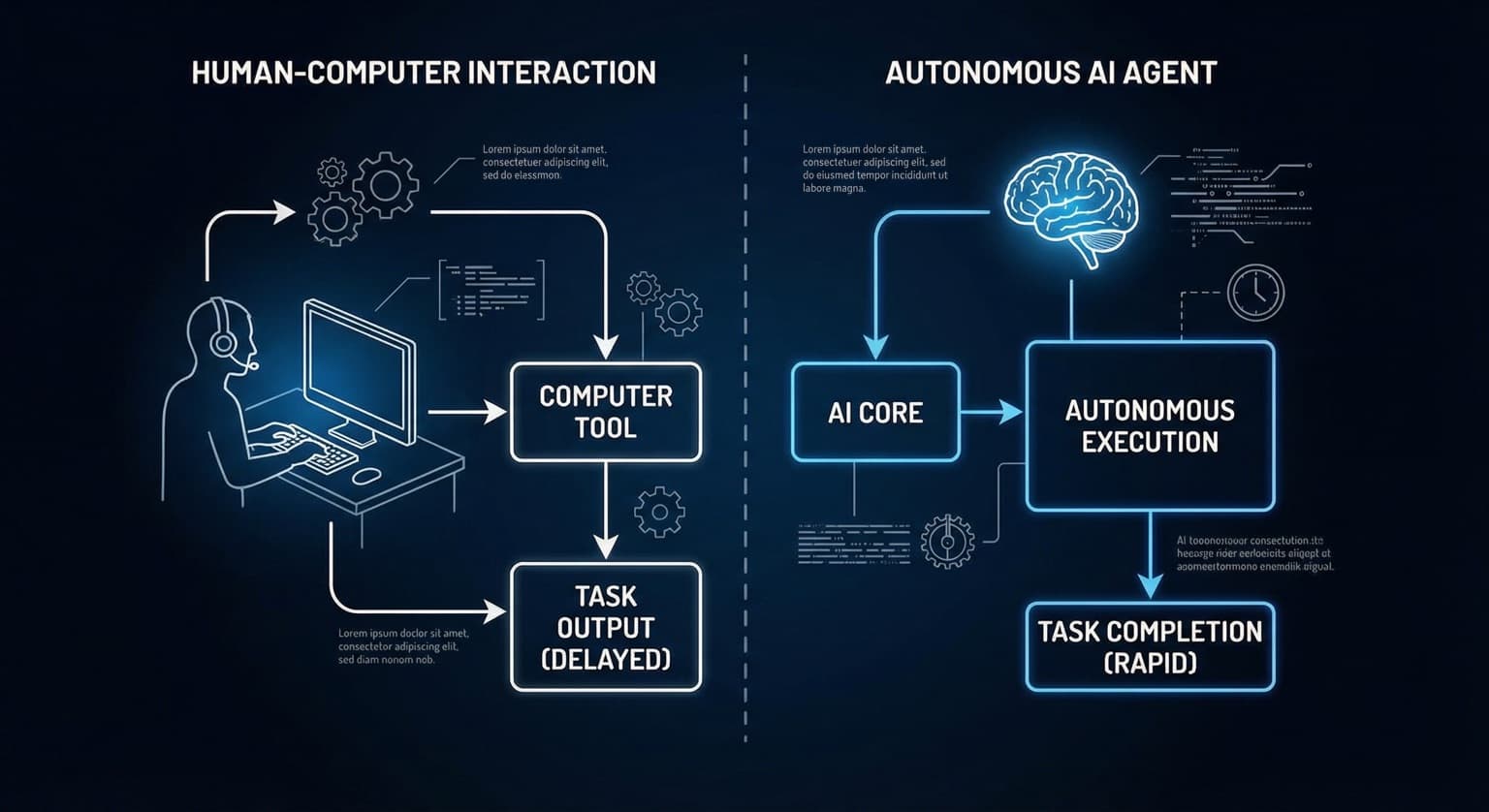
The rebrand to SaaStr AI reflects a shift to what venture capitalists are calling "Service as Software".
In this new model, you don't buy a CRM to manage your leads; you buy an AI agent that finds, qualifies, and closes leads for you. You don't buy project management software to track tasks; you buy an AI project manager that assigns work, follows up on deadlines, and generates reports.
This shift is why we are seeing massive layoffs in professional services firms like Baker McKenzie, while AI-native companies are exploding in valuation. The bottleneck is no longer the software; it's the human bureaucracy surrounding it.
What This Means for Developers
If you are a developer building traditional CRUD (Create, Read, Update, Delete) applications, this is your wake-up call. The market for "digital forms" is collapsing.
To survive in the SaaStr AI era, you need to pivot your engineering mindset from interface-first to agent-first.
1. Stop Building "User" Interfaces
Traditional apps are designed for human eyes and mouse clicks. AI apps are designed for API calls and context windows. Your "users" are increasingly other AI agents. If your application doesn't have a robust, well-documented API that allows an LLM like DeepSeek's 1M context model to navigate it autonomously, you are building a legacy product.
2. Optimize for "Job to be Done"
Don't ask, "What features does the user need?" Ask, "What job is the user trying to accomplish?"
- Old SaaS: A dashboard where a user can manually send an invoice.
- New AI: An agent that detects a completed project, generates the invoice, sends it, chases payment, and reconciles the bank account.
3. Focus on Guardrails, Not Permissions
In a human-centric app, you worry about role-based access control (RBAC) to stop users from seeing data they shouldn't. In an agentic app, you need guardrails to stop agents from hallucinating or taking destructive actions. The security model is fundamentally different.
The "Service as Software" Opportunity
This transition is terrifying for incumbents with millions of lines of legacy code and thousands of UI components. But for small businesses and agile developers, it is a massive opportunity.
You don't need 500 engineers to build the next Salesforce. You just need a small team to build a specialized agent that does one thing better than a human can.
The SaaStr rebrand is a signal. The smart money has already moved. The question is: Are you still building software for 2020, or are you building AI for 2026?
If you are ready to pivot your development strategy and build agentic workflows that deliver real outcomes, we can help.
AI Pilot Readiness Checklist
Turn the idea into a pilot you can defend.
AI agent articles are easy to bookmark and hard to operationalize. Use the readiness questions as a shared way to decide whether a workflow is specific enough, safe enough, and measurable enough to pilot. If they surface a strong candidate, BaristaLabs can review it with you and help shape a first version that fits your systems, approval process, and risk tolerance.
Please do not submit PHI, customer records, credentials, or confidential workflow exports.
Practical AI Workflow Notes
Want more practical AI operations ideas?
Get short notes on applying AI inside real small-business workflows — from document handling and customer follow-up to internal reporting, compliance, and automation guardrails.