
A better AI image editor still needs a preservation test
GPT-Image-2.5 Flare and Sunburst promise tighter edits and better consistency. Before migrating a creative workflow, measure what changed and what should not have changed.

Sean McLellan
Lead Architect & Founder

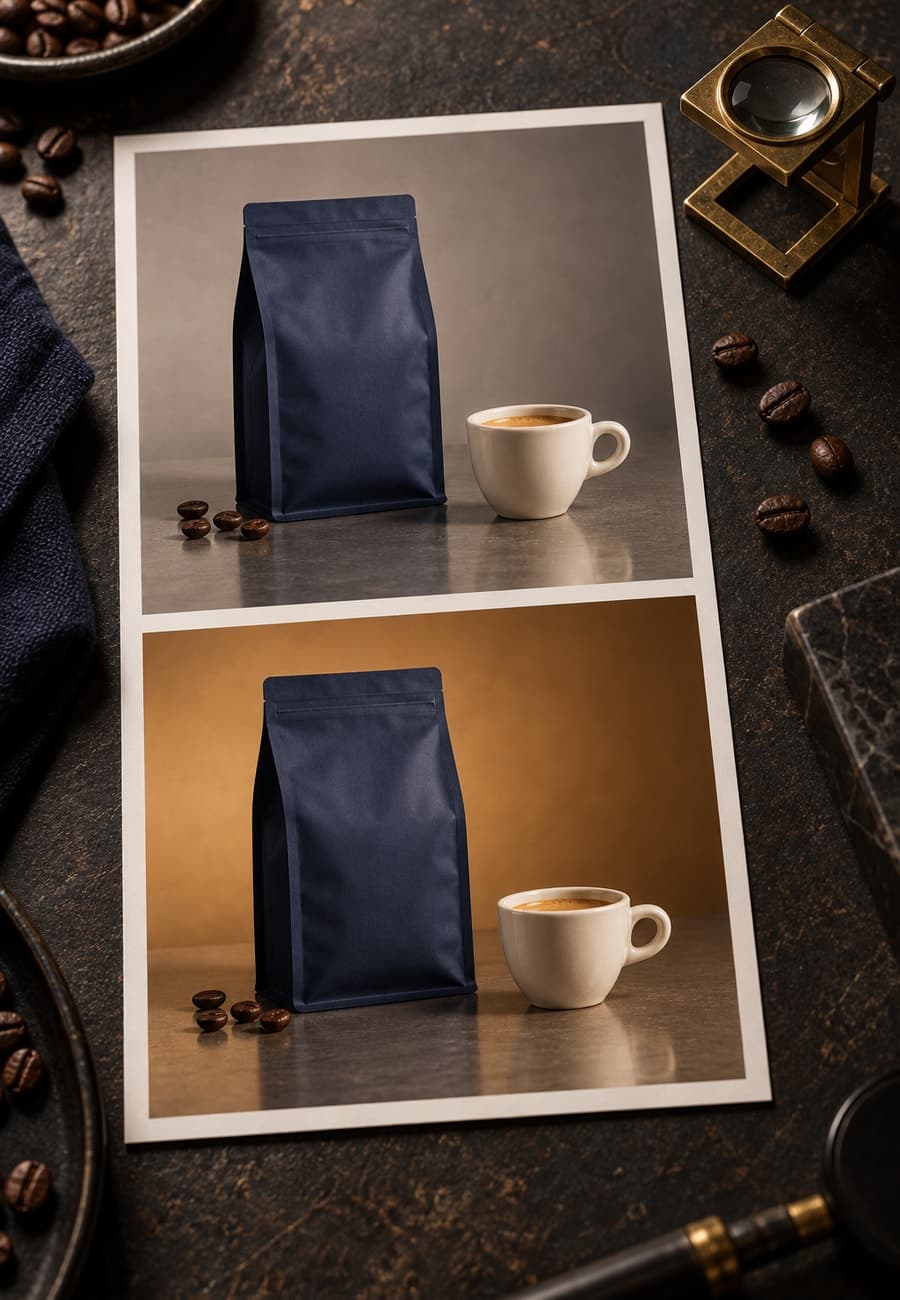
OpenAI released ChatGPT Images 2.5 on September 8, 2026, with two new API models: GPT-Image-2.5 Flare and GPT-Image-2.5 Sunburst. OpenAI says the system preserves reference subjects better, makes more focused edits, and remains more consistent across repeated revisions.
Those claims matter to teams that spend more time repairing AI-generated creative than generating it. They do not settle the migration decision. Before replacing a current model or manual editing step, test whether Images 2.5 changes the requested element while preserving the product, composition, lighting, copy-safe area, and other facts that must remain fixed.
What changed in Images 2.5?
OpenAI says Images 2.5 is available across ChatGPT, ChatGPT Work, and Codex on desktop, mobile, and web. For developers, the company introduced Flare and Sunburst through the API.
The two API models serve different operating needs. OpenAI positions Flare as the default for most applications. The company reports that Images 2.5 reduces image-generation latency by up to 50% compared with Images 2.0. Sunburst takes longer and is positioned for premium creative and editing workflows that benefit from tighter control. These are vendor descriptions, not proof that either model will reduce rework for a particular asset library.
The more important change is the claimed edit behavior. OpenAI says a user can update one element, such as a product, background, or copy, while retaining more of the subject, composition, and brand treatment. It also says earlier changes are more likely to remain consistent through multiple editing turns.
A creative team should translate “more likely” into a testable production question. If the instruction changes a background, how often does the product shape also drift? If a later edit adjusts lighting, does it undo the approved crop or alter packaging details? General image quality cannot answer those questions.
Why is a good-looking edit not enough?
A targeted edit has two outputs: the requested change and every detail that remained unchanged. Review often concentrates on the first because it is easy to describe. The second determines whether the asset is still truthful, reusable, and ready to publish.
Consider a product image where the background must change for a seasonal campaign. The package geometry, label art, cap color, product count, shadow direction, and empty area reserved for copy may all be fixed. An attractive result fails if it quietly changes one of those facts.
The same problem appears in less literal work. A presentation illustration may need a new color treatment without moving the visual hierarchy. A social crop may need more space on one side without inventing details around a real object. A sequence of campaign variants may need to preserve one approved subject across different settings.
OpenAI's announcement says Images 2.5 is better at these tasks. It does not publish a benchmark for your products, approval rules, or distribution formats. BaristaLabs' recommendation is therefore to judge the model on the edits your team repeats and the details your reviewers already protect.
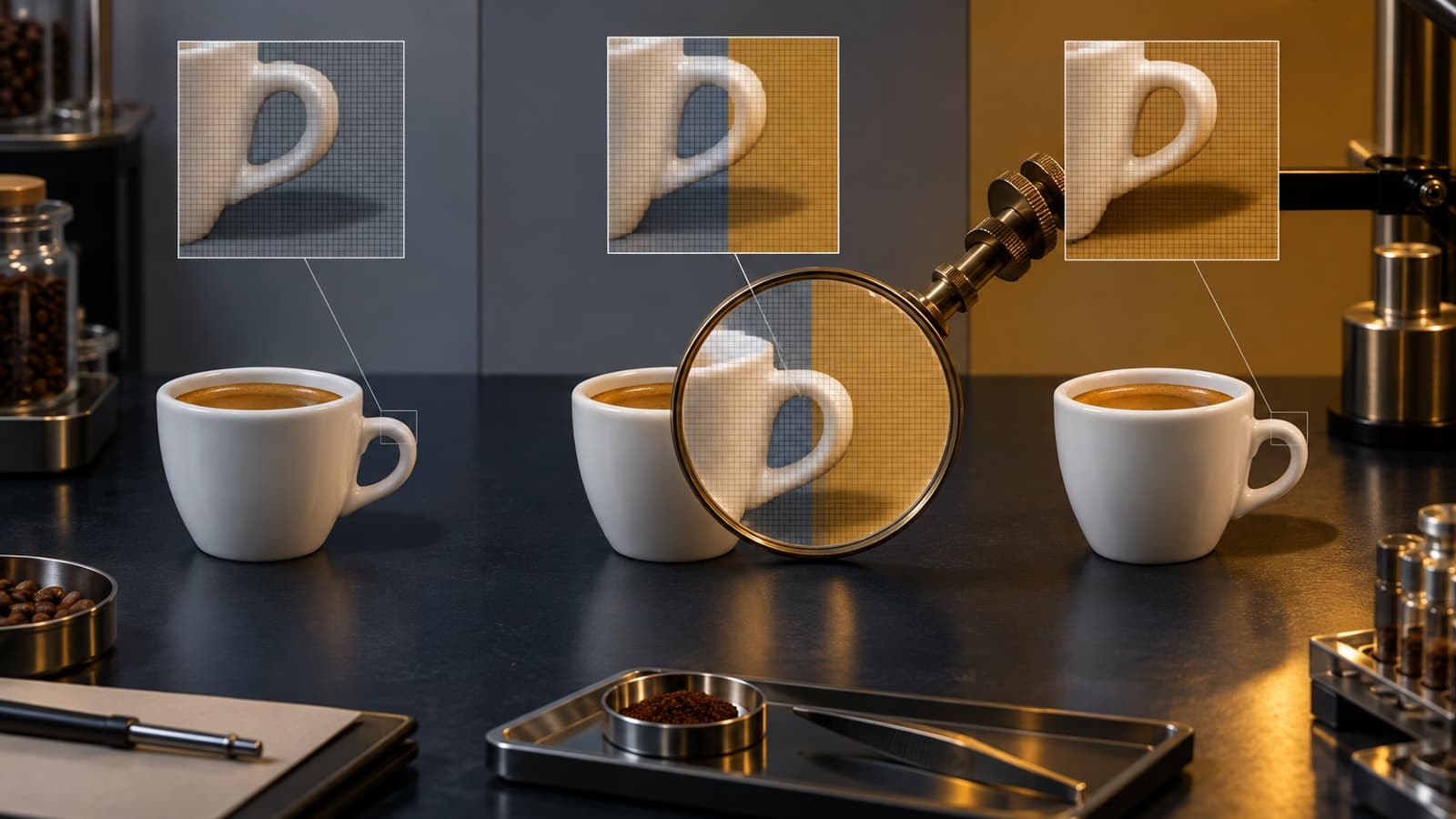
How do you build a preservation test?
Start with a small set of real, approved source assets. Include the conditions that make routine work difficult: reflective packaging, fine edges, shadows, transparent objects, repeated products, small but important details, and layouts with a fixed safe area. Remove confidential material and confirm that the test inputs may be sent to the selected service.
For each source, specify one requested change. Then list the invariants that must survive it. A useful record separates the two:
Scroll sideways to see all 2 columns.
| Test field | Example |
|---|---|
| Requested change | Replace the neutral background with warm amber |
| Product invariants | Keep package shape, label art, cap color, and item count |
| Composition invariants | Keep crop, object position, and copy-safe area |
| Physical invariants | Keep light direction, contact shadow, and reflections coherent |
| Output requirements | Preserve dimensions, file type, transparency, and required metadata |
| Release owner | Named reviewer who can approve campaign use |
Run the same source, instruction, and output requirements through the current workflow, Flare, and Sunburst where access and expected value justify both new models. Keep prompts and settings with the outputs. Do not let a stronger prompt for one candidate turn the comparison into a prompt-writing contest.
Use several runs for the highest-value edit classes. Generative output varies, so one excellent result and one obvious failure reveal little about the rate of acceptable work. The goal is not to crown a universal winner. It is to learn which route produces releasable assets for a defined task.
What should reviewers measure?
Score the requested change and preservation separately. A result can complete the edit but still fail a product invariant. It can preserve the product yet require so much cleanup that the faster generation time has no business value.
For every output, record:
- whether the requested element changed as instructed;
- which protected details changed, disappeared, or appeared without instruction;
- whether edges, shadows, reflections, and repeated objects remain physically coherent;
- whether dimensions, transparency, crop, and copy-safe areas match the destination;
- how many editing turns and human minutes were needed before release; and
- whether the reviewer approved, repaired, regenerated, or rejected the asset.
An overlay or image-difference tool can direct attention to changed regions. It cannot decide whether a changed pixel is acceptable. Small lighting changes may affect a wide area, while a tiny alteration to a product label may be disqualifying. Keep automated comparison as evidence for a human reviewer, not as the release authority.
The review must also include ordinary rights, brand, and truthfulness checks. OpenAI says Images 2.5 continues to use C2PA metadata and invisible watermarking. Those provenance measures can support downstream identification; they do not prove that a product depiction is accurate, that the team has rights to every input, or that an ad claim is permitted.
When should Flare or Sunburst enter production?
Choose by workflow, not by model position. Flare may fit high-volume variants when its outputs clear the preservation threshold and lower latency actually shortens the full review cycle. Sunburst may fit a smaller set of premium edits when additional generation time produces enough releasable work to reduce manual repair.
Promote a route only after it meets a written threshold across representative cases. That threshold might require every product fact to remain correct, no severe brand or rights failure, a minimum first-pass approval rate, and lower median human repair time than the current process. Record the model identifier and test date because model behavior and surrounding safeguards can change.
Keep a fallback after launch. Send unsupported formats, sensitive assets, repeated preservation failures, and ambiguous rights cases to the existing process. Sample approved outputs in production and repeat the test when the model, prompt template, asset pipeline, or destination format changes materially.
OpenAI's system card makes a similar point about the limits of its own safety evaluation: automated labels can contain errors, sample sizes affect precision, and findings apply to a fixed adversarial test set and evaluated configurations. A model evaluation should be read within its scope. Your creative evaluation needs the same discipline.
The migration decision is about rework
Sharper output and faster generation are useful only when the resulting asset survives review. For targeted edits, the most revealing measure is not images per minute. It is releasable images per reviewer hour, with protected product and brand facts still intact.
Images 2.5 gives creative teams a timely reason to rerun that calculation. Treat the launch as a candidate for a bounded comparison, not as permission to replace the current route by default. Define the requested change, name what must remain fixed, and let real review evidence decide where Flare or Sunburst belongs.
BaristaLabs can help review one image-edit workflow from representative source assets through preservation checks and a controlled release decision.
Sources
- OpenAI, “Introducing ChatGPT Images 2.5”, published September 8, 2026.
- OpenAI, “ChatGPT Images 2.5 System Card”, published September 8, 2026.
Creative workflow review
Will a faster image edit reduce rework in your real asset library?
BaristaLabs can help turn one recurring creative task into a bounded model comparison with explicit preservation checks and a human release decision.
Bring a sanitized set of source assets, the edits your team repeats, and the brand or product details that must not move.
Turn this idea into a pilot
Which workflow should go first?
Use the readiness check to compare impact, effort, risk, owner, and next step before requesting a review.
- 3-5 minutes
- Deterministic score
- No sensitive data
Practical AI Workflow Notes
Want more practical AI operations ideas?
Get short notes on applying AI inside real small-business workflows — from document handling and customer follow-up to internal reporting, compliance, and automation guardrails.