Facebook Just Tightened the Rules on AI Slop. SMBs Need to Adjust Fast.
Facebook just made its stance on unoriginal content much clearer. If your business relies on recycled posts, lazy AI visuals, or low-effort remixes, expect less reach — and start fixing it now.

Sean McLellan
Lead Architect & Founder
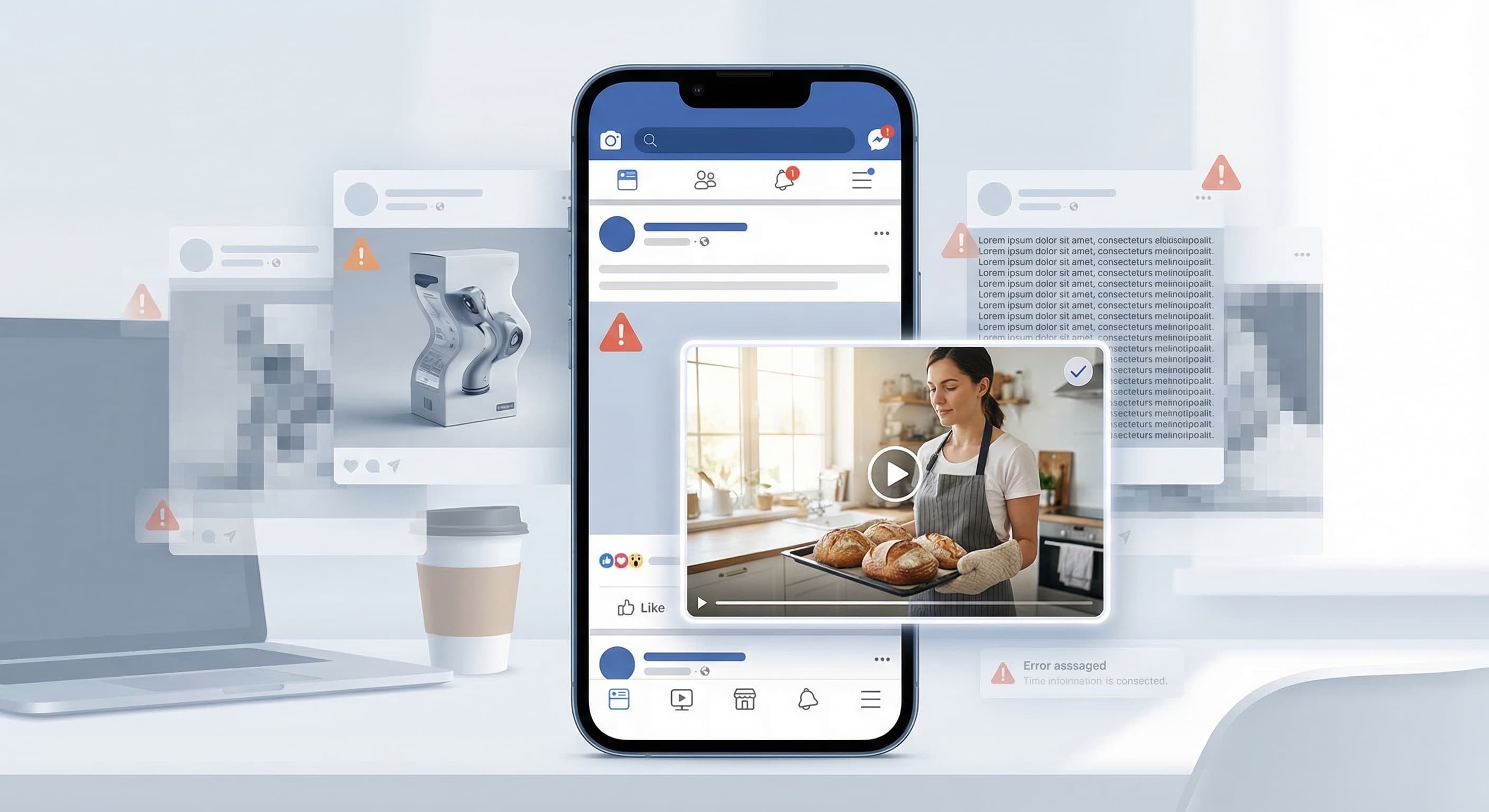
Facebook just said the quiet part out loud: if unoriginal content and AI slop take over the feed, creators stop posting, audiences tune out, and the platform gets worse for everyone.
That matters for small and medium businesses because Meta also made its enforcement standard clearer. If your Facebook strategy depends on reposted clips, generic AI-generated visuals, thin remixes, or old content with a fresh caption slapped on top, you are now on shakier ground.
This is not a niche creator issue. It is a distribution issue. And if Facebook is one of your main marketing channels, you should treat it like one.
What Changed
Meta updated Facebook's content guidelines to better define what counts as original content.
According to the new standard, original content includes:
- Content filmed or produced directly by the creator
- Remixes that add real value
- Reels with overlays, commentary, discussion, analysis, or new information
That is a meaningful shift because Facebook is no longer leaving much room for "close enough." The platform is drawing a harder line between content you made and content you lightly decorated.
Meta also said its earlier crackdown on spammy and unoriginal posts was already working. In the second half of 2025, views of and time spent watching original content on Facebook approximately doubled compared with the same period a year earlier.
Translation: Facebook thinks rewarding original work improves the platform, and it now has enough internal evidence to keep pushing harder.
What Facebook Now Sees as Unoriginal
Meta was unusually direct here too.
Content that will be deemed unoriginal and deprioritized includes:
- Re-uploads of someone else's video or post
- Minor edits to existing content
- Adding borders, captions, or other cosmetic changes without adding substance
- Duplicative content that does not meaningfully change the original
And yes, this is where a lot of business AI content starts to look dangerous.
If you're churning out generic quote cards, faceless B-roll clips with auto-generated captions, or trend-chasing posts assembled from other people's ideas with a thin AI rewrite, Facebook is signaling that this stuff is not going to get the same treatment as original work.
AI itself is not the issue. Low-value output is. If you use AI to help script, brainstorm, edit, or speed up production on content that still reflects your business, your expertise, and your point of view, that is one thing. If you use AI to mass-produce interchangeable feed filler, that is another.
Facebook is telling you it knows the difference.
What This Means for Your SMB Facebook Strategy
The old playbook of "post more" is getting weaker. The new playbook is "post things worth seeing."
For SMBs, that means three practical changes.
1. Originality now affects reach more directly
If your content looks recycled, templated, or lazily repackaged, it is more likely to get buried. Your posting cadence will not save you if the platform reads your content as low-value.
2. Subject-matter expertise is suddenly a bigger advantage
A local business owner explaining a real customer problem on camera is harder to copy than a generic Canva graphic with an AI-written tip. The more your content is rooted in your business, team, process, and perspective, the safer you are.
3. Content theft and impersonation are part of the risk now
Meta also announced easier reporting tools for creators dealing with impersonator reels. From a central dashboard, creators can flag duplicate reel content published by impersonators. Meta says it removed 20 million impersonator accounts in 2025 and saw impersonation reports targeting large creators drop by 33%.
Most SMBs are not "creators" in the influencer sense, but the same problem applies. If your brand videos, founder clips, or product demos start getting copied, Facebook is building more tooling around protection. That is a sign this problem is not small.
What SMBs Should Do Right Now
Do not panic. Do audit.
Here is the move:
- Review your last 30 Facebook posts. Which ones were truly original? Which ones were filler?
- Cut low-effort repurposing. If a post is just a repost, a stitched clip with no insight, or an AI-generated graphic with no clear point of view, stop making more of it.
- Create more first-party content. Film your team. Show your process. Answer real customer questions. Comment on industry changes from your own perspective.
- Add substance when you remix. If you reuse a clip, add analysis, lessons learned, customer context, or a clear opinion. Do not just repackage.
- Protect your best assets. Keep originals organized, monitor for copycats, and use Meta's protection tools if your content starts getting lifted.
- Measure quality, not volume. Watch saves, shares, comments, and qualified traffic — not just how many posts you pushed out.
If your Facebook content could be posted by almost any business in your category, it is probably too generic.
The Bigger Picture
This is not just a Facebook thing.
The same week Meta tightened its definition of originality, YouTube expanded AI deepfake detection for politicians, public figures, and journalists. Different platform, same direction: major networks are moving from "AI is fine" to "AI without trust controls is a problem."
That is the real trend SMBs should be watching.
Platforms still want more content. They just want content that keeps the feed usable. That means original voice, clear ownership, and visible value are becoming ranking factors whether platforms say it that plainly or not.
The Bottom Line
Facebook is raising the cost of lazy content.
For small businesses, that is actually good news — if you act on it. You do not need a huge production budget. You need content that is recognizably yours, useful to your audience, and hard to mistake for AI sludge.
The businesses that win on Facebook next will not be the ones posting the most. They will be the ones posting the most real content.
Turn this idea into a pilot
Which workflow should go first?
Use the readiness check to compare impact, effort, risk, owner, and next step before requesting a review.
- 3-5 minutes
- Deterministic score
- No sensitive data
Practical AI Workflow Notes
Want more practical AI operations ideas?
Get short notes on applying AI inside real small-business workflows — from document handling and customer follow-up to internal reporting, compliance, and automation guardrails.