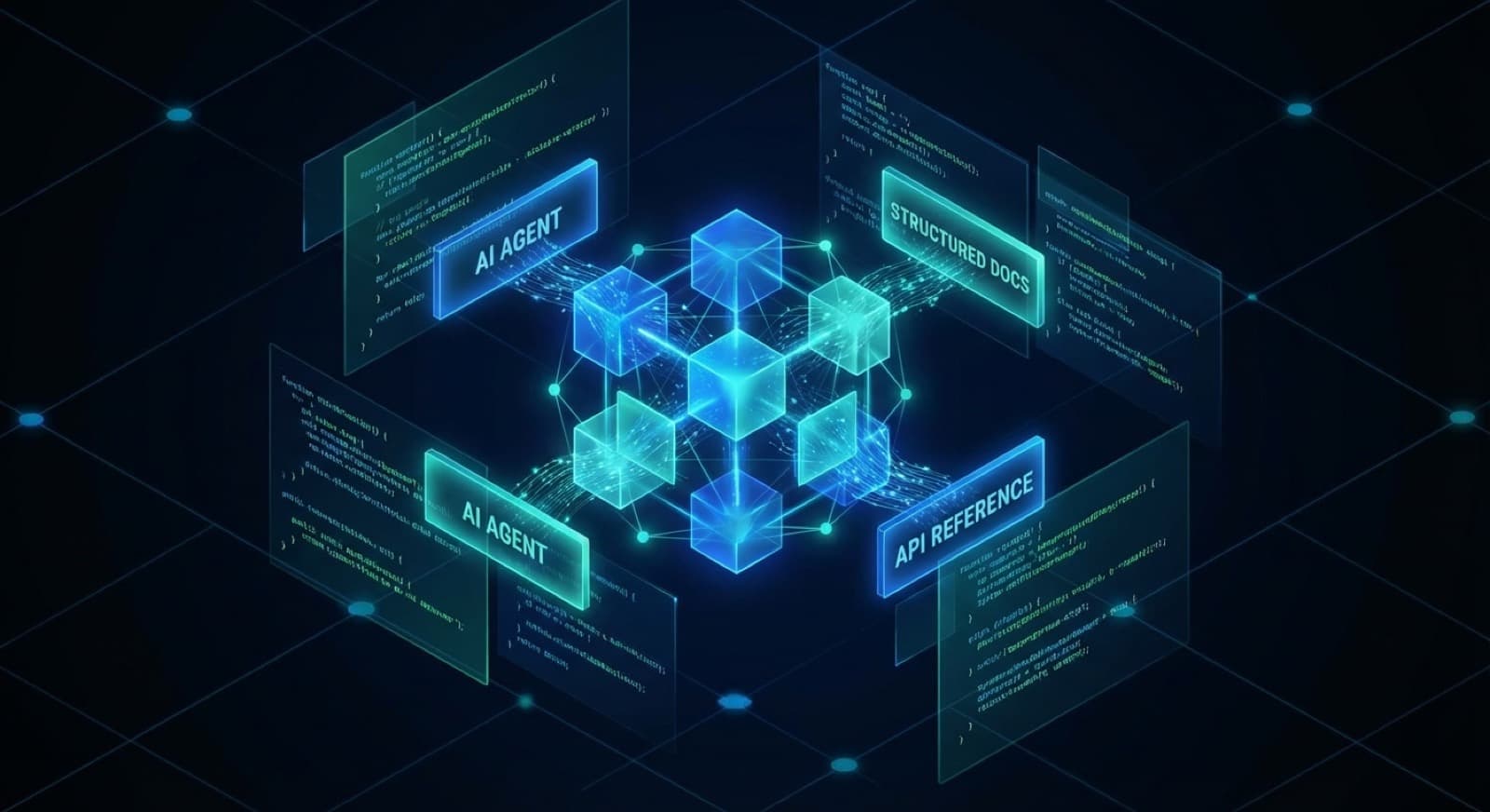

Andrew Ng announced Context Hub, or chub, on X on March 16, 2026, as an open-source answer to one of the dumbest failure modes in AI coding: agents calling APIs that no longer exist. The project ships as @aisuite/chub, installs with npm install -g @aisuite/chub, and gives agents a cleaner path to current documentation than hoping their training data happened to stop at the right week.
That framing is sharper than most "agent infrastructure" launches because it attacks a problem developers already know by smell. The code looks plausible. The method names are almost right. The import path existed six months ago. Then the run blows up because the model reached for stale docs, an old SDK surface, or a blog post that quietly lost the argument to the official API reference.
Ng's prompt for the project was simple: should there be a Stack Overflow for AI coding agents to share learnings? Context Hub is his answer, and the interesting part is that it is not just a doc fetcher.
A command line that treats docs as live infrastructure
The core workflow is small enough to explain without a diagram:
npm install -g @aisuite/chub
chub search stripe
chub get stripe/python --lang py
chub annotate stripe/python
chub feedback stripe/python up
The command set matters because each piece fixes a different break in the coding-agent loop.
chub search is discovery. chub get <id> [--lang py|js] turns a repo of curated API references into fetchable context. chub annotate lets the agent or operator leave local notes that persist across sessions. chub feedback <id> up/down pushes a signal back toward the maintainers of the document itself.
That last part is where this stops looking like another packaging wrapper and starts looking like shared infrastructure. Most agent tools optimize the single session. Context Hub is trying to improve the next session too.
The memory feature is more important than the search box
The flashier headline is "fresh docs for agents." The more durable idea is that agents can annotate those docs locally and keep the annotations.
That means if an agent learns a sharp edge in a library, spots a missing parameter nuance, or figures out which example in the docs is misleading, that note can stay attached to the local copy. On the next run, the agent does not start from zero. It starts from the official reference plus the scar tissue.
That is a better model for practical coding work than pretending every session is a clean-room benchmark. Real teams remember the weird parts. Good tools should too.
Context Hub also bakes in a social correction loop. The feedback command sends an up or down signal tied to a specific document. If that loop works, doc quality can improve from actual agent usage rather than waiting for a human to open a browser, notice the problem, and file an issue days later.
From 100 documents to 1,000 changes the category
The other number worth paying attention to is coverage. Context Hub reportedly grew from fewer than 100 API documents to more than 1,000 through community contributions in roughly a week, while the GitHub repo cleared 6,000 stars in the same early window.
That scale shift matters because a curated doc tool with 40 great references is a demo. A curated doc tool with 1,000-plus references starts to become default plumbing for coding agents, especially when the repo is MIT-licensed and open for community expansion.
It also explains why prior art matters here. Ng explicitly pointed to tools such as OpenClaw and Moltbook as earlier examples of agent-to-agent social sharing. Context Hub extends that instinct into API documentation: not just "what did the agent do," but "what source should the agent trust next time, and what did it learn while using it?"
Why MCP support makes this more than a CLI curiosity
The project also ships chub-mcp, which means Context Hub can plug into the Model Context Protocol ecosystem instead of living as a standalone terminal trick.
That makes the adoption path much cleaner. Claude Code, Codex, Cursor, and any MCP-aware environment can treat Context Hub as a documentation service instead of asking users to manually paste references into prompts. If you already believe coding agents need tools, not just larger context windows, MCP support is the right shape for this project.
This is also why the launch lands harder than another "AI can code better" thread. The claim is not that models suddenly became more reliable. The claim is that reliability improves when you stop forcing them to improvise against outdated references.
A better source of truth beats a smarter guess
Context Hub looks early because it is early. Version 0.1.3 is still a first-wave release, and curated documentation only stays useful if the community keeps doing the unglamorous maintenance work. But the direction is right. Agents do not only need more context. They need better context, persistent local memory about edge cases, and a way to send quality signals back into the source.
The verdict is straightforward: Context Hub is one of the more credible agent-tooling launches of the month because it fixes a real production problem instead of inventing a new abstraction layer around it. If chub keeps its document coverage growing and the feedback loop stays active, stale API calls will start looking less like an inevitable model weakness and more like an avoidable tooling failure.
AI Pilot Readiness Checklist
Turn the idea into a pilot you can defend.
AI agent articles are easy to bookmark and hard to operationalize. Use the readiness questions as a shared way to decide whether a workflow is specific enough, safe enough, and measurable enough to pilot. If they surface a strong candidate, BaristaLabs can review it with you and help shape a first version that fits your systems, approval process, and risk tolerance.
Please do not submit PHI, customer records, credentials, or confidential workflow exports.
Practical AI Workflow Notes
Want more practical AI operations ideas?
Get short notes on applying AI inside real small-business workflows — from document handling and customer follow-up to internal reporting, compliance, and automation guardrails.