AgentMail Just Raised $6M to Give AI Agents Their Own Email Inboxes
AgentMail's new email inbox API lets AI agents send, receive, and manage real email threads. For small businesses building agent-driven workflows, that closes a stubborn gap between AI tools and how customers actually communicate.

Sean McLellan
Lead Architect & Founder
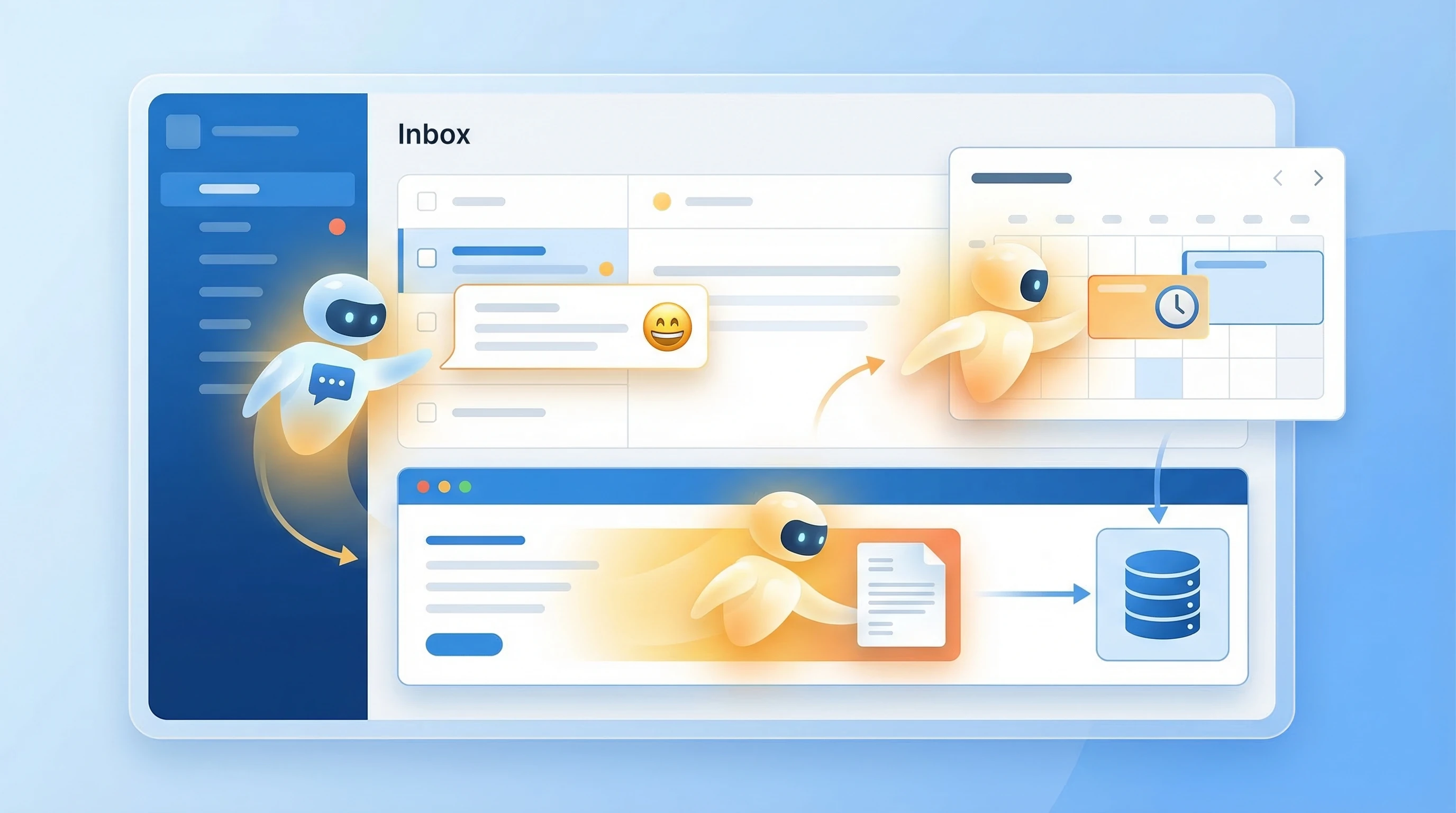
Most AI agents still live in dashboards, chat widgets, or internal tools. They can draft emails, summarize threads, and classify requests, but they usually cannot sit inside a real inbox and handle email the way a human teammate would. That has been a weird gap for a while.
AgentMail launched publicly this week to close it.
The company announced a $6 million seed round led by General Catalyst, with participation from Y Combinator and angels including Paul Graham, Dharmesh Shah, Paul Copplestone, and Karim Atiyeh. The funding matters, but the product matters more: AgentMail is building email for AI agents.
That means a business can create AI agent inboxes with one API call, then let those agents send, receive, reply in thread, process attachments, search prior conversations, and react to new events in real time. AgentMail also supports labels, custom domains, SDKs, MCP, and draft-based approval flows for human review.
For developers, that is infrastructure. For small businesses, it is a much more practical shift. It means agents can finally work inside one of the main channels customers and vendors already use.
Why email for AI agents matters to small businesses
A lot of SMB AI projects hit the same wall. The model itself is good enough. The workflow is not.
You can build an agent that answers questions, drafts follow-ups, or extracts information from documents. But if customers still prefer email, the whole system becomes awkward fast. You wind up pushing people into a portal, a chatbot, or some internal workflow they never asked for.
Email is still where support requests arrive, schedules get confirmed, invoices get chased, and vendor conversations happen. If your AI cannot operate there, it stays half-useful.
That is why AgentMail feels more important than the usual "new AI startup raised money" post. It solves a boring problem, which is often where the real value is.
What AgentMail's inbox API actually changes
Traditional email APIs were mostly built for notifications, marketing sends, or human account integrations. They were not designed for an autonomous system that needs to carry on a normal conversation.
AgentMail is built around that use case. An agent gets a real email address and can manage full threads, not just blast outbound messages. It can receive files, work with labels, trigger workflows through webhooks or WebSockets, and use human-in-the-loop drafts when a business wants review before sending.
That last part matters. A company does not need to jump straight to full autonomy. An agent can draft replies, tag messages, and route exceptions to a human first. That is a much safer starting point for a small business than letting an AI loose on a shared inbox and hoping for the best.
The traction numbers also make this easier to take seriously. AgentMail says it has processed more than 100 million emails, and some customers are provisioning 25,000 inboxes. That does not guarantee it is right for every SMB, but it does suggest this is not just a polished demo.
Best small business use cases for AI agent inboxes
The obvious use cases are the ones that already revolve around an inbox.
Customer service is a big one. An agent can monitor support emails, draft responses, attach helpful documents, and escalate edge cases when needed.
Document processing is another. Think insurance forms, intake packets, invoices, onboarding paperwork, or vendor PDFs. If the work begins as an email attachment, giving the agent its own inbox is cleaner than forcing everything through a separate upload flow.
Scheduling also fits well. A service business can use an agent to handle the back-and-forth around appointments, confirmations, and reschedules without making people open a different system.
Sales outreach is the touchiest use case, but it is real. If an agent has a proper email identity, can maintain thread context, and operates with approval rules, it becomes more useful than a simple template sender.
The guardrails still matter
This is where the excitement needs a little cold water.
Giving an agent a real inbox also gives it the power to create real problems. Bad outbound behavior can hurt deliverability, annoy customers, or create compliance issues. If the agent sends inaccurate information, the cleanup lands on your team, not the startup that sold the infrastructure.
So the right question is not "Can we automate email now?" It is "Which email workflows are safe enough to automate first?"
Small businesses should think about approval thresholds, escalation paths, sending limits, and domain reputation before turning on anything autonomous. AgentMail seems to understand that. The platform's support for drafts, labels, and workflow controls is a good sign.
My take: this is one of the more useful infrastructure launches we have seen for the agent stack. Small businesses have had plenty of tools that generate AI text. They have had far fewer tools that let AI participate in the normal communication systems businesses already depend on.
That gap is finally starting to close.
If your business is exploring AI for customer service, document intake, scheduling, or follow-up workflows, and you want help figuring out where agentic email actually makes sense, contact Barista Labs. We help small businesses build AI systems that work in production, not just in demos.
AI Pilot Readiness Checklist
Turn the idea into a pilot you can defend.
AI agent articles are easy to bookmark and hard to operationalize. Use the readiness questions as a shared way to decide whether a workflow is specific enough, safe enough, and measurable enough to pilot. If they surface a strong candidate, BaristaLabs can review it with you and help shape a first version that fits your systems, approval process, and risk tolerance.
Please do not submit PHI, customer records, credentials, or confidential workflow exports.
Practical AI Workflow Notes
Want more practical AI operations ideas?
Get short notes on applying AI inside real small-business workflows — from document handling and customer follow-up to internal reporting, compliance, and automation guardrails.