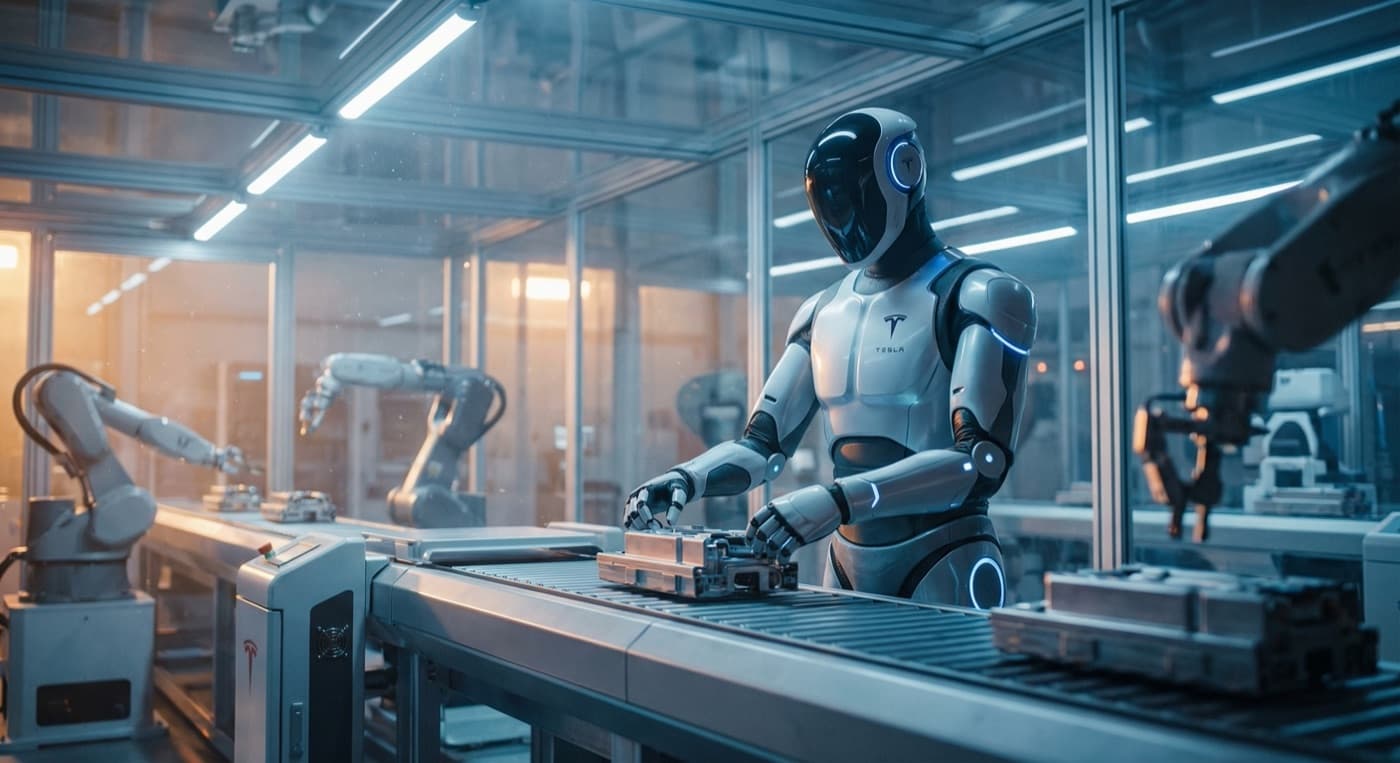

In a move that has sent shockwaves through both the automotive and tech industries, Tesla announced this week that it will officially discontinue production of its flagship Model S and Model X vehicles by the end of Q1 2026. The reason? To clear massive amounts of factory floor space for the mass production of Optimus Gen 3 humanoid robots.
This decision marks a definitive pivot for the company—from an electric vehicle manufacturer that dabbles in robotics, to a robotics company that happens to sell cars. For small businesses and industry observers, this isn't just a change in product lineup; it's a signal that the age of "Labor-as-a-Service" is arriving much faster than anticipated.
The End of an Era, The Beginning of a Revolution
The Model S put Tesla on the map, proving that electric cars could be desirable, fast, and long-range. But in 2026, the margins on a luxury sedan pale in comparison to the potential of a general-purpose humanoid robot.
According to the Tesla Optimus Update, the new Gen 3 bots feature dexterous hands capable of threading a needle, a 20-hour battery life, and a unit cost that is rapidly approaching the price of a small economy car. By repurposing the Fremont and Austin lines for Optimus, Tesla aims to produce millions of units per year, flooding the market with affordable labor.
Why This Matters for Small Business
It's easy to dismiss this as news for heavy industry. After all, small businesses don't need assembly line robots, right? Wrong.
The Gen 3 Optimus isn't just a factory worker. It's designed for logistics, warehousing, and even retail tasks. Imagine a 24/7 stocking clerk, a janitor that never sleeps, or a warehouse picker that integrates seamlessly with your inventory system.
This mirrors the shift we saw with software a decade ago. Just as companies moved from expensive, on-premise servers to flexible SaaS (Software-as-a-Service) models, physical labor is about to undergo a similar transformation. We are entering the era of RaaS (Robotics-as-a-Service), where labor becomes an operating expense rather than a hiring headache.
Connecting Digital Intelligence to Physical Action
At Barista Labs, we've been helping clients integrate Agentic Engineering into their digital workflows. We use tools like Claude to automate complex cognitive tasks. Now, with platforms like Optimus coming online, we can see a future where digital agents direct physical ones.
Imagine an AI agent that not only processes a customer's order but also instructs a robot to pick, pack, and ship it—without human intervention. This is the convergence of digital and physical automation.
As we discussed in our piece on SpaceX's orbital data centers, the infrastructure for this new world is being built at breakneck speed. The compute is there. The connectivity is there. And now, the physical bodies are coming.
How to Prepare Your Business
You don't need to buy a robot today. But you do need to start auditing your processes for automation potential.
- Identify Repetitive Physical Tasks: What tasks in your business are repetitive, dangerous, or prone to human error?
- Standardize Workflows: Robots (and AI agents) thrive on structured data and clear instructions. The more standardized your processes, the easier they will be to automate.
- Watch the Costs: The cost of humanoid robots is expected to drop below $20,000 within two years. At that price point, the ROI for even a small coffee shop or boutique becomes compelling.
The Future is Automated
Tesla's gamble is a wake-up call. The future of work isn't just about AI writing emails; it's about AI navigating the physical world. The businesses that prepare for this shift today will be the ones that thrive in the automated economy of tomorrow.
If you're ready to explore how agentic AI can transform your business operations—before the robots even arrive—contact Barista Labs today. Let's build your future, one agent at a time.
AI Pilot Readiness Checklist
Turn the idea into a pilot you can defend.
AI agent articles are easy to bookmark and hard to operationalize. Use the readiness questions as a shared way to decide whether a workflow is specific enough, safe enough, and measurable enough to pilot. If they surface a strong candidate, BaristaLabs can review it with you and help shape a first version that fits your systems, approval process, and risk tolerance.
Please do not submit PHI, customer records, credentials, or confidential workflow exports.
Practical AI Workflow Notes
Want more practical AI operations ideas?
Get short notes on applying AI inside real small-business workflows — from document handling and customer follow-up to internal reporting, compliance, and automation guardrails.