Proof gives small teams a better place to work with AI agents
Proof, launched by Every, is a free and open-source document editor built for humans and AI agents to work in the same doc. For small businesses, it fixes a real workflow problem: where collaborative AI writing should actually live.

Sean McLellan
Lead Architect & Founder
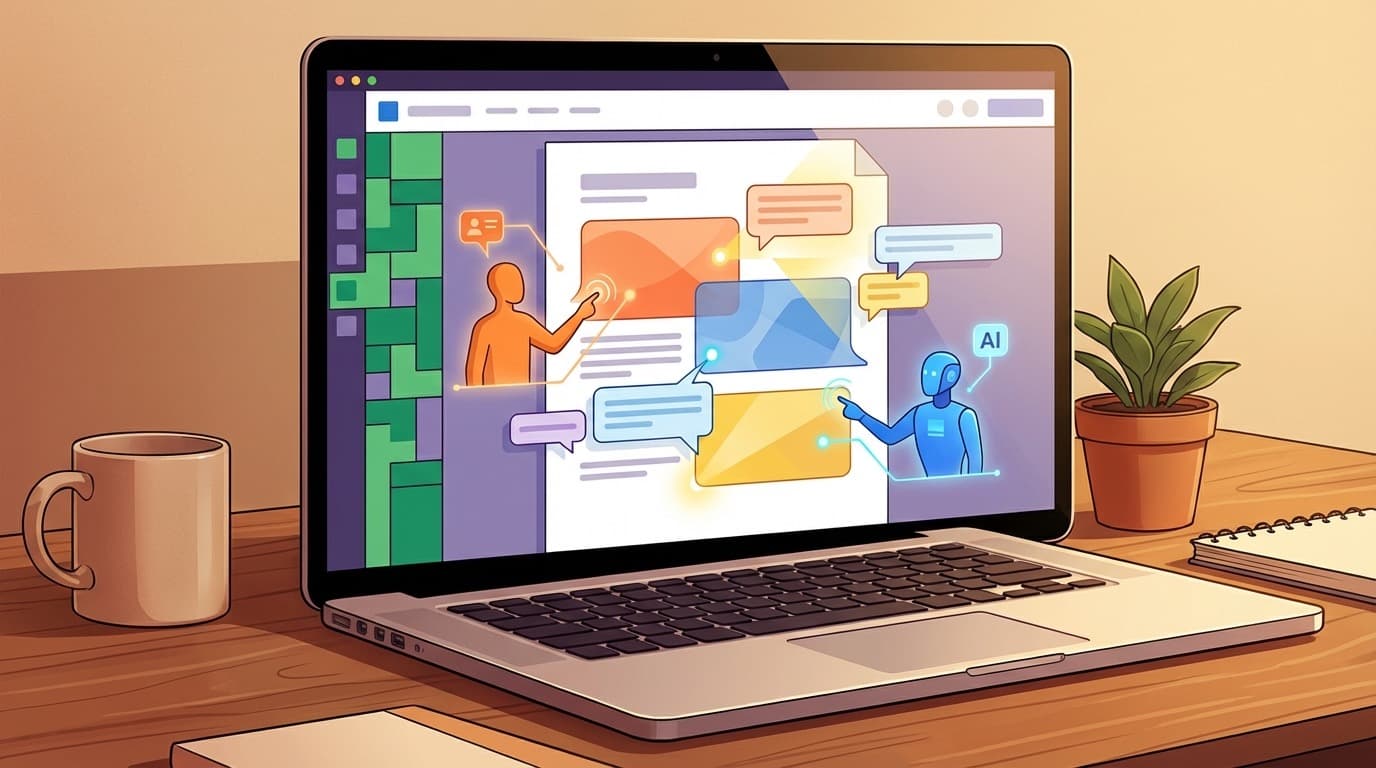
Small businesses have started using AI agents for real work, not just experiments. The output is piling up fast: implementation plans, research briefs, bug reports, client proposals, strategy memos, copy audits. The awkward part is what happens next. Most teams still dump that writing into Markdown files, Google Docs, chat threads, or some messy mix of all three.
That is the problem Proof is trying to solve.
Launched today by Every, Proof is a live collaborative document editor built for humans and AI agents to work in the same document at the same time. It is free, open source, and login-free. You can open it right now at proof.vc.
That combination matters more than it sounds.
Why this launch matters for small businesses
A lot of AI tooling still assumes the model is the product. For small businesses, that is not the hard part anymore. The hard part is operational: where drafts live, how teams review them, and how anyone knows what came from a person versus an agent.
Proof starts with that workflow instead of treating it like cleanup.
According to Dan Shipper's launch post, the editor was built from the ground up for the kinds of documents agents are increasingly writing: bug reports, PRDs, implementation plans, research briefs, copy audits, strategy docs, memos, and proposals. That list is basically a map of modern small-team knowledge work.
If you run a 5-person or 25-person company, you do not need another shiny AI demo. You need a place where your operator, marketer, founder, contractor, and AI assistant can all push a draft forward without losing the thread.
The best feature is not the AI. It is the paper trail.
The standout feature in Proof is provenance tracking.
Each document includes a colored rail on the left side that shows who wrote what. Green means a human wrote it. Purple means AI wrote it.
That is a deceptively practical feature.
Most SMB teams are not worried that AI might write a first draft. They are worried about accountability. If a client proposal includes the wrong pricing, if a rollout plan misses a dependency, or if a research memo makes a bad recommendation, someone needs to know where that text came from and who reviewed it.
Proof makes that visible inside the document instead of forcing teams to guess.
That creates a better editing loop. Humans can keep the parts that are useful, tighten the parts that are sloppy, and stay in control without pretending the AI did not help write the draft.
Proof is betting that Markdown is the wrong default
One of the sharper points in the launch message is that today's agent-writing workflow feels stuck in 1999. That is hard to argue with.
Right now, a lot of agent-assisted writing still happens in flat files on a laptop. That is fine for solo technical users. It is bad for growing businesses that need collaboration, comments, shared visibility, and faster approvals.
Proof's pitch is simple: leave .md files behind when the document is meant to be collaborative.
That does not mean Markdown disappears. It means Markdown stops being the default container for every piece of agent-generated work, even when the real need is shared editing and review.
For small businesses, that is the right bet. Most teams do not need a more elegant file format. They need less friction between draft, feedback, and decision.
What makes it different from a normal online doc
Proof is not just a standard editor with an AI button bolted on.
Every's positioning is that Proof is agent-native. Agents can do everything a human can do in the document. They can contribute edits, collaborate in the shared workspace, and work from the same source of truth instead of kicking text back and forth through chat windows.
The product site also shows a practical onboarding angle: create a doc, share it with humans and agents, then collaborate with comments and suggestions while tracking authorship at the character level.
That last part matters because it turns AI from a side conversation into an actual teammate workflow. For an SMB, that can reduce version sprawl fast.
The frictionless part may be what helps it spread
Proof is login-free and open source. There is no account wall just to try it.
That is smart.
Small businesses adopt tools when the first useful moment happens quickly. If a founder can open a doc, paste the link into an agent, and start working without setting up seats, permissions, and another training session, the tool has a real shot.
This also fits the current market. Teams are still figuring out which written workflows should stay in chat, which belong in project tools, and which deserve a shared doc built for human plus AI collaboration. Proof has a chance because it is aimed straight at that gap.
BaristaLabs take
Proof is one of the more practical AI product launches we have seen this year.
It does not try to impress people with a vague promise of transformation. It fixes a real workflow problem that small businesses are already running into: AI can generate useful written work, but most teams still do not have a clean, shared place to shape that work into something ready to use.
If Proof delivers on the product shown today, it could become the default workspace for AI-assisted planning and documentation in smaller companies.
That is a big opportunity, because the future of SMB AI is not just better generation. It is better collaboration around what gets generated.
If you want help figuring out where tools like Proof fit into your business, contact us.
AI Pilot Readiness Checklist
Turn the idea into a pilot you can defend.
AI agent articles are easy to bookmark and hard to operationalize. Use the readiness questions as a shared way to decide whether a workflow is specific enough, safe enough, and measurable enough to pilot. If they surface a strong candidate, BaristaLabs can review it with you and help shape a first version that fits your systems, approval process, and risk tolerance.
Please do not submit PHI, customer records, credentials, or confidential workflow exports.
Practical AI Workflow Notes
Want more practical AI operations ideas?
Get short notes on applying AI inside real small-business workflows — from document handling and customer follow-up to internal reporting, compliance, and automation guardrails.