OpenAI Gets PCI-DSS Certified: What It Means for Small Businesses Handling Payments
OpenAI says it now maintains PCI-DSS compliance for the ChatGPT components that support delegated payment processing. Here's what that changes for SMBs exploring AI in billing and checkout workflows.

Sean McLellan
Lead Architect & Founder
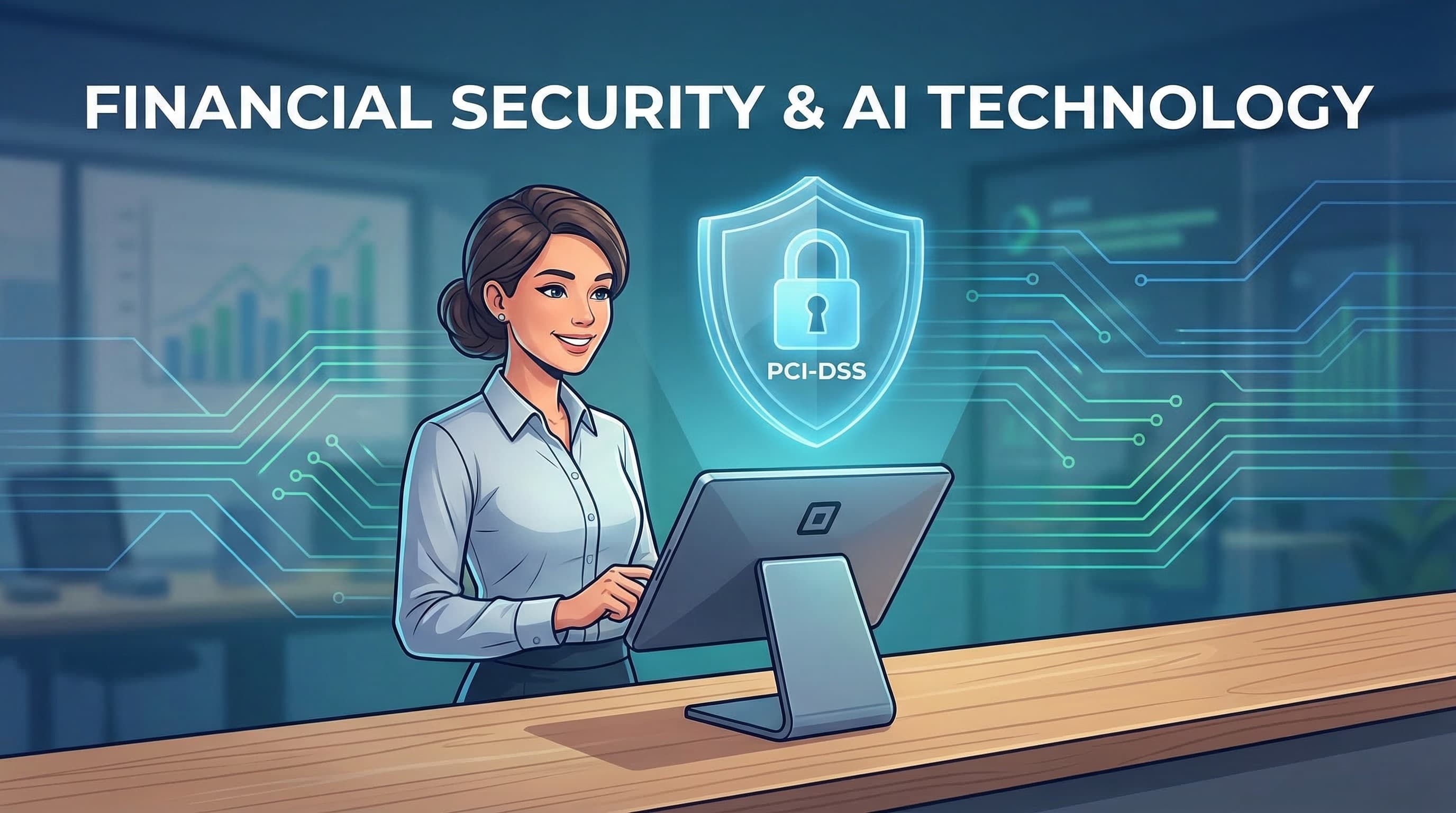
OpenAI now says it maintains PCI-DSS compliance for the ChatGPT components that support delegated payment processing.
That sounds technical, but the business takeaway is straightforward: if your company wants ChatGPT to help inside payment-related workflows, there is now a clearer compliance path than there was before.
For small and midsize businesses, that matters because payment data is one of the fastest ways to turn an interesting AI experiment into a legal, security, or vendor-review headache. Before this update, many teams had to keep ChatGPT far away from anything that touched cardholder data. Now, some payment-adjacent use cases that were previously off-limits or too risky to approve are much more realistic.
What PCI-DSS means in plain English
PCI-DSS is the main security standard used by businesses that store, process, or transmit payment card data.
If you accept credit cards online, over the phone, through invoices, subscriptions, or a point-of-sale system, PCI rules are already part of your world whether you think about them often or not.
The important point is not that ChatGPT is suddenly a payments platform. It is not. The important point is that OpenAI is saying the specific ChatGPT components used for delegated payment processing now meet PCI-DSS compliance requirements.
That reduces one major barrier for businesses that want AI involved in payment workflows.
What changed for SMBs
This does not mean you should start pasting raw card numbers into random chat windows.
It does mean businesses can start evaluating more structured AI-assisted payment experiences without immediately running into the objection that "ChatGPT is not PCI compliant, so this is dead on arrival."
In practice, that opens the door to workflows like:
- AI assistants that help customers complete purchases inside a guided conversation
- Chat-based billing support that can hand off securely into approved payment steps
- AI-powered account assistants that help with subscription upgrades, invoice questions, or payment collection flows
- Internal support tools that assist staff during payment-related customer interactions within compliant boundaries
For a small business, the real value is not novelty. It is fewer handoffs, faster support, and a smoother customer experience around billing and checkout.
Who should care most
This matters most if your business is in one of these groups:
1. Service businesses that bill customers directly
If you run an agency, consultancy, clinic, repair business, or home services company, payment conversations often happen through email, chat, or support threads. AI can help guide those conversations, explain charges, surface invoice status, and move customers toward payment without your staff doing every step manually.
2. SaaS companies with subscriptions
If you sell software, you probably deal with upgrades, failed charges, plan changes, refunds, and renewal questions. Those are exactly the kinds of repetitive billing workflows where AI can reduce support load.
3. E-commerce brands with support-heavy checkout issues
Customers ask about payment failures, saved cards, order confirmations, subscriptions, and billing disputes. A compliant AI layer can make those interactions more useful without forcing every question to a human agent.
4. Businesses selling into larger companies
Even if you are small, your buyers may be strict. Enterprise procurement teams often reject vendors quickly if compliance answers are vague. OpenAI being able to point to PCI-DSS compliance for these ChatGPT components makes internal approval conversations easier.
What you still cannot assume
This is the part people will get wrong.
OpenAI's statement is specific. It says PCI-DSS compliance applies to the ChatGPT components that support delegated payment processing. That does not mean every way you use ChatGPT is automatically compliant.
Your business still has to answer questions like:
- Which product and features are in scope?
- What payment data is actually being handled?
- Is card data being stored, transmitted, or just passed to a compliant processor?
- What other systems touch that workflow?
- Do your internal policies and vendors also meet PCI requirements?
In other words, OpenAI cleared an important hurdle. They did not clear all of them for you.
What SMBs can do now that was harder before
The biggest shift is that businesses can start designing customer-facing payment workflows with AI in the loop instead of treating AI as a back-office drafting tool only.
That could include:
- A website assistant that helps a customer pick a service package and complete payment through a secure handoff
- A billing assistant that walks a customer through updating a subscription or fixing a failed payment
- A support workflow where staff use AI to speed up payment-related conversations without stepping outside compliance boundaries
- More ambitious embedded commerce experiences inside chat-driven product flows
Six months ago, many owners would have killed those ideas early because compliance was too unclear. Now the conversation can move from "probably not allowed" to "how do we design this correctly?"
That is a big difference.
The smart way to approach it
If you are an SMB owner, do not treat this as permission to move fast and ask questions later.
Treat it as permission to explore real use cases with your payment processor, developer, and compliance advisor involved early.
A good starting checklist:
- Identify one payment-related workflow that creates friction today
- Confirm exactly where cardholder data appears in that workflow
- Check what OpenAI product and payment architecture would actually be in scope
- Keep payment handoff points explicit and controlled
- Document the workflow before launching it
The winners here will not be the businesses that throw AI at checkout because it sounds modern. They will be the businesses that remove friction while staying boring and disciplined on security.
Bottom line
OpenAI's PCI-DSS compliance update is not just a badge for security teams. It is a practical unlock for small businesses that want to use ChatGPT in real revenue workflows.
If your company has avoided AI around billing, checkout, or subscription management because compliance was too murky, that answer just got more concrete.
You still need to design carefully. You still need the right payment architecture. But for many SMBs, the question has changed from "Can we touch this at all?" to "What is the safest, highest-value way to use it?"
That is progress.
If you want help figuring out where AI belongs in your payment or customer support workflow, contact Barista Labs.
AI Pilot Readiness Checklist
Turn the idea into a pilot you can defend.
AI agent articles are easy to bookmark and hard to operationalize. Use the readiness questions as a shared way to decide whether a workflow is specific enough, safe enough, and measurable enough to pilot. If they surface a strong candidate, BaristaLabs can review it with you and help shape a first version that fits your systems, approval process, and risk tolerance.
Please do not submit PHI, customer records, credentials, or confidential workflow exports.
Practical AI Workflow Notes
Want more practical AI operations ideas?
Get short notes on applying AI inside real small-business workflows — from document handling and customer follow-up to internal reporting, compliance, and automation guardrails.