McKinsey's AI Chatbot Got Breached: What Every SMB Must Know About AI Security
McKinsey's Lilli breach shows how AI chatbot security can fail through ordinary web vulnerabilities.

Sean McLellan
Lead Architect & Founder
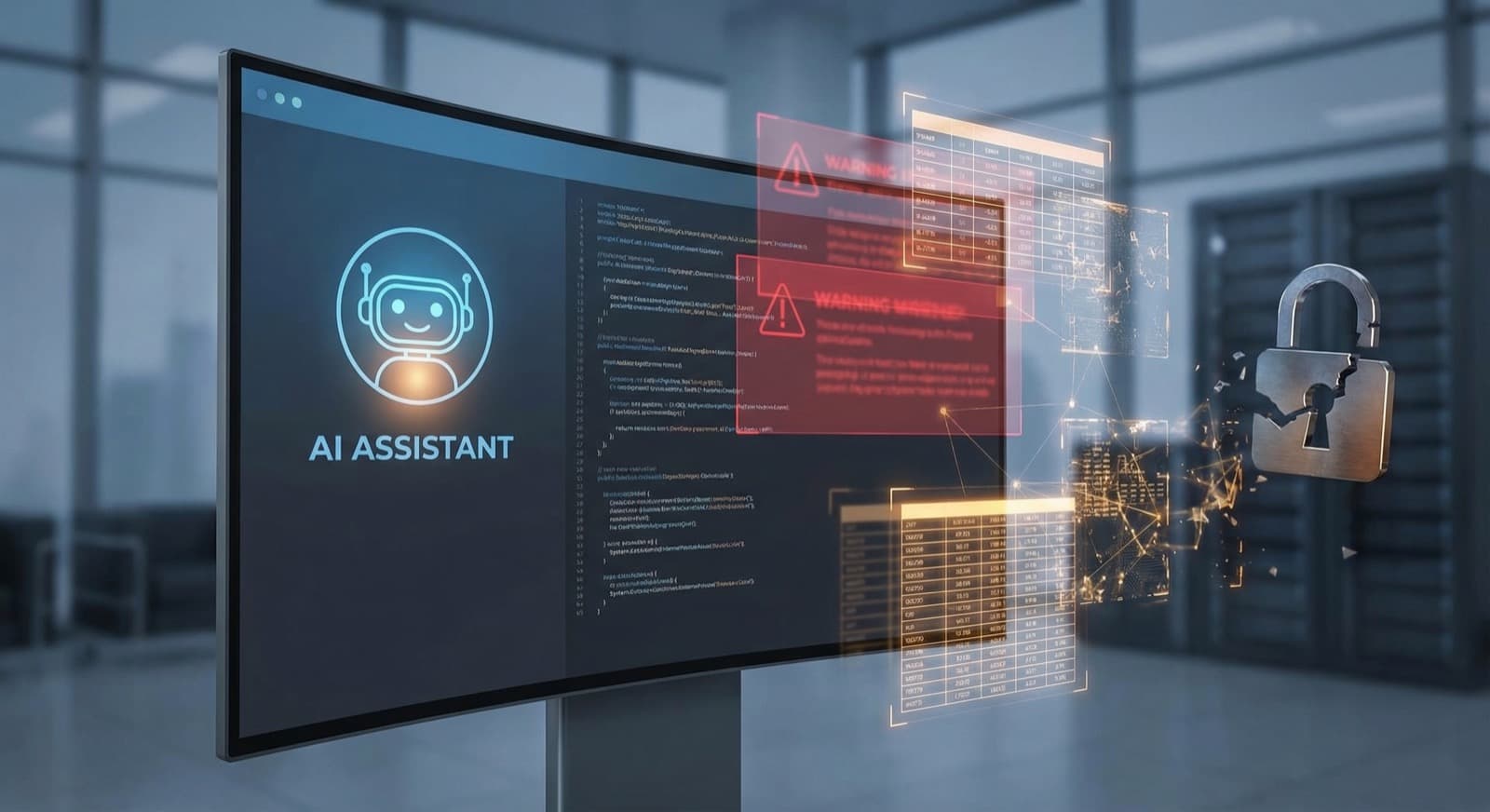
McKinsey is not a sloppy company. It is one of the most sophisticated advisory firms on the planet, with major clients, deep technical resources, and every incentive to protect sensitive information.
That is exactly why the reported breach of its internal AI platform, Lilli, matters.
According to reporting from The Register and public disclosures from security firm CodeWall, an autonomous research agent found publicly exposed API documentation, discovered 22 unauthenticated endpoints, and used a SQL injection flaw in one of them to gain read and write access to production data. The reported exposure included roughly 46.5 to 47 million chat messages, 57,000 user accounts, and system prompts that controlled how the chatbot behaved. McKinsey said it patched the issues quickly and found no evidence that client data was accessed by an unauthorized third party.
If that can happen inside McKinsey, no small business should assume an AI deployment is safe just because the product looks polished.
What happened to McKinsey's Lilli chatbot
Lilli is not a toy internal bot. McKinsey has described it as a firmwide AI platform trained on decades of institutional knowledge and more than 100,000 internal documents. Reports say more than 70 percent of employees use it, generating around 500,000 prompts per month.
That scale is what makes this story important for enterprise AI security.
The failure was not some exotic, science-fiction attack against the model itself. The attack reportedly started with ordinary application security weaknesses:
- public API documentation exposed to the internet
- endpoints that did not require authentication
- SQL built unsafely from JSON keys
- production data reachable from the vulnerable path
- sensitive AI configuration stored in the same environment
In other words, this was not "AI magic." It was familiar web security debt wrapped around an AI product.
That is the first lesson for business owners: most AI data breach scenarios still begin with classic software mistakes.
Why this matters for SMBs using AI
A lot of small and midsize companies think AI security is mainly a concern for Fortune 500 firms building custom models. That is the wrong takeaway.
Most SMB AI risk comes from three places:
- AI connected to sensitive business systems. Your chatbot may touch email, customer records, contracts, financial files, or internal knowledge bases.
- Fast deployment without security review. Teams want the productivity gains now, so governance gets bolted on later.
- Vendor trust without verification. Many businesses assume their AI provider has already handled the hard security questions.
The McKinsey breach shows why that mindset is dangerous. Even large organizations with strong engineering talent can miss obvious exposure points when they move quickly.
For an SMB, the consequences may be smaller in raw numbers but worse in business impact. You may not expose 47 million chat messages, but leaking a few dozen contracts, payroll files, acquisition plans, or client conversations can still create legal, financial, and reputational damage.
The bigger issue: AI systems expand your attack surface
When a business deploys an AI chatbot, it is not just deploying a model. It is deploying an ecosystem:
- web apps
- APIs
- file stores
- prompts and system instructions
- vector databases or RAG pipelines
- identity and permission layers
- logging, analytics, and third-party integrations
That means AI chatbot security is really application security, data security, and access control all at once.
The dangerous mistake is focusing only on prompt quality and output quality while ignoring the surrounding infrastructure. A chatbot can sound smart and still be dangerously exposed.
The Lilli case also highlights a newer risk: prompt-layer compromise. If attackers can change system prompts or model settings, they may not just steal data. They may quietly alter outputs, weaken guardrails, or push bad recommendations through a tool employees trust.
That is a serious business AI risk because poisoned output can spread into sales proposals, client deliverables, internal analyses, and executive decisions.
The practical AI security checklist for SMBs
If your business is using AI assistants, internal copilots, retrieval-augmented search, or workflow agents, start here.
1. Inventory every AI tool touching company data
Make a simple list of every AI product your team uses, what data it can access, and who can use it. You cannot secure what you have not mapped.
2. Limit permissions aggressively
Your AI system should have the least access needed to do its job. If a support bot only needs help center content, do not give it access to contracts, finance folders, and all-company Slack exports.
3. Separate environments
Development, staging, and production should not blur together. Sensitive prompts, files, and customer data should not sit in the easiest place to reach from a public endpoint.
4. Treat APIs like public front doors
Every endpoint should be authenticated, authorized, logged, and tested. Hidden documentation is not a security control.
5. Test for ordinary web vulnerabilities
Ask specifically about SQL injection, broken access control, insecure direct object references, exposed storage, and auth bypass. Boring bugs still break modern AI systems.
6. Protect prompts and configurations like critical assets
System prompts, routing rules, model settings, and tool permissions should have access controls, version history, and change monitoring.
7. Keep sensitive data out of plaintext wherever possible
Reduce retention, encrypt stored data, and avoid dumping full conversation histories into systems that do not need them.
8. Demand better answers from vendors
If you buy rather than build, ask vendors blunt questions: How do you test for AI data breach scenarios? What is logged? What can be scoped by role? How fast can access be revoked? Have they had an external security assessment?
9. Put human approval around high-risk actions
Do not let an AI tool send contracts, approve refunds, change customer records, or trigger external actions without review.
10. Build an incident plan before you need one
Know who investigates, who communicates, what gets shut off first, and how customers are notified if something goes wrong.
The real takeaway
The McKinsey story is not proof that businesses should avoid AI. It is proof that AI deployment needs the same discipline as any other critical business system, and probably more.
The companies that win with AI will not just be the ones that automate faster. They will be the ones that connect AI to real workflows without being reckless about security.
If you are an SMB owner, the smart move is not panic. It is pressure-testing your stack now, before a chatbot, copilot, or AI search tool becomes your weakest link.
Because the hard truth is simple: if enterprise AI security can fail at McKinsey, AI chatbot security deserves serious attention in every business.
Sources
- The Register, "AI vs AI: Agent hacked McKinsey's chatbot and gained full read-write access in just two hours" (March 9, 2026)
- CodeWall, "How We Hacked McKinsey's AI Platform" (March 9, 2026)
- Trung Phan on X summarizing the breach details (March 12, 2026)
Agent Governance Scorecard
Move from agent excitement to operating clarity.
If your team is debating how and where agents should run, the scorecard gives business and technical stakeholders a shared language for risk. Use it to spot the gaps BaristaLabs should account for in an agent pilot or implementation roadmap.
Built for agent architecture and risk-review discussions.
Turn this idea into a pilot
Which workflow should go first?
Use the readiness check to compare impact, effort, risk, owner, and next step before requesting a review.
- 3-5 minutes
- Deterministic score
- No sensitive data
Practical AI Workflow Notes
Want more practical AI operations ideas?
Get short notes on applying AI inside real small-business workflows — from document handling and customer follow-up to internal reporting, compliance, and automation guardrails.