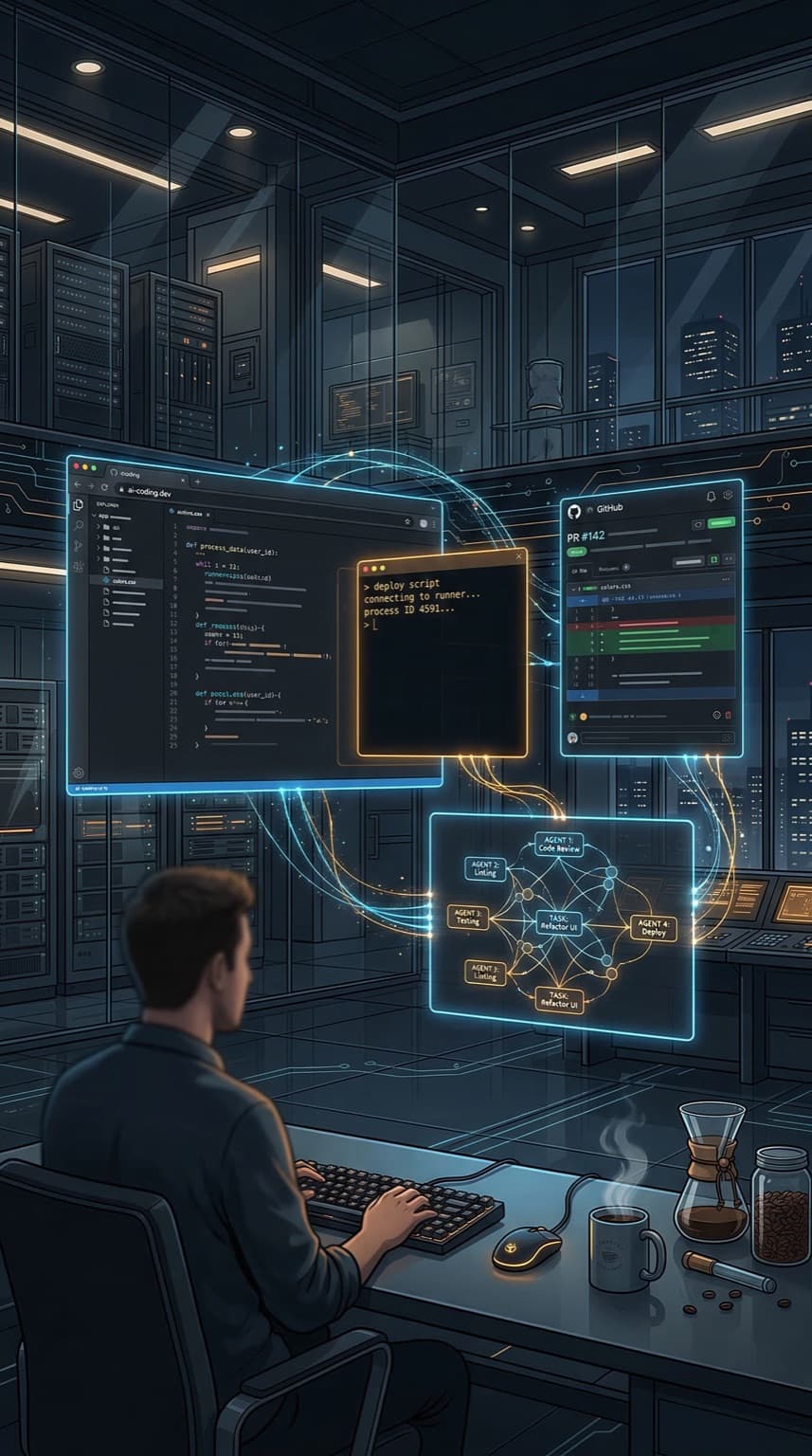

One of the dumbest bottlenecks in AI coding has been the waiting.
You hand Claude Code a real job — refactor a checkout flow, clean up a migration, trace a bug across six files — and then you sit there. If a follow-up question pops into your head five minutes later, too bad. In a lot of cases, you had to wait 10 to 30 minutes for the task to finish before you could ask anything new.
Anthropic just fixed that with a new Claude Code command: /btw.
The idea is simple. While Claude is still working on the main task, you can type /btw [question or note] to start a side conversation that does not interrupt the main job. Instead of forcing a stop-and-restart cycle, Claude can keep grinding on the original task while also handling your follow-up in parallel.
That sounds small. It is not. For small and mid-sized teams, it removes a real productivity drag.
What /btw actually does
In plain English, /btw gives Claude Code a second lane.
Before this, your workflow looked like this:
- Start a long task
- Remember something important halfway through
- Either wait, or interrupt the run and risk losing momentum
Now the workflow is closer to this:
- Start a long task
- Ask a side question with
/btw - Get an answer without stopping the main task
That matters because real development work is rarely linear. While a tool is changing code, you often want to ask for context, sanity-check a decision, or leave a note for what should happen next. The old flow made that awkward. The new one fits how people actually work.
Why SMB teams should care
If you run a small business, agency, or lean internal product team, you do not have hours to waste on tool friction. AI coding tools are only useful when they reduce overhead, not when they create a new kind of waiting room.
/btw helps in a few very practical ways.
1. You can keep moving during long refactors
Say Claude is rewriting part of your checkout flow or cleaning up a brittle integration. While that work is running, you can ask:
/btw explain why this function keeps touching the tax calculation logic
Now you are learning about the codebase while the main task continues. That is better than staring at a spinner and trying to remember your question 20 minutes later.
2. You can gather decision-making context without breaking flow
Small teams make a lot of decisions on the fly. While Claude is fixing a bug, you might realize you also need to know whether a related route should be deprecated, whether a helper is still used elsewhere, or whether a naming pattern is worth standardizing.
/btw lets you ask those questions immediately, while the code work keeps moving. That is especially useful for owners or operators who are technical enough to manage vendors and internal tools, but do not want to babysit every step.
3. You can turn dead time into documentation time
While Claude is handling the main implementation, you can use a side conversation to ask for a rollout checklist, a plain-English summary of what changed, or a quick explanation you can hand to a teammate.
That means one session can produce code and supporting context instead of making you wait for one and then request the other.
This is the right kind of AI improvement
A lot of AI product updates are flashy but shallow. This one is useful.
Anthropic team member @trq212 shared the feature, and it got quick attention from people already deep in Claude Code workflows. @cryptopunk7213 summed up the appeal pretty well: side conversations mean more productivity and less wasted time. That is the real story here.
The bigger signal is that Anthropic keeps shipping meaningful Claude Code improvements at a fast clip. Not cosmetic tweaks. Workflow improvements. That matters for businesses trying to decide which AI tools are worth standardizing on.
My take: /btw is not a gimmick. It fixes a genuine usability problem for anyone doing serious work with AI coding tools.
If you are evaluating Claude Code for an SMB team, this is exactly the kind of feature you want to see. It makes the tool feel less like a one-thread chatbot and more like an actual working partner. When a platform removes friction from everyday use, adoption gets easier, output gets faster, and the value becomes easier to justify.
That is why this launch matters. Not because /btw is flashy, but because it makes Claude Code more usable in the messy middle of real work.
Back-Office Automation ROI Worksheet
Choose the first automation with evidence, not vibes.
AI tools can make almost any workflow look automatable. The ROI worksheet helps you pick the one most likely to pay back quickly. If one workflow rises to the top, BaristaLabs can help decide whether a lightweight tool, integration, or custom pilot is the best next step.
Use broad workflow categories in the form; save specifics for a scoped conversation.
Turn this idea into a pilot
Which workflow should go first?
Use the readiness check to compare impact, effort, risk, owner, and next step before requesting a review.
- 3-5 minutes
- Deterministic score
- No sensitive data
Practical AI Workflow Notes
Want more practical AI operations ideas?
Get short notes on applying AI inside real small-business workflows — from document handling and customer follow-up to internal reporting, compliance, and automation guardrails.