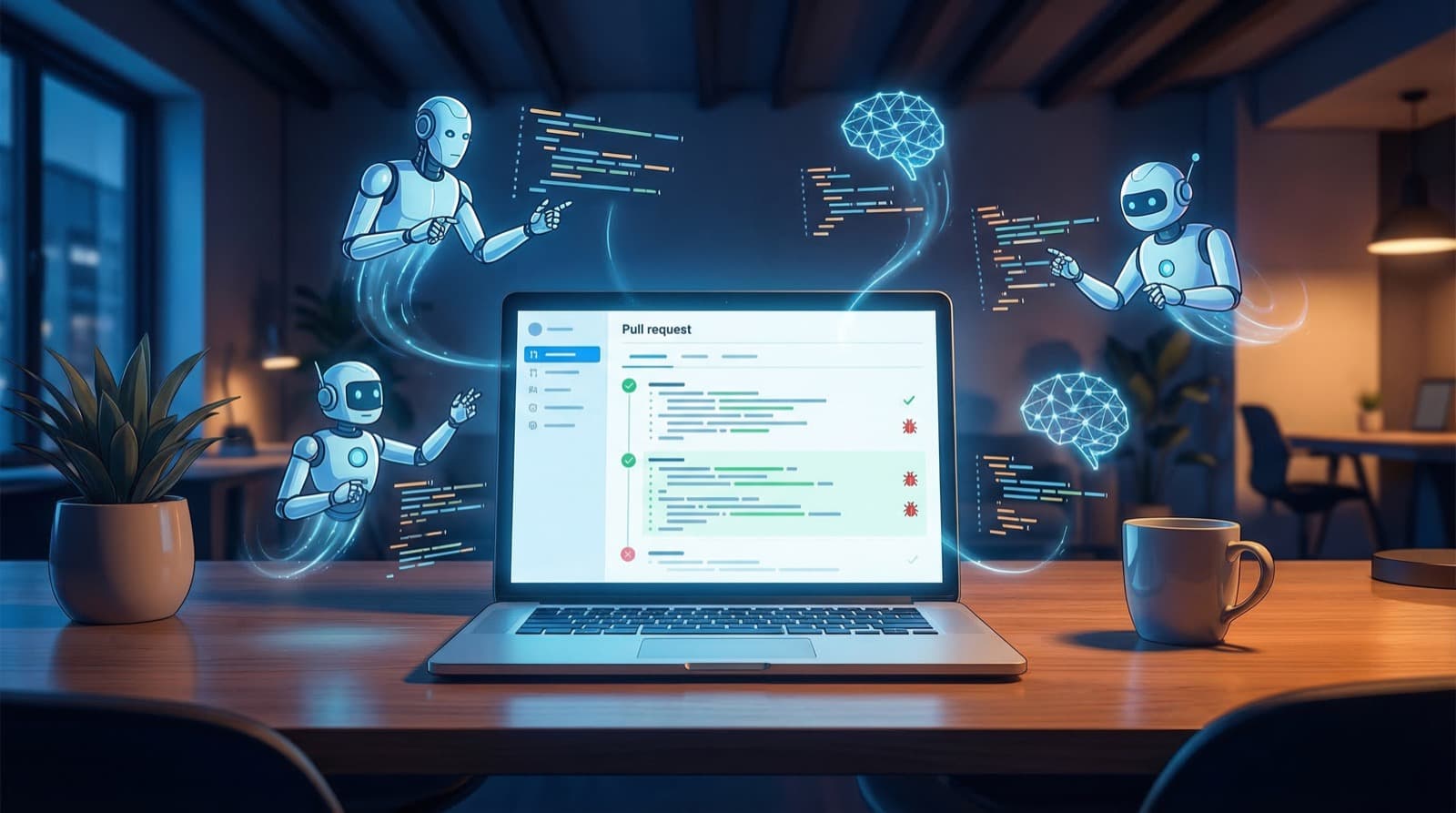

Anthropic just shipped one of the more important upgrades yet for practical AI-assisted development: Code Review in Claude Code.
The pitch is simple and strong. When a pull request opens, Claude does not just skim the diff and leave a generic comment. It dispatches a team of agents to review the PR and hunt for bugs collaboratively.
For enterprise engineering orgs, that sounds like a nice acceleration layer. For small development teams, solo founders, and SMBs with one in-house developer, it is bigger than that. It raises the floor on code quality without forcing the business to hire a senior reviewer for every change.
What Anthropic Just Announced
Anthropic introduced Code Review for Claude Code on March 9, 2026. The official positioning is clear: this is automated pull request review built into the workflow developers already use.
Boris Cherny, who leads Claude Code, amplified the launch himself. The interesting part is not just that Claude can review code. Plenty of tools already claim that. The interesting part is the architecture behind it.
This is framed as a multi-agent review system. A PR opens, and Claude sends multiple agents to inspect the change, look for bugs, and surface issues before the code gets merged.
That matters because good code review is rarely one-dimensional. One reviewer notices edge cases. Another spots weird state handling. Another catches a performance trap or an integration regression. Anthropic is trying to reproduce that dynamic in software.
How Code Review Works
At a high level, the workflow is straightforward:
- A developer opens a pull request
- Claude Code Review kicks in automatically
- Claude dispatches a team of agents against the PR
- Those agents inspect the change from different angles and flag likely bugs
- The developer gets actionable review feedback before the PR ships
The phrase to pay attention to is team of agents.
That suggests Anthropic is not treating review as a single-pass summary task. Instead, it appears to be using coordinated agent work to examine the same PR with more depth than a one-shot model response would usually provide.
For small teams, that is the right design choice. Real bugs are often hiding in the boring stuff:
- a missing null check
- a broken edge case in a form flow
- a hidden assumption in a background job
- a subtle regression in existing behavior
- a change that technically works but creates maintenance debt
A single rushed human reviewer can miss those. A solo developer reviewing their own PR will definitely miss some of them. A coordinated automated pass is not perfect, but it is a meaningful upgrade over no review or shallow review.
Why This Matters for Small Dev Teams
Most small businesses do not have a luxurious engineering process.
They have one developer, maybe two. Sometimes they have a founder who codes plus a contractor. Sometimes they have a product person shipping directly with AI tools and hoping nothing explodes in production.
That is the real market for a feature like this.
Large companies can throw layers of process at the problem. They have senior engineers, platform teams, security teams, and code owners. Small teams do not. They still ship customer-facing software, but they do it with less redundancy and less review capacity.
Code Review changes the economics a bit.
Instead of asking, "Who has time to review this PR properly?" the team can ask, "What did Claude catch before a human even looked at it?"
That is a better starting point.
The practical upside for SMBs looks like this:
- fewer obvious bugs making it to production
- faster PR turnaround when nobody is blocked waiting on a reviewer
- more confidence for junior or solo developers shipping changes
- better coverage when the team does not have a senior engineer available
- a more consistent review baseline across every PR
Is this a replacement for great human review on architecture, tradeoffs, or business logic? No. But that is not the real comparison.
The real comparison for most small teams is not "Claude versus a world-class staff engineer." It is "Claude versus no review, rushed review, or founder review at 11:40 PM."
Against that baseline, this is a real step forward.
What to Expect in Practice
Teams should go into this with the right expectations.
First, this will likely be best at catching implementation bugs, risky patterns, and questionable assumptions in a diff. That alone is valuable. The most expensive bug is usually the one that ships because nobody took a second look.
Second, developers should expect some false positives. That is normal for any review system, human or automated. The goal is not perfect precision. The goal is to surface enough useful issues that the average PR gets safer before merge.
Third, small teams should treat this as a first-pass reviewer that works instantly and consistently. That changes how you allocate human time.
Instead of spending scarce senior attention on obvious defects, a human reviewer can focus on:
- whether the product behavior is right
- whether the tradeoff is worth it
- whether the implementation fits the codebase long term
- whether the feature should exist at all
That is a much better use of limited engineering bandwidth.
How Small Teams Should Use It
If you are running a lean dev operation, the smart move is to wire this into your normal PR process instead of treating it like a novelty.
A simple approach:
1. Turn it on for every PR
Do not reserve it for big changes. The small changes are often where regressions sneak in because everyone assumes they are safe.
2. Use it as the default first review
Let Claude surface likely issues before a human spends time on the PR. That shortens the feedback loop and improves the quality of the diff that reaches the final reviewer.
3. Watch what kinds of issues it catches
Over the first couple weeks, look for patterns. Is it especially good at edge cases? Async bugs? Type mismatches? Dead code paths? That tells you where it creates the most leverage.
4. Keep a human in the loop for product and architecture
Do not outsource judgment. Use Claude to improve the mechanical part of review, then use humans for decisions that require business context and taste.
5. Let it raise your standard
Once a team gets used to every PR having an automated multi-agent pass, the definition of "good enough to merge" changes. That is the real long-term value.
The Bottom Line
Anthropic did not just add another AI checkbox feature here. It shipped a workflow upgrade with immediate value for the teams that need leverage most.
If Code Review works the way Anthropic is positioning it, then small development teams now get something that used to belong mostly to better-staffed engineering orgs: a consistent, always-on review layer that can catch bugs before they ship.
That does not eliminate the need for good developers. It makes good developers more dangerous.
And for SMBs trying to ship faster without breaking things, that is the whole game.
The floor for code quality just went up.
AI Pilot Readiness Checklist
Turn the idea into a pilot you can defend.
AI agent articles are easy to bookmark and hard to operationalize. Use the readiness questions as a shared way to decide whether a workflow is specific enough, safe enough, and measurable enough to pilot. If they surface a strong candidate, BaristaLabs can review it with you and help shape a first version that fits your systems, approval process, and risk tolerance.
Please do not submit PHI, customer records, credentials, or confidential workflow exports.
Practical AI Workflow Notes
Want more practical AI operations ideas?
Get short notes on applying AI inside real small-business workflows — from document handling and customer follow-up to internal reporting, compliance, and automation guardrails.