Microsoft BitNet b1.58 Makes Private AI Cheap Enough for Any Small Business
Microsoft's open-source BitNet b1.58 shows small businesses can run useful AI privately on ordinary CPUs instead of paying for GPUs or cloud usage.

Sean McLellan
Lead Architect & Founder
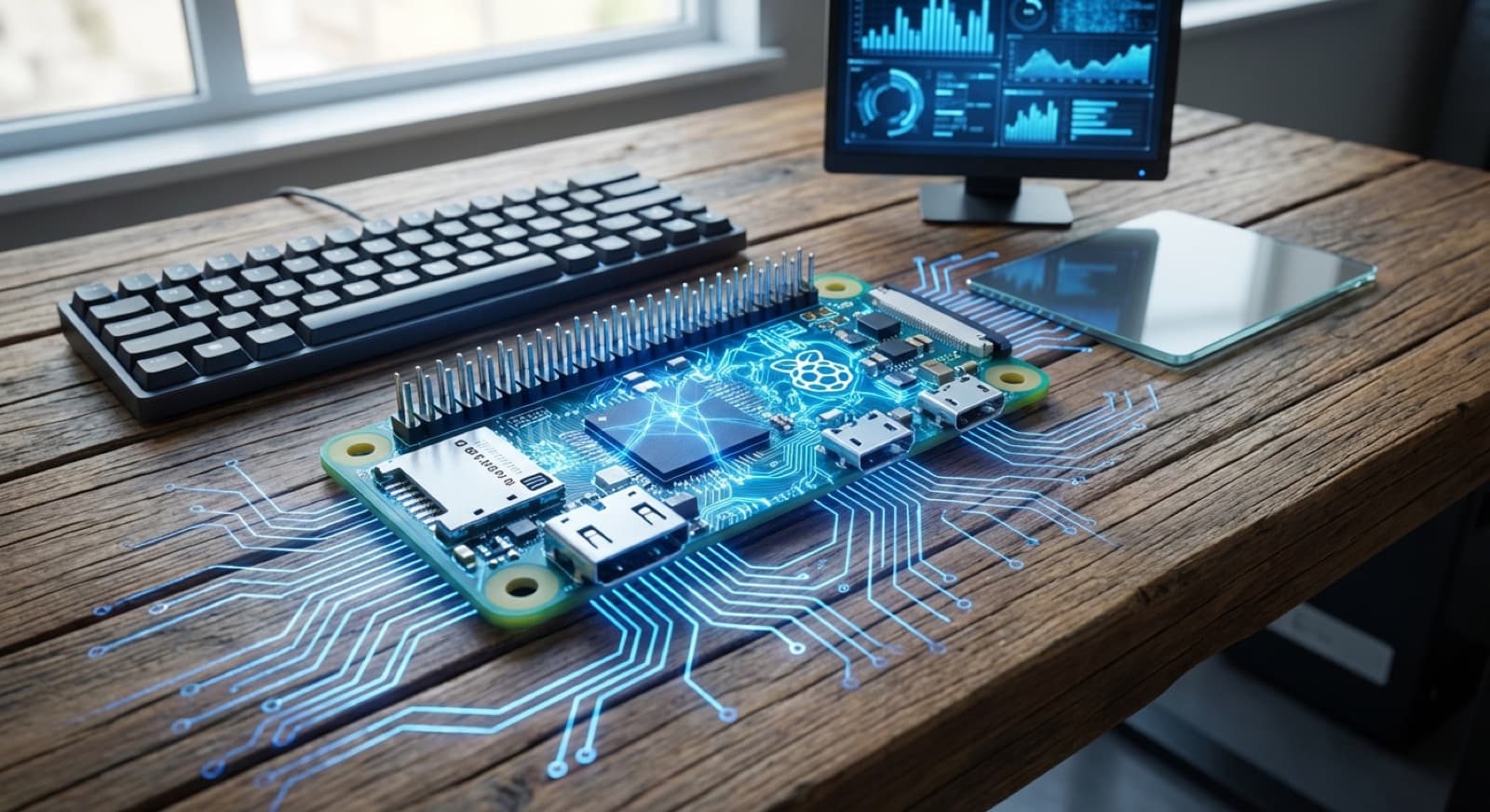
Small businesses have been sold the same AI story for two years: pay for cloud tokens, rent a GPU, or stay on the sidelines.
Microsoft just gave the market a real alternative.
Its newly open-source BitNet b1.58 2B4T model is a native 1-bit large language model that can run on ordinary CPUs instead of expensive graphics cards. The official BitNet inference project says its optimized bitnet.cpp runtime is built for fast, lossless inference of 1.58-bit models on CPUs, with speedups of 2.37x to 6.17x on x86 CPUs and 1.37x to 5.07x on ARM CPUs compared with prior baselines. Microsoft also says the approach cuts energy use sharply and can run even very large BitNet models on a single CPU at human reading speed.
That matters because it changes the economics of private AI.
If you run a small business, you no longer need to assume AI means monthly API bills, data leaving your environment, or a workstation packed with GPUs. For many practical tasks, a cheap desktop, a small office server, or even a Raspberry Pi-class device is now part of the conversation.
What BitNet actually is
BitNet is Microsoft's line of native low-bit language models. The open model now on Hugging Face is microsoft/bitnet-b1.58-2B-4T, a roughly 2 billion parameter model trained on 4 trillion tokens. Microsoft describes it as the first open-source native 1-bit LLM at this scale.
The important detail is that this is not a normal model that got compressed after training. BitNet b1.58 was trained from the start to work with ternary weights: -1, 0, and +1. That is why the model is called 1.58-bit rather than 1-bit in the strict binary sense.
In plain English: instead of storing and multiplying large full-precision numbers everywhere, the model uses a drastically simpler representation for its weights. That reduces memory pressure and compute overhead, which is exactly why CPU inference becomes realistic.
Why 1-bit quantization matters for SMBs
Most business owners do not care about quantization theory. They care about whether the thing is affordable, private, and good enough to use.
This is where BitNet gets interesting.
A traditional cloud AI setup charges you every time staff use it. Those costs look small at first, then pile up when you add customer support, internal search, document summarization, and automation flows across a team. A GPU-based local setup avoids cloud usage, but now you are buying scarce hardware and dealing with heat, power, and maintenance.
BitNet points to a third option: run smaller, useful AI models locally on normal CPU hardware.
That does not mean every business should cancel every cloud AI subscription tomorrow. It means the line between "toy local model" and "real business tool" just moved.
Real hardware examples
The official Microsoft BitNet repository focuses on CPU inference and explicitly supports both x86 and ARM systems. That covers the two hardware classes most small businesses already own: office PCs and compact ARM devices.
On the lightweight end, Adafruit has already documented bitnet.cpp running on Raspberry Pi 4 and Pi 5 systems with 8GB of RAM. That is the clearest proof that this is not theory or lab-only hardware. A Pi 5 is cheap, silent, small, and easy to dedicate to a single private AI task inside an office.
On the more practical day-to-day end, Microsoft also demonstrated BitNet running on an Apple M2 machine, and the project reports strong CPU gains on both ARM and x86. In other words, a modern laptop or mini PC is enough to start testing real local workflows.
There is one nuance worth being honest about: if you run the Hugging Face model through standard Transformers, Microsoft says you should not expect the headline efficiency gains. To get the speed and energy benefits, you need the dedicated bitnet.cpp runtime and the GGUF model variant built for CPU inference.
That is a technical detail, but it matters. The good news is it is still far easier and cheaper than standing up a GPU box.
Where this helps small businesses right now
The best use cases are the boring ones. That is a compliment.
Private internal chatbot A local BitNet deployment can answer questions over policies, SOPs, pricing sheets, onboarding docs, or product manuals without sending those files to a third-party API.
Invoice and document summarization If your team handles PDFs, invoices, purchase orders, or vendor paperwork, a local model can extract and summarize key information while keeping financial data inside your environment.
Private data summarizer A local model can condense CRM exports, meeting notes, or service logs into useful summaries for managers without pushing sensitive customer data into a public cloud workflow.
These are not flashy demos. They are the exact kinds of tasks where small businesses usually want AI help but hesitate because of privacy and recurring cost.
Cost versus cloud
Cloud AI is still great when you need the strongest frontier model, long context windows, or advanced multimodal features.
But plenty of SMB workflows do not need the best model on Earth. They need a model that is fast enough, private enough, and cheap enough to run all day without anyone thinking about the meter.
That is the real opportunity here.
A local CPU-based setup turns AI spending from an open-ended usage bill into a hardware decision. Buy a small box once. Run it in the office. Keep your data local. Avoid surprise API costs. For firms in legal, healthcare-adjacent admin, accounting, field services, or any business handling client documents, that is a much cleaner operating model.
The bottom line
BitNet b1.58 does not mean cloud AI is dead. It means the old assumption is dead: that useful AI must live in someone else's data center and run on costly GPU infrastructure.
Microsoft has now open-sourced a native 1-bit model, published the inference stack, and made the deployment path visible enough that even Raspberry Pi-class hardware is part of the conversation. That is a big deal for small businesses that want AI without handing over their data or signing up for another permanent monthly bill.
If you have been curious about AI but held back by cost, privacy, or hardware complexity, this is the moment to take another look.
Contact Barista Labs if you want help figuring out whether a local AI setup makes sense for your business, and what hardware and workflow would give you the best return.
AI Pilot Readiness Checklist
Turn the idea into a pilot you can defend.
AI agent articles are easy to bookmark and hard to operationalize. Use the readiness questions as a shared way to decide whether a workflow is specific enough, safe enough, and measurable enough to pilot. If they surface a strong candidate, BaristaLabs can review it with you and help shape a first version that fits your systems, approval process, and risk tolerance.
Please do not submit PHI, customer records, credentials, or confidential workflow exports.
Practical AI Workflow Notes
Want more practical AI operations ideas?
Get short notes on applying AI inside real small-business workflows — from document handling and customer follow-up to internal reporting, compliance, and automation guardrails.