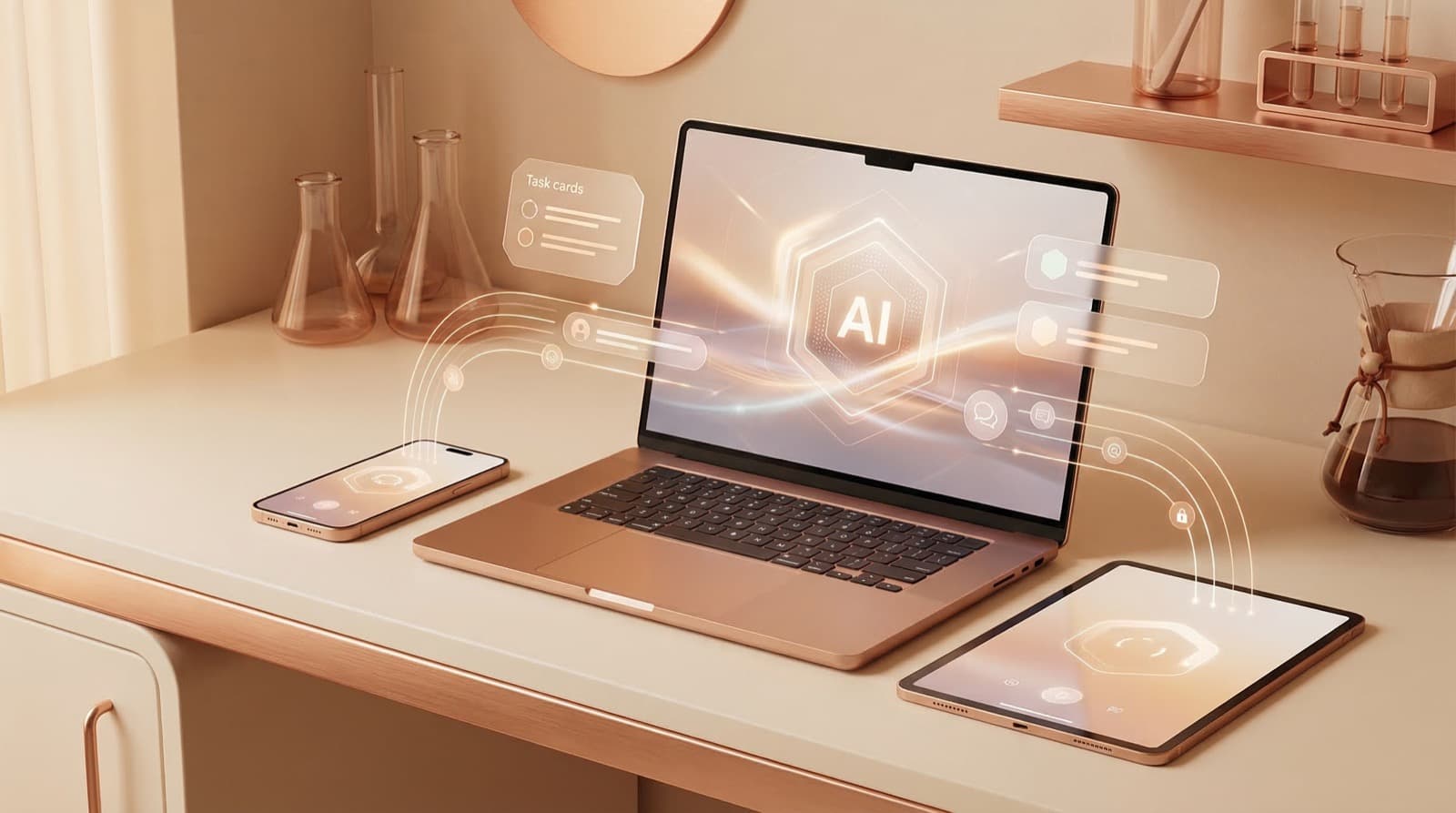

Anthropic just finished a rollout that makes Claude feel a lot more like a real remote operator than a chat app with a mobile companion. Felix Rieseberg confirmed on March 18 that Dispatch is now available to 100% of Claude Pro users, moving the feature from limited rollout language into full Pro-tier availability.
Dispatch solves a very specific friction point in agent workflows: the best version of Claude often lives on your desktop, attached to your files, your connectors, and your local environment, but your actual life does not. You leave your desk. You are in a car, at lunch, walking into a meeting, or reviewing something from the couch. Dispatch lets you keep the desktop agent where the tools are while controlling the task from wherever you are.
That sounds small until you look at what it changes.
Dispatch just crossed the line from preview to habit
The basic promise of Dispatch is simple: start or continue a Cowork task from another device, then let Claude execute on the desktop machine that already has access to the right files and services. Anthropic has framed it as a persistent thread rather than a one-shot mobile request. You can ask Claude to summarize a spreadsheet, search connected tools, build a briefing, or prepare a formatted output, then come back later for the finished result.
That is a different interaction model from classic chatbot usage. Instead of sitting in front of a screen waiting for a response, you are handing off a job to a machine that stays in place while you move around. The center of gravity shifts from conversation to delegation.
Full Pro rollout is the important threshold. Early preview features are easy to dismiss as experiments. Once every Pro user can access the capability, it stops being a demo for enthusiasts and starts becoming part of the product people evaluate when deciding whether Claude belongs in their daily stack.
This is better than "mobile Claude"
Plenty of AI apps already let you continue a chat on your phone. Dispatch is more interesting because it is not really about mobile chat at all. It is about using mobile as a command surface for a more capable system running somewhere else.
That distinction matters. Phones are bad workstations for serious agent tasks. They are great for initiating work, checking status, and sending follow-up instructions. Laptops and desktops remain better places for filesystem access, local tools, background execution, and all the messy context that makes agents useful in the first place.
Dispatch embraces that split instead of pretending the phone should replace the computer. The phone becomes the remote control. The desktop stays the engine room.
Anthropic is effectively productizing a behavior power users already wanted: "keep my agent attached to my real environment, but do not make me sit in front of it to get value."
The setup requirement is still the limiting factor
There is one constraint that keeps Dispatch grounded in reality. Your desktop app still has to be installed, configured, powered on, and connected to the internet. This is not cloud execution in the same way as a browser-based coding sandbox. It is remote task initiation for an agent that lives on your own machine.
That requirement will block some people, especially anyone expecting a fully server-side assistant that keeps working after their laptop lid closes. But the tradeoff is obvious: running on your own desktop lets Claude use the exact environment you already trust and maintain. Local folders, installed connectors, account access, and project-specific context are already there.
Anthropic picked the messier architecture, and it was the right call. Remote control over a real working machine is more useful than a cleaner demo running in an isolated cloud box with half your context missing.
Anthropic is normalizing the remote agent pattern
The strategic angle is bigger than one feature. Dispatch nudges users toward a model where AI is not just something you open when you need help. It becomes an always-available operator connected to your environment, ready to pick up work from whatever device happens to be in your hand.
That is a sticky model. Once people get used to tossing a task to Claude while they are away from their desk, the product starts competing less with chat interfaces and more with the ambient convenience of delegation itself. The value is not only better answers. It is fewer dead minutes between noticing a task and getting it underway.
TestingCatalog's coverage framed the update as remote task delegation across devices, which is exactly right. Anthropic is training users to think of Claude as a desktop agent with portable control surfaces. That is a stronger product position than "AI assistant with an app."
From side feature to daily operating layer
Felix Rieseberg's confirmation closes the loop on a rollout that moved quickly from preview messaging to broad Pro access. The feature still depends on a live desktop session, and that keeps it from being magic. It also keeps it honest.
The verdict is straightforward: Dispatch makes Claude Pro materially more useful because it turns Cowork into a workflow you can actually live with. If Anthropic keeps extending what that desktop agent can reach, cross-device delegation will stop feeling like an add-on and start feeling like the default shape of personal AI work.
AI Pilot Readiness Checklist
Turn the idea into a pilot you can defend.
AI agent articles are easy to bookmark and hard to operationalize. Use the readiness questions as a shared way to decide whether a workflow is specific enough, safe enough, and measurable enough to pilot. If they surface a strong candidate, BaristaLabs can review it with you and help shape a first version that fits your systems, approval process, and risk tolerance.
Please do not submit PHI, customer records, credentials, or confidential workflow exports.
Practical AI Workflow Notes
Want more practical AI operations ideas?
Get short notes on applying AI inside real small-business workflows — from document handling and customer follow-up to internal reporting, compliance, and automation guardrails.