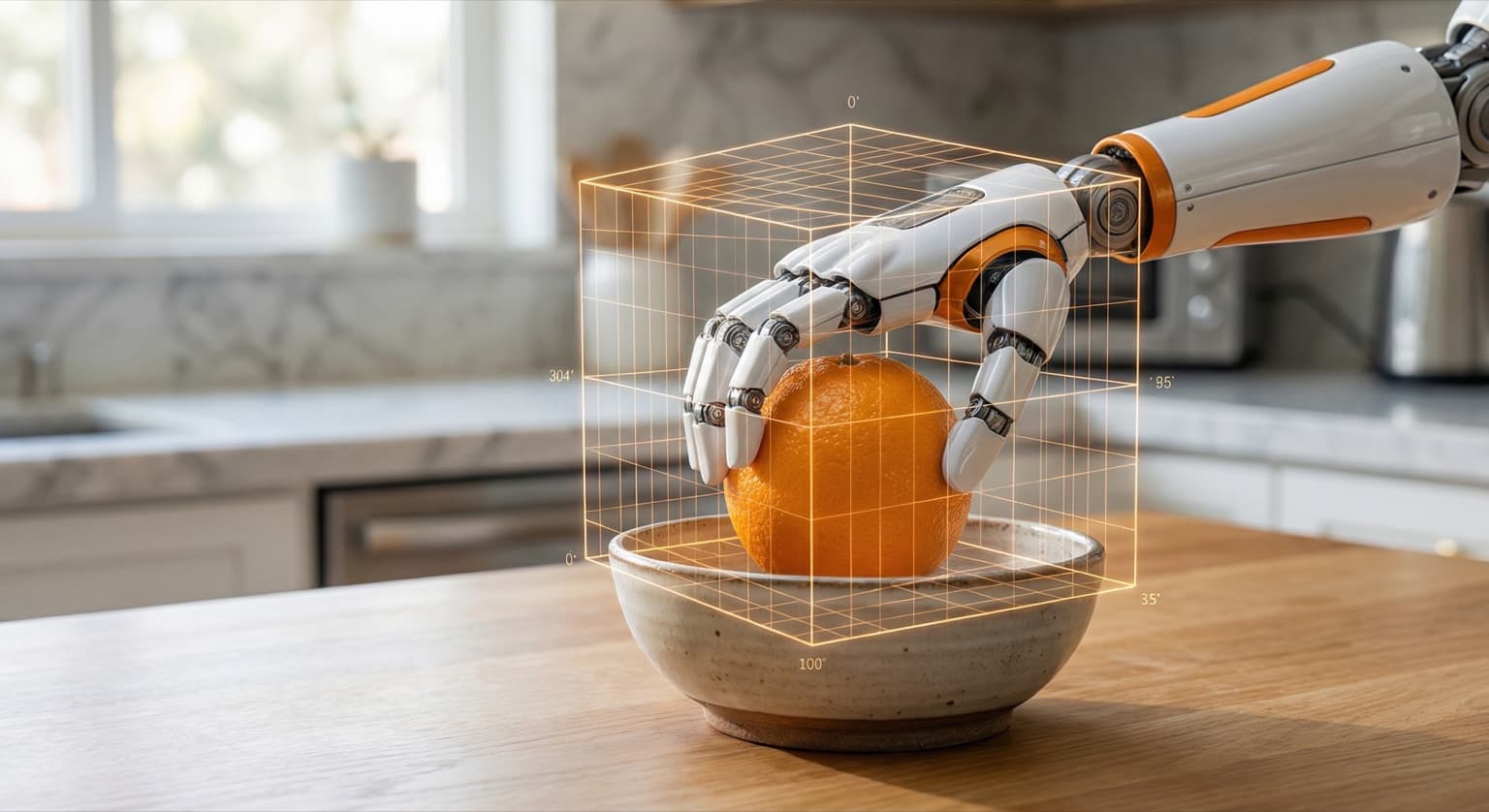

While the world was busy watching China's AI labs drop three massive LLMs in 24 hours, Alibaba quietly unveiled something potentially more transformative: a brain for robots that understands the concept of time.
Alibaba's DAMO Academy introduced RynnBrain this week, a foundation model designed specifically for embodied AI. Unlike traditional robotics models that react to immediate sensory input, RynnBrain is built with intrinsic "time and space awareness," allowing it to understand object permanence and execute complex, multi-step tasks in dynamic environments.
Beyond Reaction: The "Object Permanence" Breakthrough
Most current robots operate on a "see-think-act" loop that is heavily dependent on the immediate visual field. If a robot sees an orange on a table, it can pick it up. But if you cover the orange with a cloth, many models forget it exists.
RynnBrain changes this equation. According to reports from CNBC, the model can "remember when and where events occurred, track task progress, and continue across multiple steps."
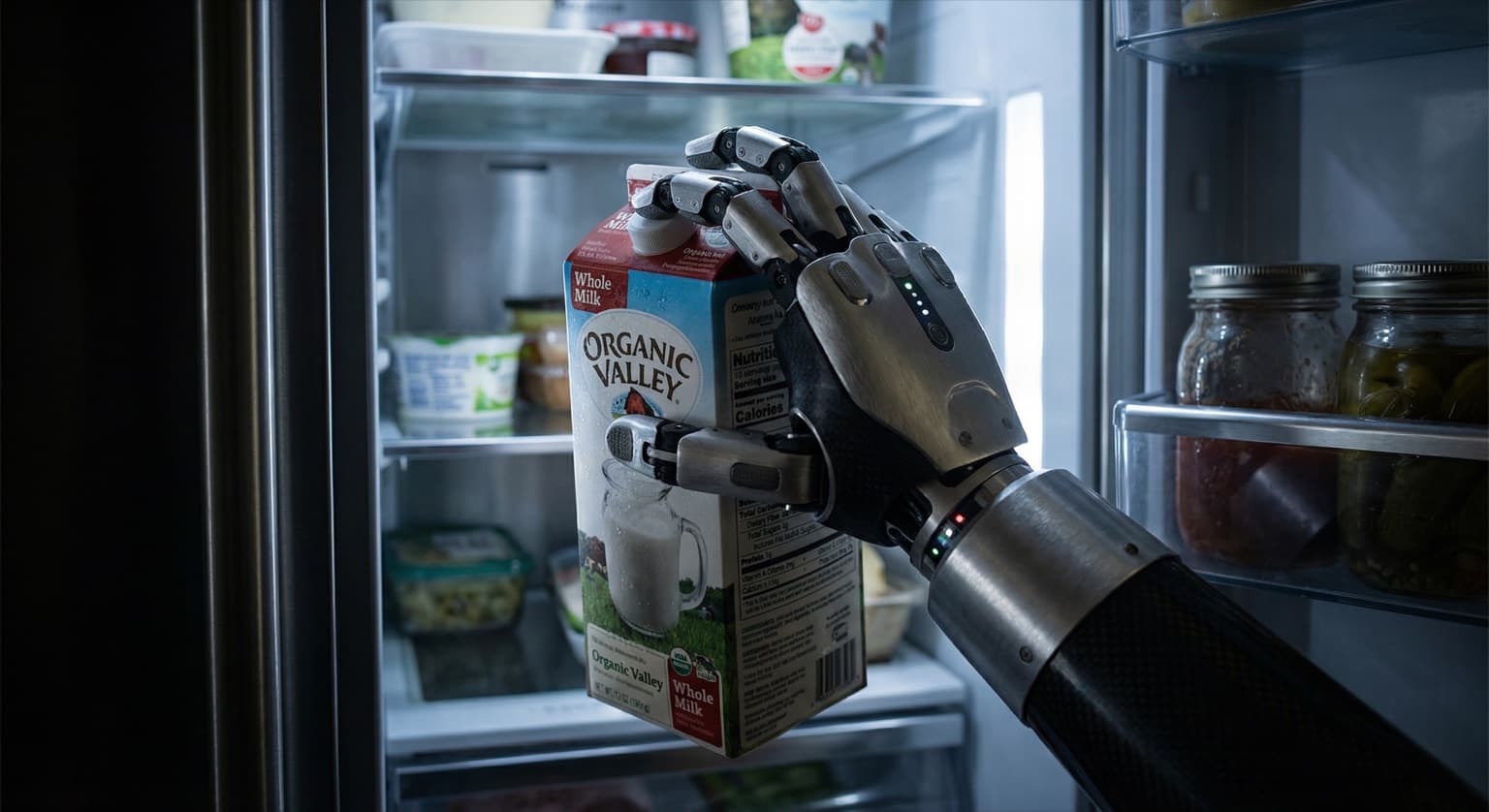
In a demonstration video released by Alibaba, a robot equipped with RynnBrain used pincer hands to:
- Count oranges on a table.
- Pick them up and place them in a basket.
- Open a refrigerator and retrieve a carton of milk.
Crucially, the robot demonstrated an understanding that the milk was inside the fridge even before opening it—a level of spatial reasoning that mimics human cognition.
"Instead of simply reacting to immediate inputs, the robot can remember when and where events occurred," said Adina Yakefu, a researcher at Hugging Face, in an interview with CNBC. "This makes it more reliable and coherent in complex real-world environments."
The Race for "Physical AI"
RynnBrain enters a crowded and rapidly accelerating field. We are seeing a massive pivot from "Generative AI" (creating text/images) to "Physical AI" (moving atoms).
- Tesla Optimus: Already replacing legacy models in factories, focusing on end-to-end neural network control.
- Figure 03: Recently showcased breakthrough dexterity with the Helix-02 hand.
- Nvidia Project GR00T: A general-purpose foundation model for humanoid robots.
- Google RT-2: Google's vision-language-action (VLA) model that translates web knowledge into robotic actions.
Alibaba's entry suggests that the "foundation model war" is moving from the cloud to the factory floor. By building a "foundational intelligence layer for embodied systems," Alibaba is positioning itself to be the operating system for the millions of humanoid robots expected to enter the workforce by 2030.

Why "Time Awareness" Matters for Business
For businesses looking at automation, RynnBrain's focus on temporal context is a critical differentiator.
In a warehouse or kitchen, tasks are rarely instantaneous. A robot might need to:
- Take an order.
- Wait for fries to cook (temporal awareness).
- Retrieve the fries only when the timer is done.
- Combine them with a burger made 2 minutes ago (object permanence).
A model that understands "past" (what I already did) and "future" (what I need to do next) is essential for replacing human labor in complex, unstructured environments.
The Chinese AI Surge
RynnBrain was just one part of a massive week for Chinese AI. Alongside it, we saw:
- Kuaishou's Kling 3.0: A video generation model with major consistency upgrades and 15-second generation times.
- ByteDance's Seedance 2.0: A viral video tool competing with Sora.
- MiniMax & Zhipu: Releasing new reasoning and coding models.
The pace of innovation in 2026 is blistering, and the lines between software intelligence and hardware capability are blurring faster than anyone predicted.
Are You Ready for Embodied AI?
The transition from digital AI to physical AI will reshape industries from logistics to healthcare. If your business is still struggling to adopt LLMs, the wave of robotics might feel overwhelming—but it is coming regardless.
At Barista Labs, we help businesses navigate this complex landscape, from selecting the right AI models to preparing your infrastructure for the autonomous future.
Contact us today to discuss your AI strategy.
AI Pilot Readiness Checklist
Turn the idea into a pilot you can defend.
AI agent articles are easy to bookmark and hard to operationalize. Use the readiness questions as a shared way to decide whether a workflow is specific enough, safe enough, and measurable enough to pilot. If they surface a strong candidate, BaristaLabs can review it with you and help shape a first version that fits your systems, approval process, and risk tolerance.
Please do not submit PHI, customer records, credentials, or confidential workflow exports.
Practical AI Workflow Notes
Want more practical AI operations ideas?
Get short notes on applying AI inside real small-business workflows — from document handling and customer follow-up to internal reporting, compliance, and automation guardrails.