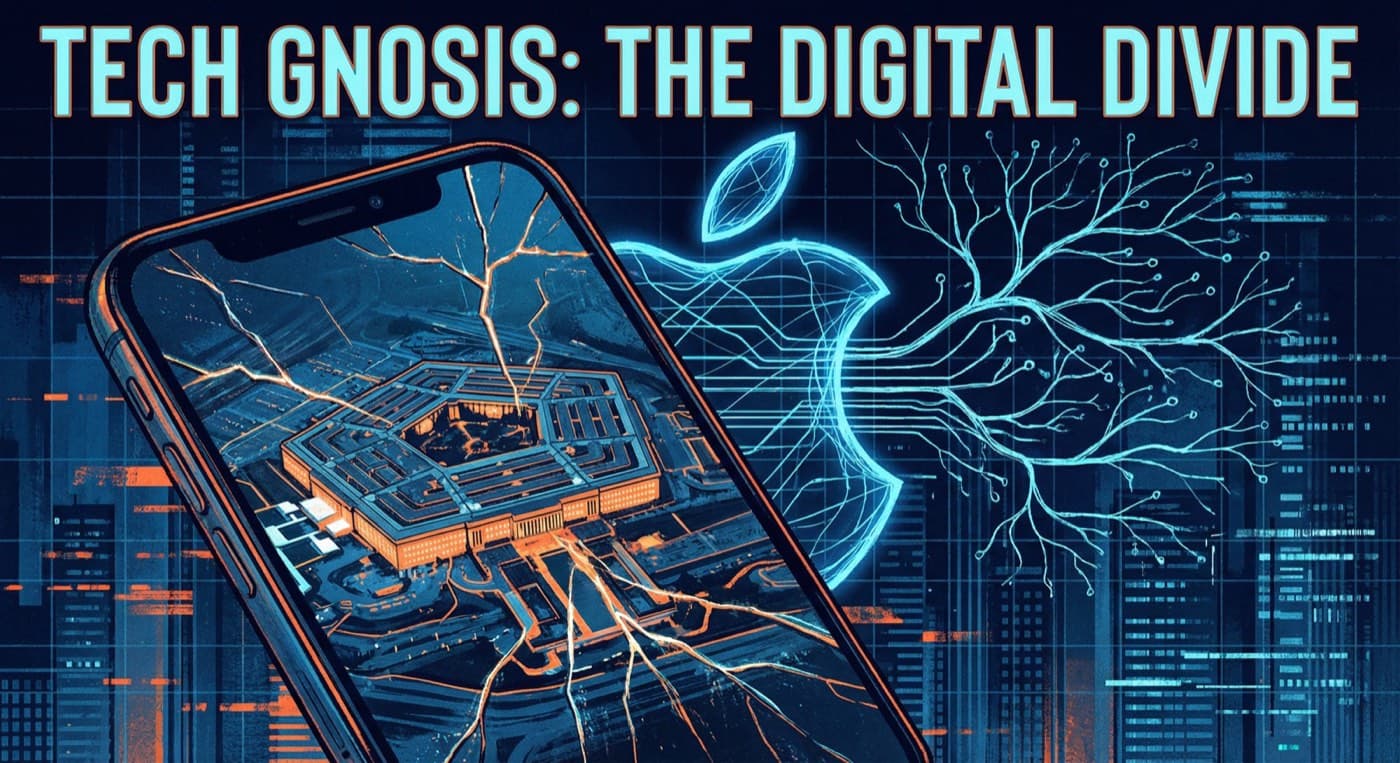

The Anthropic-Pentagon saga that dominated Friday and Saturday spawned a weekend of clarifications, employee revolt, and competitive maneuvering — all of which resolved into a clearer picture by Sunday afternoon. Meanwhile, two separate platform-layer stories landed that will matter more to most operators than anything happening in Washington.
Here's the dispatch, in order.
09:00 AM ET — OpenAI Posts Its Pentagon Guardrail Framework
After announcing the Department of Defense agreement Friday and watching the internet light up with questions over the weekend, OpenAI published a detailed blog post this morning explaining precisely what its models can and cannot be used for under the contract.
The three hard stops: mass domestic surveillance, autonomous weapons systems, and high-stakes automated decisions (the post explicitly uses "social credit" as an example). OpenAI says its safety stack travels with the model deployment rather than relying solely on usage policy language, and that cleared OpenAI personnel remain in the loop for classified environment use.
CEO Sam Altman acknowledged on social media that the deal was "definitely rushed" and that "the optics don't look good" — a remarkably candid self-assessment for a CEO defending a government contract. The acknowledgment doesn't change the contract's terms, but it signals Altman knows the company absorbed trust damage by moving so quickly after Anthropic's negotiations collapsed.
The meaningful operational distinction OpenAI is drawing: its models deploy via cloud with a continuous safety layer, not as fine-tuned weights handed over for self-hosting. Whether that distinction survives contact with classified network requirements over time is an open question the blog post doesn't address.
10:30 AM ET — 200+ Employees Sign Letter Backing Anthropic's Position
A cross-company open letter signed by more than 200 employees at Google and OpenAI called on their respective leadership to "put aside their differences" and stand with Anthropic against what the letter frames as coercive pressure to remove safety guardrails in exchange for government contracts.
The letter is notable for its source as much as its content. These are employees at the companies that did sign Pentagon agreements — or in Google's case, are rumored to be in advanced discussions. The fact that they're signing a letter supporting a competitor's principled stand is an unusual public signal about internal culture at both firms.
For operators: employee sentiment at foundation model labs has historically been a leading indicator of model safety culture. Watch whether either company responds publicly or whether the letter quietly disappears into HR inboxes.
11:00 AM ET — TechCrunch: "The Trap Anthropic Built for Itself"
A longer analytical piece from TechCrunch this morning is worth reading in full. The argument — drawing on MIT's Max Tegmark — is that Anthropic, like its rivals, spent years resisting formal regulation while promising self-governance, and is now discovering that self-governance has no enforcement mechanism when a government customer shows up with requirements you won't meet.
The piece doesn't take sides on whether Anthropic's red lines are correct. Its argument is structural: the industry collectively chose a path that maximized speed and minimized regulatory constraint, and the Pentagon negotiation is the first large-scale consequence of that choice coming due.
This is background context, not an actionable item for most operators. But if you're building on AI-native infrastructure and have government-adjacent customers, the article is a useful frame for the conversation that's coming about AI procurement governance.
Early Afternoon — Apple Confirms Core AI Framework for WWDC 2026
Reported today via 9to5Mac and confirmed by Bloomberg's Power On newsletter: Apple will retire Core ML at WWDC 2026 in favor of a new first-party framework called Core AI, aligned with iOS 27.
Core ML launched in 2017 and was designed around on-device inference for discrete tasks — image classification, natural language processing, basic prediction. Core AI is positioned as a unified framework that handles the full spectrum of on-device AI operations, including the Apple Foundation Models announced last year and the expanded Siri capabilities that have been rolling out incrementally since then.
The practical impact for iOS developers: existing Core ML models will reportedly continue to work via compatibility shims, but new development targeting the AI features Apple is prioritizing will need to move to the Core AI APIs. WWDC is in June. That's a roughly four-month window to assess migration scope.
For the broader platform picture, this is Apple doing what Apple does: absorbing a technology layer that was previously fragmented across third-party tools and making it a first-party primitive. The pattern is identical to what happened with ARKit, HealthKit, and Metal. If Core AI follows that trajectory, it becomes table stakes for any iOS app touching AI features within two to three release cycles.
Afternoon — DeepSeek V4 Confirmed for This Week
The Financial Times reported Friday, and multiple outlets confirmed today, that DeepSeek will release V4 in the first week of March — timed to coincide with China's annual Two Sessions parliamentary meetings starting March 4.
The V4 announcement is significant because it represents DeepSeek's first move into multimodal generation: the model is expected to include image and video generation capabilities, directly competing with OpenAI's DALL-E and Sora, and Google's Imagen and Veo. DeepSeek's prior releases (V2, V3, R1) established the company's credibility on language and reasoning at dramatically lower compute cost. Extending that cost efficiency to image and video generation — if it holds — would be a meaningful market event.
No benchmark scores are available yet. Expect them Tuesday or Wednesday. DeepSeek's track record on release claims has been solid, so the window for genuine surprise here is real.
MWC 2026 Opens in Barcelona — The AI Infrastructure Layer
Mobile World Congress kicked off its preview weekend with a notable shift in tone: the headline announcements aren't phones, they're AI infrastructure plays.
Samsung presented its "Network in a Server" concept — a software-defined edge AI solution aimed at enterprise deployments, positioned as a next-generation alternative to traditional telecom infrastructure. MediaTek used its keynote to unveil an "AI For Life: From Edge to Cloud" showcase, with president Joe Chen framing the company's entire chip roadmap around AI workload distribution across device, edge, and cloud tiers.
Honor's AI Vision keynote previewed on-device AI capabilities coming to its Magic V6 lineup, with a particular focus on real-time translation and vision-based task automation.
The pattern across all three announcements is the same: AI is moving from a software feature to a hardware infrastructure assumption. The question for the next 18 months is where the inference layer actually sits — on device, at the edge, or in the cloud — and which chip vendors win each tier. MWC is the first major venue of 2026 where that competition is being argued in public, hardware-first.
Editorial Read
The most important story today isn't the Pentagon drama, which is fundamentally a political story about one company's negotiations with one customer. It's the combination of Apple's Core AI and DeepSeek V4 arriving in the same week.
Apple retiring Core ML means the developer contract for iOS AI is being rewritten. That has no urgency for most businesses today, but it creates a deprecation clock that will matter for every team shipping AI features to iPhone users. The earlier you map your Core ML dependencies, the less painful June gets.
DeepSeek V4's multimodal play, if it delivers on cost efficiency the way V3 did for text, changes the economics of image and video generation for anyone not yet committed to a platform contract. Worth waiting for the benchmarks before the next infrastructure decision.
AI Pilot Readiness Checklist
Turn the idea into a pilot you can defend.
AI agent articles are easy to bookmark and hard to operationalize. Use the readiness questions as a shared way to decide whether a workflow is specific enough, safe enough, and measurable enough to pilot. If they surface a strong candidate, BaristaLabs can review it with you and help shape a first version that fits your systems, approval process, and risk tolerance.
Please do not submit PHI, customer records, credentials, or confidential workflow exports.
Practical AI Workflow Notes
Want more practical AI operations ideas?
Get short notes on applying AI inside real small-business workflows — from document handling and customer follow-up to internal reporting, compliance, and automation guardrails.