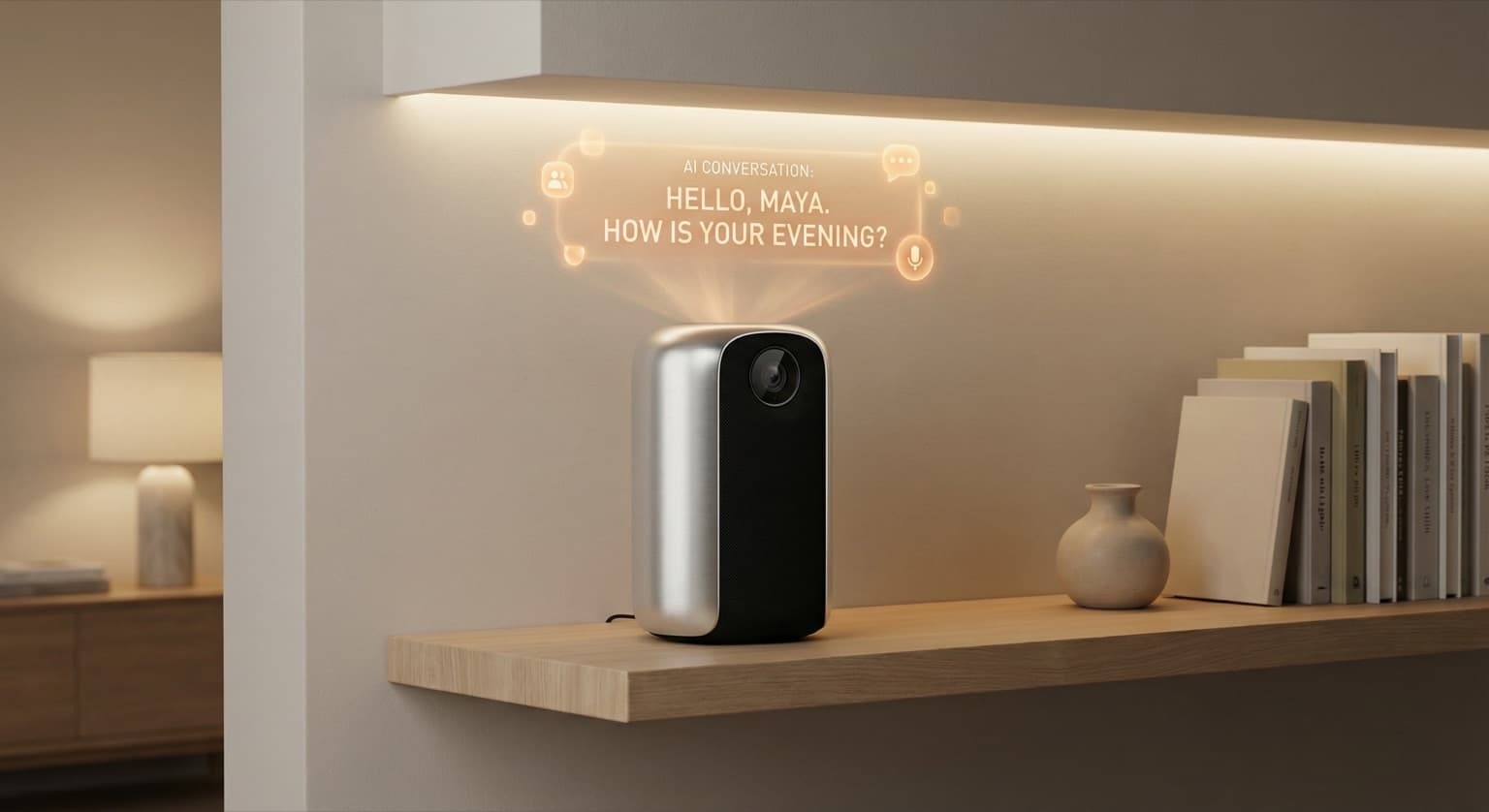

OpenAI has spent the last three years proving that large language models can write code, pass bar exams, and hold conversations that feel uncomfortably human. But ChatGPT still lives behind a screen. According to a report from The Information, that is about to change.
The company is developing a lineup of AI-powered consumer devices, starting with a smart speaker that includes a built-in camera and facial recognition. Former Apple design chief Jony Ive and his team from io Products are leading the industrial design, and roughly 200 employees are working on the effort. The first device is reportedly targeting a 2027 launch at a price point between $200 and $300.
This is not a concept video or a research paper. It is a funded hardware program with a design legend attached and a delivery timeline. For businesses watching the AI landscape, it deserves attention.
What We Know About the Device
The smart speaker would combine voice interaction with visual awareness. According to multiple outlets citing The Information report, the device would use a camera for facial identification similar to Apple Face ID. That means it could recognize individual users, personalize responses, and potentially authorize purchases based on who is standing in front of it.
More interesting than the authentication angle is what sources describe as proactive contextual assistance. One example from the report: the device detects late-night activity before a scheduled early meeting and suggests the user get some rest. The system is not just listening for wake words. It is observing behavior patterns and offering unsolicited but useful advice.
That moves the device category from "smart speaker" into something closer to an ambient AI companion -- a concept that companies like Amazon and Google have chased for years with limited success.
The Jony Ive Factor
OpenAI acquired Ive's startup io Products in a deal reportedly valued at $6.5 billion. That is an extraordinary price tag for a hardware design firm, but it signals how seriously OpenAI is treating the physical product experience.
Ive's track record at Apple -- the iMac, iPod, iPhone, Apple Watch -- is not just about making things look good. His team repeatedly defined entirely new product categories by making technology approachable. OpenAI appears to be betting that the same design sensibility can make AI hardware feel natural in a home setting rather than intrusive.
The smart speaker is just the starting point. Additional devices in various stages of development reportedly include AI-powered smart glasses targeted for around 2028, and an experimental smart lamp concept with no confirmed release window.
Why Software Companies Are Chasing Hardware
OpenAI is not alone in this pivot. Samsung recently rebooted Bixby as a full AI agent with Perplexity search built in, and Google is expanding its AI hardware ambitions alongside massive infrastructure investments. Meta has been pushing Ray-Ban smart glasses with its AI assistant for over a year.
The pattern is clear: AI companies are realizing that the smartphone app is not the optimal interface for their technology. Voice-first, always-available devices eliminate the friction of opening an app, typing a prompt, and waiting for a response. A dedicated device can listen, see, and respond without the user ever reaching for a phone.
For businesses, this matters because it reshapes how customers will interact with AI services. If your customer base starts using ambient AI devices at home, they will expect the same always-available intelligence from the products and services they buy from you.
The Privacy Question No One Has Answered
A camera-equipped smart speaker sitting in your living room raises obvious concerns. Amazon faced significant backlash over Echo Show and Ring devices. Google Nest cameras generated privacy lawsuits. And those devices did not include facial recognition as a core feature.
OpenAI has not disclosed how facial data would be processed, stored, or secured. There is no information about whether recognition happens on-device or requires cloud processing. For a company that has already faced scrutiny over data practices in its training pipeline, the stakes are significant.
For business owners evaluating AI hardware for office or retail environments, these privacy questions are not theoretical. Any device with a camera and facial recognition that sits in a shared space will require clear policies around consent, data retention, and employee notification. Getting ahead of those requirements now is worth the effort.
What This Means for Small Businesses
You are not going to buy an OpenAI smart speaker for your business next quarter. The device is at least a year away, and the first version will clearly target consumers. But the implications matter now for three reasons.
First, ambient AI is becoming the interface. The companies with the most AI talent and capital are investing billions in devices that remove screens from the equation. If you are building customer-facing tools or internal workflows that rely on AI, consider how they would work in a voice-and-vision-first world.
Second, the hardware race will drive API improvements. OpenAI building dedicated devices means it needs faster, cheaper, more reliable model inference. Every optimization it makes for a $250 consumer product will trickle down to the APIs that small businesses use to build with AI today.
Third, expect a new wave of AI-native accessories. Just as the iPhone spawned an ecosystem of cases, chargers, and connected devices, dedicated AI hardware will create opportunities for businesses that build complementary products and services.
The Bottom Line
OpenAI transitioning from software company to hardware company is one of the most significant strategic shifts in AI this year. Whether the smart speaker succeeds commercially matters less than what it represents: the biggest AI lab on the planet decided that software alone is not enough to deliver the experience it wants users to have.
That conviction, backed by $6.5 billion in design talent and 200 dedicated engineers, tells you where the industry is heading. The question for your business is not whether ambient AI devices will arrive. It is whether you will be ready when they do.
Need help evaluating how AI hardware trends affect your business strategy? Barista Labs helps small businesses cut through the noise and focus on AI investments that actually drive results.
AI Pilot Readiness Checklist
Turn the idea into a pilot you can defend.
AI agent articles are easy to bookmark and hard to operationalize. Use the readiness questions as a shared way to decide whether a workflow is specific enough, safe enough, and measurable enough to pilot. If they surface a strong candidate, BaristaLabs can review it with you and help shape a first version that fits your systems, approval process, and risk tolerance.
Please do not submit PHI, customer records, credentials, or confidential workflow exports.
Practical AI Workflow Notes
Want more practical AI operations ideas?
Get short notes on applying AI inside real small-business workflows — from document handling and customer follow-up to internal reporting, compliance, and automation guardrails.