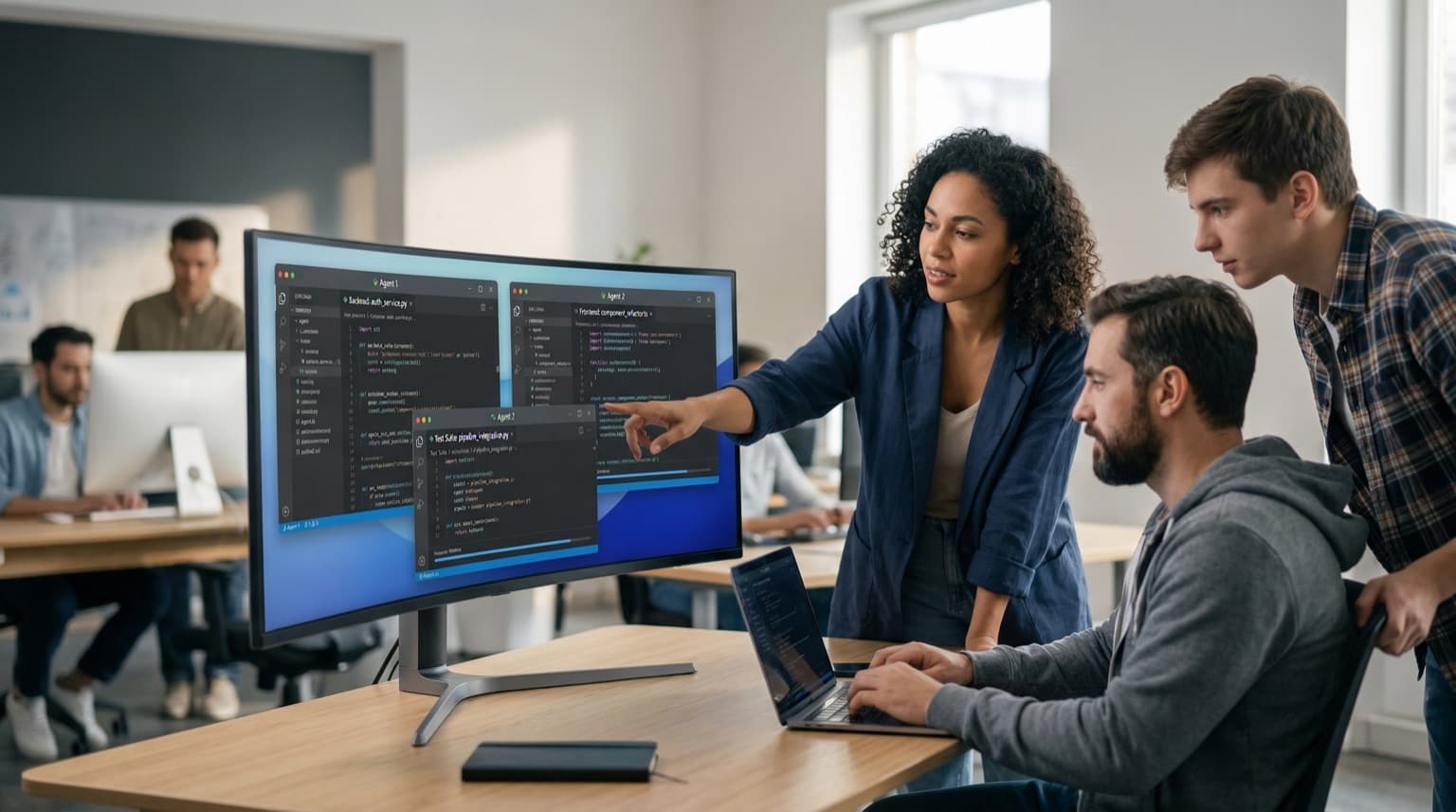

OpenAI announced two Codex moves on the same day: Codex Security (positioned as an application security agent) and Codex support for open-source maintainers. The combined signal is clear: AI coding tools are moving beyond generation into full software lifecycle work, especially security and maintenance.
For small and mid-sized businesses, this is not a “someday” update. It directly affects how fast you can ship safely with small teams.
What OpenAI Announced
From OpenAI’s developer account on X:
- Codex Security launch: OpenAIDevs post
- Codex for Open Source maintainers launch: OpenAIDevs post
Even without marketing fluff, the direction is important. OpenAI is treating code as an operational surface: write it, review it, secure it, and sustain it.
Why This Matters for SMBs
Most SMB engineering teams have the same three bottlenecks:
- Security review capacity is thin. You may not have dedicated AppSec staff.
- Open-source maintenance debt accumulates. Dependency updates and security patches get deferred.
- Shipping pressure wins. Teams prioritize feature work over hardening.
A security-focused coding agent plus maintainer-oriented workflows can reduce those bottlenecks if adopted correctly.
Practical Use Cases You Can Test This Quarter
1) Pull-request security triage
Use Codex Security as a first-pass reviewer for:
- risky auth/session patterns
- input validation gaps
- insecure defaults
- obvious secrets exposure
Treat it like an aggressive junior AppSec reviewer: useful, fast, and sometimes wrong. Human approval still decides merges.
2) Dependency and patch support for internal tools
If your team runs internal scripts, automations, or customer portals, test whether Codex workflows can:
- identify vulnerable packages
- suggest minimally disruptive upgrades
- generate patch PRs with clear rollback notes
This is where SMBs usually lose time: not building new software, but keeping old software safe.
3) Open-source participation with lower overhead
If your product depends on open-source libraries, maintainers now getting Codex support can improve issue throughput and patch velocity. SMBs benefit indirectly through faster upstream fixes.
If you maintain your own open-source component, this can also reduce maintainer burnout by handling repetitive triage and draft fixes.
The Real Risk: False Confidence
The failure mode is predictable: teams assume “AI checked it, so it’s secure.”
Don’t do that.
A better model is AI-augmented verification:
- AI proposes findings and patches
- CI enforces tests and policy checks
- humans approve risk tradeoffs
If your process skips the last step, you’re not doing DevSecOps—you’re outsourcing judgment.
SMB Implementation Playbook (30 Days)
If you want to move quickly without creating chaos:
Week 1: Define scope
- Pick one repo with active PR traffic.
- Define 5–8 security checks you care about most.
- Decide acceptance criteria for AI-generated suggestions.
Week 2: Shadow mode
- Run Codex Security suggestions in parallel to your normal review.
- Measure signal quality: true positives, false positives, missed issues.
Week 3: Controlled adoption
- Let AI findings block merges only for specific high-risk patterns.
- Keep human override mandatory.
Week 4: Open-source + maintenance workflow
- Pilot dependency update cadence with AI-assisted PRs.
- Track time-to-patch and rollback frequency.
If metrics improve, expand gradually. If they don’t, narrow scope and retrain prompts/policies.
Bottom Line
OpenAI’s dual Codex launch is meaningful because it targets the two places SMBs feel pain most: security coverage and maintenance load.
The opportunity is real, but only if you treat these tools as force multipliers—not autonomous decision-makers. The SMB winners will be teams that combine AI speed with disciplined review and measurable controls.
Sources
- OpenAI Developers on X — Codex Security: https://x.com/OpenAIDevs/status/2029983809652035758
- OpenAI Developers on X — Codex for Open Source: https://x.com/OpenAIDevs/status/2029998191043911955
AI Pilot Readiness Checklist
Turn the idea into a pilot you can defend.
AI agent articles are easy to bookmark and hard to operationalize. Use the readiness questions as a shared way to decide whether a workflow is specific enough, safe enough, and measurable enough to pilot. If they surface a strong candidate, BaristaLabs can review it with you and help shape a first version that fits your systems, approval process, and risk tolerance.
Please do not submit PHI, customer records, credentials, or confidential workflow exports.
Practical AI Workflow Notes
Want more practical AI operations ideas?
Get short notes on applying AI inside real small-business workflows — from document handling and customer follow-up to internal reporting, compliance, and automation guardrails.