Anthropic Let One Person Run Growth Marketing. Small Businesses Should Pay Attention.
Anthropic reportedly had one marketer running six growth channels for about 10 months using Claude Code, AI agents, a Meta Ads MCP server.

Sean McLellan
Lead Architect & Founder
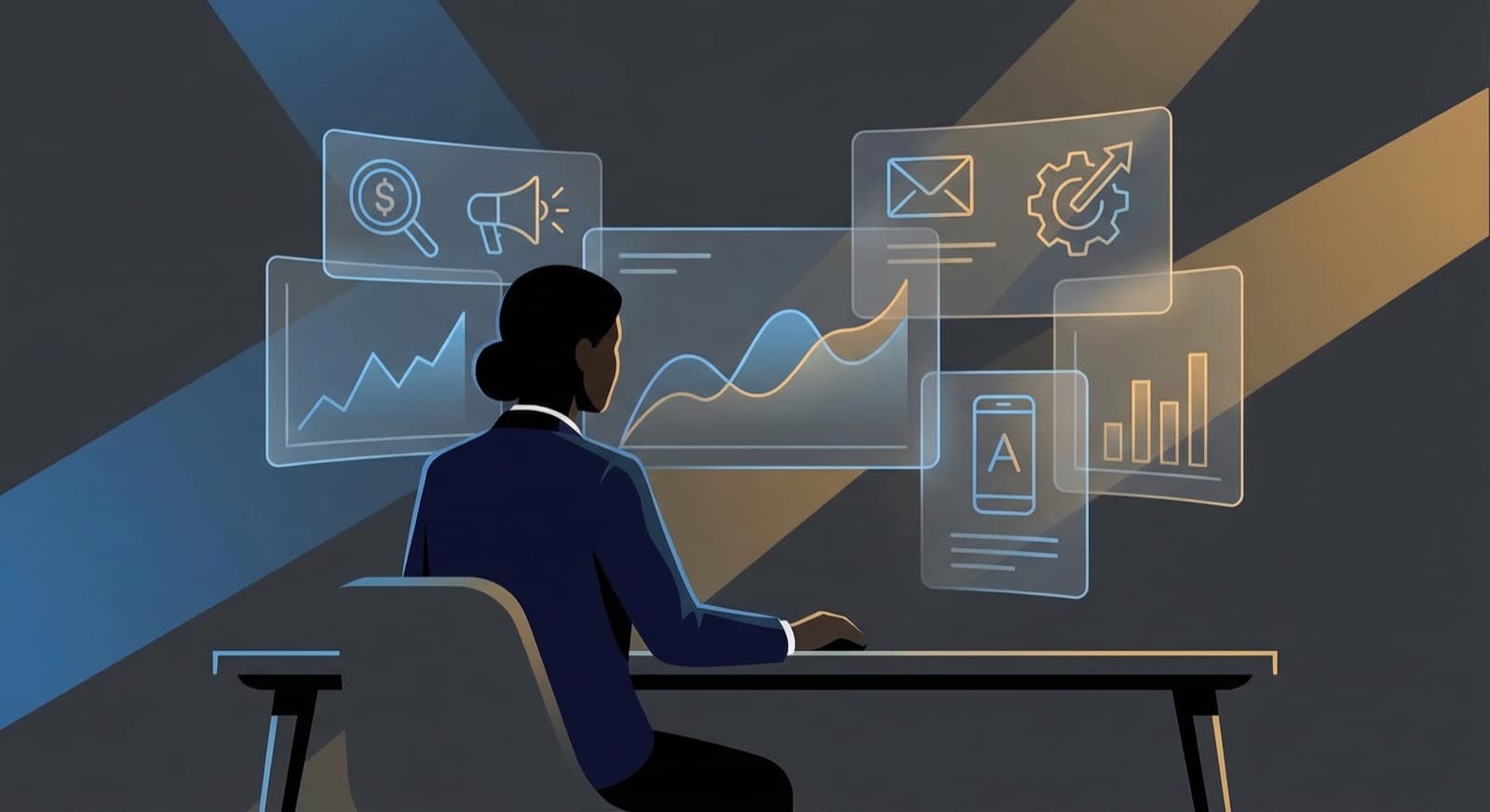
Most businesses are still asking whether AI will make their marketing team a little faster.
Anthropic just showed the more uncomfortable version of that question.
According to posts about Austin Lau's workflow, one non-technical marketer helped run growth marketing at Anthropic for roughly 10 months across paid search, paid social, app stores, email, SEO, and other growth ops while the company scaled from about $9 billion to $19 billion in annualized revenue. This is a company reportedly valued around $380 billion with 3,000+ employees. At that scale, you would normally expect a proper growth machine. Not one operator with a stack of AI tools and a stubborn refusal to wait around for headcount.
That is the story SMB owners should care about.
Not because your local service business is secretly Anthropic. Obviously not. But because the workflow is real, the leverage is real, and the budget implications are very real.
The stack matters more than the headline
What made this work was not "AI" in the vague, buzzwordy sense. It was a tight operating loop.
Here is the reported setup:
- Claude Code exported ad performance data
- it flagged underperforming ads automatically
- two specialized agents generated fresh copy variations
- a custom Figma plugin swapped new copy into ad templates
- the plugin could reportedly produce 100 variations in about 0.5 seconds
- an MCP server connected to Meta's Ads API let the team query live campaign data without bouncing between tabs and dashboards
That is not a toy workflow. That is an execution system.
Most marketing teams still split this across people: analyst pulls data, media buyer reviews losers, copywriter drafts new hooks, designer rebuilds creative, marketer uploads variants, manager checks performance later. It is slow because every handoff adds drag.
This setup collapsed the handoffs.
The real lesson: one person was running the loop
The key detail is not that one person replaced 15 or 20 people in some absolute sense. The key detail is that one person could run the entire optimization loop.
That loop looks like this:
- Pull live performance data
- Spot what is slipping
- Generate new copy angles
- Push those angles into creative assets
- Launch variants fast
- Check the next round of data
That is the whole game in paid growth.
If one operator can keep that loop moving every day, the team gets faster than larger groups stuck in meetings, approvals, and backlog theater. At big-company scale, that is wild. At SMB scale, it is a cheat code.
Why this should rattle small business marketing budgets
A normal company trying to cover six channels seriously might assume it needs:
- a paid search person
- a paid social person
- a lifecycle or email marketer
- an SEO lead
- a designer
- a copywriter
- maybe an analyst or marketing ops hire on top
At enterprise scale, that often turns into 15 to 20 marketers once you add management, creative support, and channel specialization. That is easily $3 million to $5 million a year in payroll.
SMBs are not spending that, but they do copy the same structure in miniature. They hire one specialist, then another, then an agency, then a freelancer, then wonder why growth feels expensive and weirdly slow.
Anthropic's example points to a different model.
Instead of buying separate humans for every micro-function, you build a compact system where one good operator has:
- direct access to performance data
- repeatable prompts and agents for copy generation
- template-driven creative production
- tight approval rules
- a short list of channels that actually matter
That does not mean "fire your team and let the bots cook." That is how you get garbage. It means the next great SMB marketing hire may be a marketing operator with good taste and strong systems instincts, not six disconnected specialists.
What SMBs can steal from this right now
You do not need Claude Code, an MCP server, and a custom Figma plugin on day one. You need the shape of the workflow.
Start here:
1. Build one weekly reporting loop
Pull channel data into one place. Stop making people log into five dashboards just to answer basic questions.
2. Define what counts as an underperformer
Bad CTR. Weak conversion rate. Rising CPA. Low reply rate. Pick the thresholds.
3. Use AI for first drafts, not final judgment
Let agents produce copy options, subject lines, hooks, and ad variants. Keep a human deciding what goes live.
4. Use templates for creative
If every ad refresh starts from a blank canvas, your process is broken.
5. Shorten the loop
The win is not better brainstorming. The win is getting from signal to test faster.
That is the part most SMBs miss. AI is not magic because it writes. It is useful because it removes waiting.
The blunt takeaway
If Anthropic could keep a huge chunk of growth moving with one non-technical marketer and the right toolchain, most small businesses are probably overestimating how much marketing headcount they need and underestimating how much workflow design they need.
That is the opportunity.
You may not need a bigger team yet. You may need a tighter loop.
If you want help building that loop without turning your marketing into AI slop, contact BaristaLabs.
Sources
- Source post by @itsolelehmann on X about Austin Lau's workflow at Anthropic
- Follow-up detail thread by @aakashgupta on X covering Claude Code agents, the Figma plugin, and Meta Ads MCP setup
AI Pilot Readiness Checklist
Turn the idea into a pilot you can defend.
AI agent articles are easy to bookmark and hard to operationalize. Use the readiness questions as a shared way to decide whether a workflow is specific enough, safe enough, and measurable enough to pilot. If they surface a strong candidate, BaristaLabs can review it with you and help shape a first version that fits your systems, approval process, and risk tolerance.
Please do not submit PHI, customer records, credentials, or confidential workflow exports.
Practical AI Workflow Notes
Want more practical AI operations ideas?
Get short notes on applying AI inside real small-business workflows — from document handling and customer follow-up to internal reporting, compliance, and automation guardrails.