One workload first
Do not start by making a giant model catalog. Pick the workload that would hurt most if a region, quota, retention, or SDK fact changed quietly.
Search articles, pages, and resources across BaristaLabs.
Start typing to search...
AI development field packet
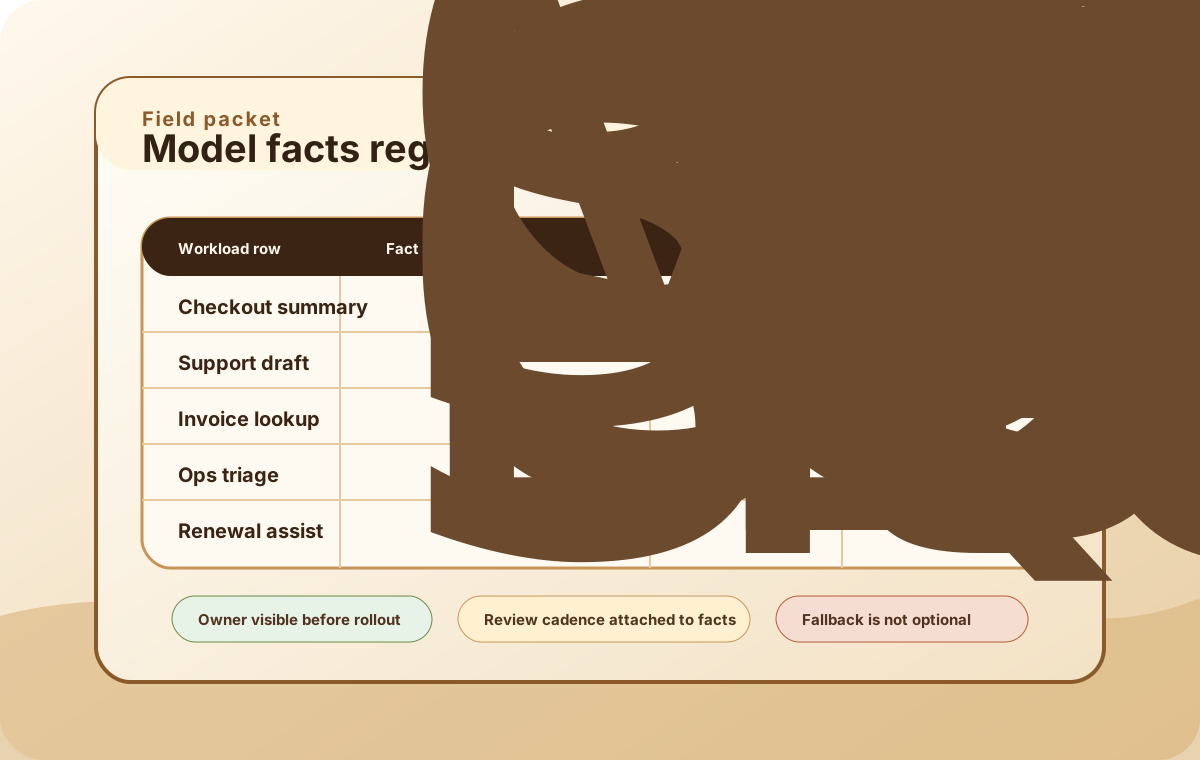
Use this register when a model decision depends on facts that can go stale: region, quota, context, price, lifecycle, retention, SDK behavior, and fallback. Start with one production workload and assign an owner before the next release treats the model choice as permanent.
A production workload is close to a quota ceiling or throughput change.
A Bedrock, SDK, model-version, or provider-routing update could break a release.
Security or legal needs the actual data-retention posture for one model-dependent workflow.
A team needs a fallback model, manual path, or stop rule before expanding traffic.
The model catalog is useful, but no one owns local SDK behavior, project policy, or review cadence.
A pilot is moving from experimentation into a support, operations, analytics, or customer-facing workflow.
How to use it
Do not start by making a giant model catalog. Pick the workload that would hurt most if a region, quota, retention, or SDK fact changed quietly.
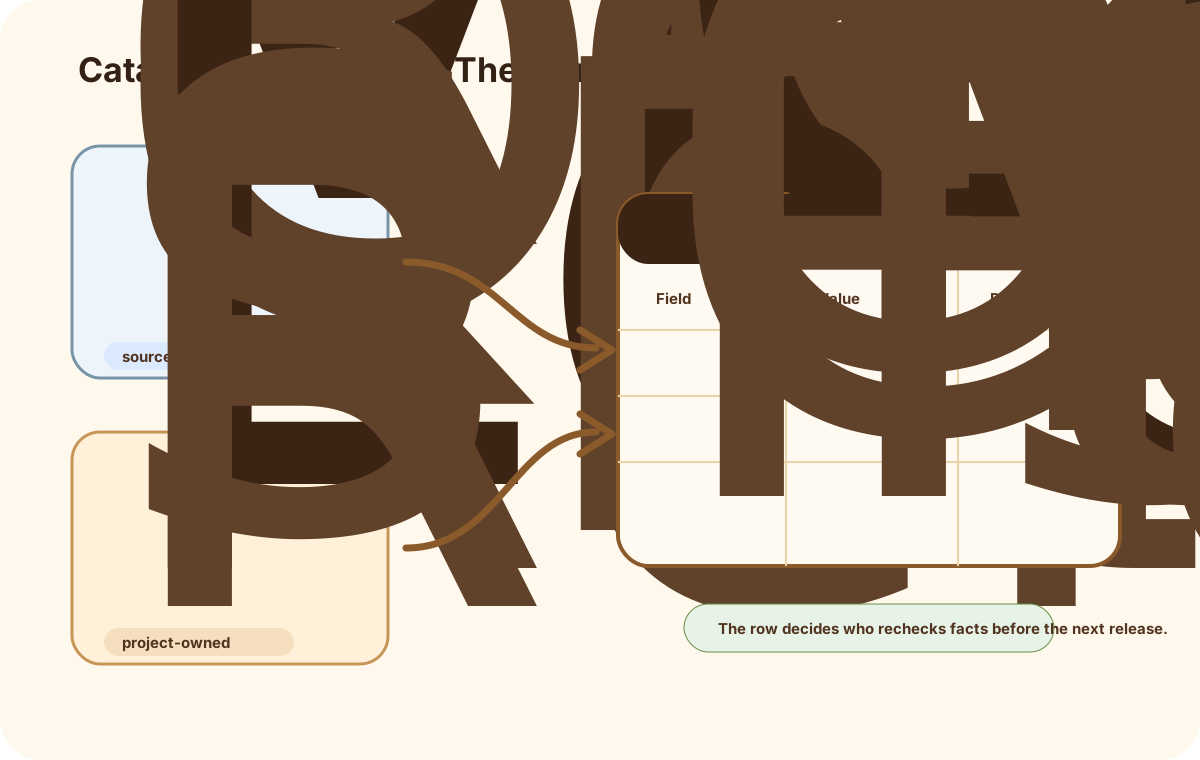
Bedrock or another vendor can expose model metadata. Your team still owns the account quota, project policy, SDK path, fallback, and review trigger.
A row is not complete until it has a last-refreshed date, an accountable owner, and the event that makes the team recheck it.
The time to name the fallback model or stop condition is before the primary path fails in production.
Copy the table into a planning document or spreadsheet. Keep the first pass narrow: one production workload or five recurring questions before creating a broad catalog.
| Field | What to write | Why it matters |
|---|---|---|
| Workload owner | The person accountable for this workload's model choice staying current. | A catalog can surface facts, but it cannot assign anyone to act on them. |
| Candidate model / provider | The exact model, version, provider, and invocation path this workload calls. | Provider families move fast enough that a family name is not a production decision. |
| Region availability | The regions where this model is actually served for this account and workload. | A model can be generally available and still absent from the region your workflow uses. |
| TPM / RPM quota | The current throughput ceiling for this account, region, and model path. | Quotas are operational facts, not marketing facts, and they change outside the original selection meeting. |
| Context and max output limits | The input, output, and tool-call ceilings this workload depends on. | A prompt or response shape that worked last quarter can fail after a model or SDK change. |
| Pricing / consumption mode | On-demand, provisioned throughput, batch, committed spend, or other billing mode. | The same model can have different economics depending on how the workload invokes it. |
| Lifecycle status | Generally available, legacy, preview, deprecated, replacement pending, or on a sunset clock. | Lifecycle notices often arrive outside the architecture doc that named the model. |
| Data-retention / project policy | Retention, residency, logging, training-use, or project-setting commitments that apply to this traffic. | Security and legal need the workload's actual policy, not a generic model-card assumption. |
| Known SDK / API incompatibilities | Client-library, message-format, schema, auth, tool-calling, or provider-routing issues for this workload. | Integration drift often appears when a specific SDK meets a specific model version. |
| Last refreshed | The date someone last checked every field in this row against current sources. | A fact with no timestamp is a guess wearing a table's clothing. |
| Review cadence | Monthly, quarterly, on quota alert, on lifecycle notice, on SDK upgrade, or before the next release. | The register only works if the row says when it gets rechecked. |
| Fallback model / stop rule | The fallback model, route, manual path, or pause condition when the primary choice breaks. | Without this row, a quota miss or deprecation notice becomes an incident instead of a routing decision. |
Copy block
The register is intentionally portable. It should survive a meeting, a pull request, a wiki page, or a spreadsheet before it becomes a polished internal tool.
Model Facts Register

Workload name:
Business owner:
Technical owner:
Current model path:

| Field | What to write | Owner / source | Last refreshed | Review trigger |
| --- | --- | --- | --- | --- |
| Workload owner |  |  |  |  |
| Candidate model / provider |  |  |  |  |
| Region availability |  |  |  |  |
| TPM / RPM quota |  |  |  |  |
| Context and max output limits |  |  |  |  |
| Pricing / consumption mode |  |  |  |  |
| Lifecycle status |  |  |  |  |
| Data-retention / project policy |  |  |  |  |
| Known SDK / API incompatibilities |  |  |  |  |
| Last refreshed |  |  |  |  |
| Review cadence |  |  |  |  |
| Fallback model / stop rule |  |  |  |  |

Decision note:
What changed since the last review:
What blocks the next release:
What the workflow does if the model path fails:
Example row
Next step
BaristaLabs can help map the model facts that matter for one production workload, especially the retention, SDK compatibility, quota, lifecycle, and fallback rows that vendor catalogs do not own for your implementation.
Review one model-dependent workflowSource notes
Related resources
Build the comparison evidence before the approved model path, owner, fallback, and recheck trigger enter the register.
Open resourceConnect the model row to permissions, approval policy, receipts, rollback, and launch evidence.
Open resourceName the data, vendor/model exposure, credential, retention, and security questions before model traffic expands.
Open resourceRecord which model path ran, what evidence it used, what action it proposed, and how the team can reconstruct or correct it.
Open resourceTurn fallback and stop-rule fields into a recovery path before model or quota drift becomes an incident.
Open resourceUse the register as advisory evidence before a model or vendor choice becomes the default.
Open resourceBring the register into custom AI systems that need production-readiness artifacts, not just model-pick notes.
Open resource