
Most AI coverage still treats model releases as the main event: better benchmark, bigger context window, new leaderboard shuffle.
But the more important shift this week happened lower in the stack.
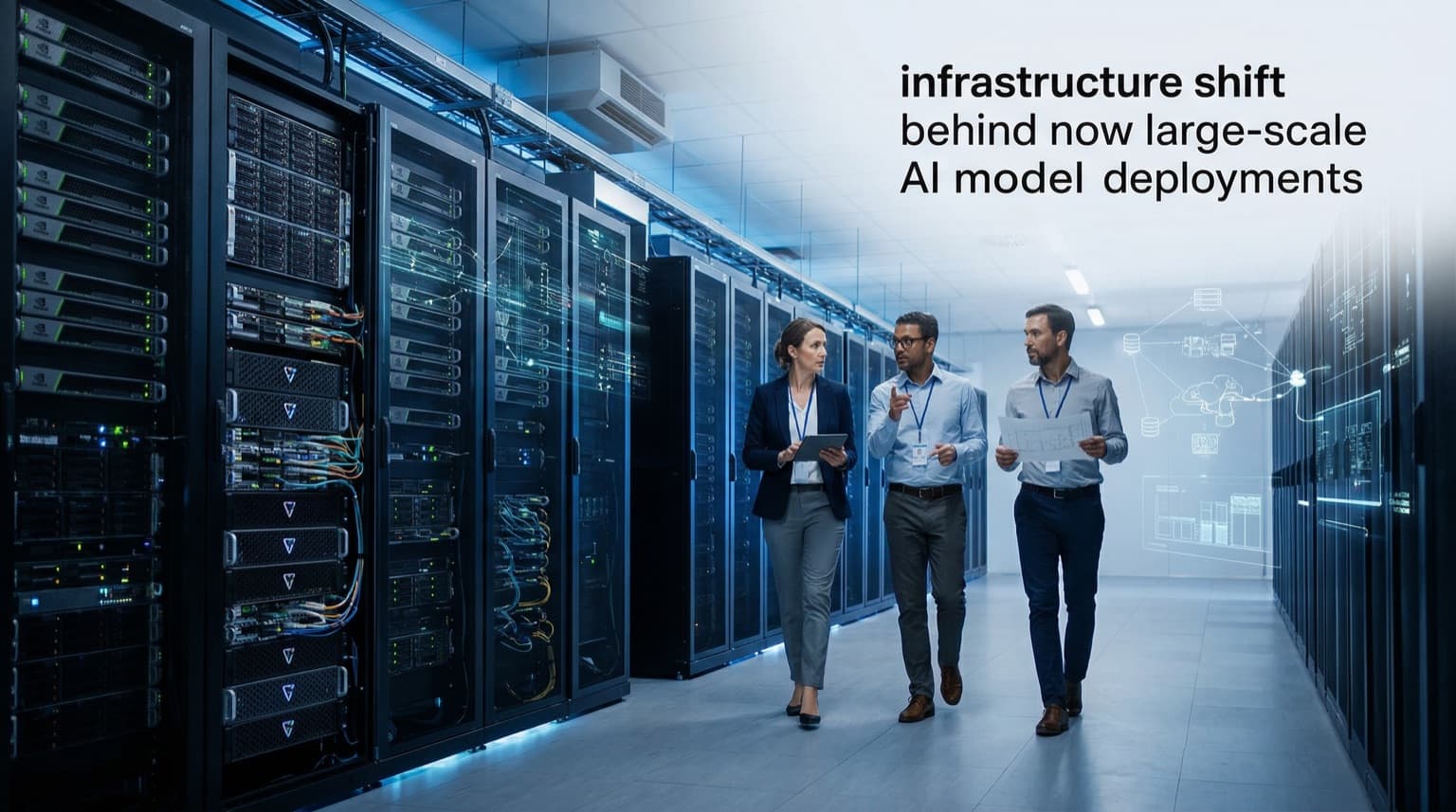
Supermicro and VAST Data announced CNode-X, an integrated enterprise AI data platform aligned to NVIDIA's AI Data Platform reference architecture, combining compute, storage, vector search, and deployment services in a validated package rather than a DIY assembly project (Supermicro + VAST announcement and PRNewswire release details).
That sounds like infrastructure plumbing. It is. And that is exactly why it matters.
When infra gets pre-integrated, product teams stop burning weeks on compatibility testing and start shipping user-facing AI features.
The real change: less architecture theatre, more shipping
Many teams still lose months in what I call architecture theatre:
- debating vector database choices before production traffic exists
- tuning cluster topology before they have eval baselines
- rebuilding ingestion and retrieval pipelines every quarter
CNode-X signals a different path: use a validated stack where hardware, data services, and model-serving workflows are already designed to run together.
The important point is not that one vendor stack will win everything. It is that integrated stacks are becoming normal.
We saw the macro version of this in our coverage of Big Tech's infrastructure spending cycle, and now we are seeing the packaging layer catch up for implementation teams that do not have hyperscaler budgets.
Why this changes timelines for an ops lead
If you are an ops lead inside a 20-to-200 person company, your blocker is rarely "can a model do this?"
Your blocker is usually one of these:
- Data movement is too slow to keep GPUs utilized
- Environments break when you move from pilot to production
- You cannot explain run costs clearly enough to get budget approval
The CNode-X design directly targets #1 and #2 with pre-validated server and storage configurations plus an integrated software layer for vectorization, search, and inference (NVIDIA AI Data Platform architecture context).
That does not magically solve your economics, but it does reduce the engineering tax between "proof of concept" and "feature in customer hands."
And that is where most teams currently stall.
A concrete 30-minute experiment
If you run operations or platform for an agency, SaaS team, or service business, run this today:
- Pick one repetitive internal workflow with measurable cycle time (for example: support ticket triage, proposal drafting, onboarding QA).
- Measure baseline latency and handoff friction for five real tasks.
- Swap in retrieval + inference using one managed stack you can spin up quickly (cloud vendor package is fine).
- Track only three metrics: time-to-first-useful-output, average correction passes, and per-task cost.
- Debrief after 30 minutes and decide whether to expand, pause, or redesign.
Do not optimize model quality first. Optimize pipeline reliability and operator trust first.
This mirrors a lesson we covered in building scalable AI pipelines: architecture choices that reduce operational variance often beat theoretically better model setups in week-one production.
Where teams should wait
Here is the caveat: do not adopt integrated infrastructure bundles just because they are "enterprise-ready" on paper.
Wait if any of the following are true:
- your data contracts are still unstable (schemas changing weekly)
- you do not yet have eval criteria for output quality
- your security team has not mapped data residency and access controls
In that state, a polished stack can mask unresolved fundamentals. You will move faster into the wrong setup.
The right order is:
- stabilize data definitions
- define evals and rollback rules
- pick the fastest viable stack
If you invert that order, migration pain returns quickly.
The cost curve angle most teams miss
There is a second-order effect here.
As infrastructure gets standardized and pre-integrated, procurement risk drops. Lower risk changes buying behavior. Teams that previously delayed AI rollouts because "integration cost is unpredictable" start green-lighting projects with smaller pilot budgets.
That dynamic compounds the trend we called out in the AI memory supply squeeze analysis: model capability matters, but deployment economics and hardware bottlenecks decide who can actually scale.
Put bluntly: the fastest model demo does not win by default. The team with the shortest path from data to dependable output wins.
What to watch next week
If this infrastructure shift is real, you should see these signals quickly:
- more vendor announcements about validated reference stacks, not just model releases
- more case studies reporting deployment time and utilization metrics, not just benchmark scores
- more platform RFPs written by operations leaders instead of pure research teams
That is the practical barometer: when ops starts driving AI architecture decisions, the market is moving from experimentation to execution.
The quiet story this week is not a new model name. It is the shrinking gap between "we built a demo" and "we can run this in production without heroics."
AI Pilot Readiness Checklist
Turn the idea into a pilot you can defend.
AI agent articles are easy to bookmark and hard to operationalize. Use the readiness questions as a shared way to decide whether a workflow is specific enough, safe enough, and measurable enough to pilot. If they surface a strong candidate, BaristaLabs can review it with you and help shape a first version that fits your systems, approval process, and risk tolerance.
Please do not submit PHI, customer records, credentials, or confidential workflow exports.
Practical AI Workflow Notes
Want more practical AI operations ideas?
Get short notes on applying AI inside real small-business workflows — from document handling and customer follow-up to internal reporting, compliance, and automation guardrails.